
Vegetables
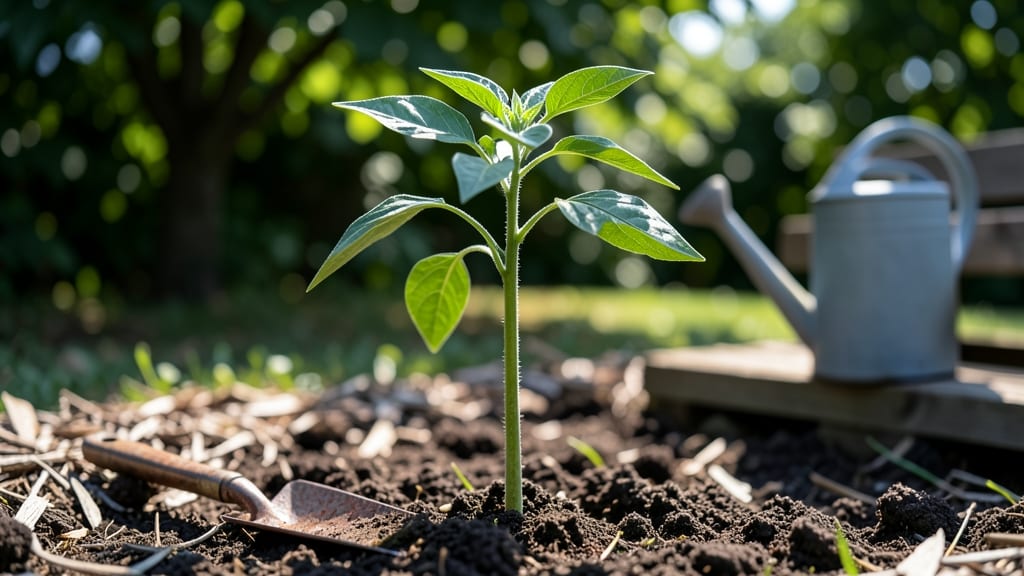
Growing green pepper seedlings that climb poles saves space and doubles your harvest. 🌱 I learned the hard way that cramped seedlings turn into stunted plants—until I started using vertical training from day one.
The secret isn't fancy equipment; it's matching plant needs to your space with simple techniques that work even in small patios or raised beds.
You'll need just three things: a sturdy 6-foot pole, lightweight twine, and a soil mix that drains well but holds moisture. Most garden centers sell pepper-specific soil blends, but I mix my own with compost and perlite for extra vigor.
Seedlings need warmth (70-85°F) and bright light—either a sunny window or grow lights—to prevent leggy, weak stems that snap when you try to train them later.
By the time you transplant, your peppers will be sturdy, bushy plants ready to climb. The vertical growth means more sunlight exposure, fewer pests hiding in foliage, and easier harvesting. You'll end up with twice the yield in half the footprint compared to sprawling plants.
Works for bell peppers, jalapeños, or any variety—just adjust pole height based on mature plant size. Here's how to get started without the common mistakes that waste seedlings.
📚 In This Guide
- What you need
- Instructions
- Tips and common mistakes
- Wrapping up and next steps
What you need
- ● Green pepper seeds: 5–10 seeds (choose compact varieties like 'Snack Pepper' or 'Aristotle' for pole training).
- ● Seed-starting mix: 2–3 quarts of sterile, well-draining potting soil (avoid garden soil—it’s too dense!).
- ● Seed trays or biodegradable pots: 2–4 trays (2–3 inches deep) or 50–100 small pots (2–3 inches in diameter).
- ● Grow lights or sunny windowsill: A 4–6 inch LED grow light (12–16 hours/day) or a south-facing window (6+ hours of sunlight).
- ● Spray bottle: 1 (for gentle watering).
- ● Plant labels: 5–10 (to track varieties).
- ● Pole or trellis: 1–2 bamboo stakes (5–6 feet tall) or a lightweight metal trellis (for vertical support).
- ● Twine or soft plant ties: 10–15 feet (to secure seedlings to the pole).
- ● Fertilizer: Balanced liquid fertilizer (5-5-5 or 10-10-10, diluted to half-strength) or compost tea.
- ● Pruning shears: 1 pair (for trimming later).
- ○ Heat mat (optional): 1 (if starting seeds indoors in cool climates, 70–80°F is ideal).
- ○ Hardening-off tray (optional): 1 (for gradual outdoor transition).
- ● 💡 Use a seedling heat mat if your home runs cold—peppers love warmth!
- ● ✨ Opt for biodegradable pots to avoid root disturbance when transplanting.
- ● 🔥 Start seeds 8–10 weeks before last frost for a head start.
Step-by-step guide to growing pole-trained green pepper seedlings
Here's how I turn tiny seedlings into productive, space-saving pepper plants using simple poles.
🌱 Step 1: Start with Healthy Seedlings
Begin with 4 pepper seedlings that are 4-6 inches tall with at least 4 true leaves. I always harden them off first by placing them outside in partial shade for 3-5 hours daily for 7-10 days. This toughens the stems so they won't snap when you tie them to poles later.
Check the soil before transplanting—it should be warm (70-80°F) and well-draining. Cold soil slows root growth, and soggy soil invites rot. I test by sticking my finger in: if it feels warm like a bath, it's ready.
🪴 Step 2: Set Up Your Pole System
Drive 5-foot bamboo stakes 6 inches deep into the soil at a 45-degree angle for stability. Space them 18 inches apart in a square pattern. This creates a trellis effect that supports the plant's weight as it grows.
For each stake, attach a 3-foot tall wooden dowel horizontally at the top using twine. The dowel acts as a crossbar where you'll weave the pepper vines. I like to use untreated cedar dowels—they resist rot and last multiple seasons.
☀️ Step 3: Plant and Train Seedlings
Dig a hole for each seedling deep enough to bury half the stem (about 2-3 inches). This encourages stronger root growth. Gently remove the plant from its container and loosen the roots if they're circling.
Place the seedling near the base of the stake and tie the main stem to the pole with soft plant ties. As the plant grows, guide the main vine upward and secure it every 6-8 inches with ties. Side shoots will emerge—pinch these off to direct energy into the main vine.
💧 Step 4: Water and Fertilize for Vertical Growth
Water deeply at the base once weekly until the top 6 inches of soil feel moist. Avoid wetting the leaves to prevent disease. I use a soaker hose for even moisture distribution—it keeps the soil damp without creating puddles.
After 2 weeks, switch to a balanced liquid fertilizer (10-10-10) every 3 weeks. The goal is to encourage fast, vertical growth. You'll see the vines reach for the crossbar within 4-6 weeks if conditions are right.
✂️ Step 5: Prune and Maintain Through Harvest
Once the main vine reaches the crossbar, trim the tip to encourage branching. This creates more fruiting sites along the vine. Remove any suckers (side shoots) that form in the leaf axils—they sap energy from your peppers.
Harvest peppers when they reach 3-4 inches long and have developed color. Pole-trained peppers ripen faster because they get better air circulation. I pick every 2-3 days to keep production steady—overripe peppers fall off and rot on the ground.
Tips & tricks for pole-trained green pepper seedlings
Here's what nobody tells you about transforming those fragile seedlings into sturdy, productive vines.
Hardening Off the Right Way: During those 3-5 hours daily of hardening off, gradually increase exposure over the 7-10 days—start with 2 hours on day one, then add 30 minutes each day. This slow progression prevents shock. I also move them to slightly sunnier spots each day so they adjust to full sun conditions. The goal is to make them tough enough to handle the wind and temperature swings they'll face when tied to poles.
Stake Stability Secret: When driving your 5-foot bamboo stakes 6 inches deep, use a rubber mallet instead of a hammer to avoid compacting the soil around the roots. For extra stability in windy areas, tie three stakes together in a triangle formation before planting your seedlings. This creates a more secure anchor system that won't tip over when vines get heavy with peppers.
Pruning for Maximum Production: In Step 5, when you reach the crossbar and trim the tip, make your cut just above a leaf node where two leaves meet the stem. This encourages branching at that exact spot, creating more fruiting sites. I also recommend removing any suckers (side shoots) that form below the main vine—they compete for nutrients that could go to your peppers.
Watering Wisdom: That once weekly watering guideline assumes average summer conditions. In hotter climates, you might need to water every 5-6 days, while cooler weather may extend it to 10 days. Always check by sticking your finger 6 inches deep—if it feels dry, water thoroughly. The key is keeping the soil consistently moist at the root level without creating puddles that invite rot.
Pro Tips for Green Pepper Seedling
- Here's what nobody tells you about transforming those fragile seedlings into sturdy, productive vines.
- Hardening Off the Right Way: During those 3-5 hours daily of hardening off, gradually increase exposure over the 7-10 days—start with 2 hours on day one, then add 30 minutes each day.
- Stake Stability Secret: When driving your 5-foot bamboo stakes 6 inches deep, use a rubber mallet instead of a hammer to avoid compacting the soil around the roots.
Frequently asked questions
Got questions about nurturing your green pepper seedlings? You’re in the right place! Whether you’re a first-time gardener or a seasoned grower, these answers will help you troubleshoot, optimize, and succeed with pole-trained peppers—even in small spaces.
How long does it take for green pepper seedlings to mature enough for transplanting?
Green pepper seedlings typically take 6–8 weeks from seed to reach transplant size. Look for 2–3 sets of true leaves (not the initial seed leaves) and sturdy stems before moving them outdoors. Pro tip: Harden them off for 7–10 days by gradually exposing them to outdoor conditions to avoid shock.
Why are my green pepper seedlings leggy or weak?
Leggy seedlings usually mean too little light or overcrowding. Place them in a sunny window or under grow lights (12–16 hours/day). Thin them so they’re 12–18 inches apart to improve airflow. If already leggy, bury them deeper when transplanting—the extra stem will root!
Can I grow green peppers from store-bought seeds, or do I need to buy specialty seeds?
Yes! You can save seeds from organic, homegrown peppers (avoid hybrids like "Sweet Banana" if you want true-to-type peppers). For best results, choose open-pollinated varieties like "California Wonder" or "Jalapeño." Store-bought seeds may have lower germination rates, so soak them in warm water overnight before planting.
What pests commonly attack green pepper seedlings, and how do I prevent them?
Watch for aphids, spider mites, and cutworms. Use neem oil or insecticidal soap for soft-bodied pests. For cutworms, create a collar barrier with cardboard around seedlings. Prevention tip: Keep your garden clean and mulch to deter pests naturally.
How much water do green pepper seedlings need, and can I overwater them?
Keep soil consistently moist but not soggy—water when the top inch feels dry. Overwatering causes root rot, while underwatering stunts growth. Use well-draining pots and avoid letting seedlings sit in water. Morning watering prevents fungal issues.
What’s the best way to train green pepper seedlings on a pole?
Start by tying the main stem to a 5–6 ft tall pole with soft plant ties when seedlings are 6–8 inches tall. Prune side shoots to encourage upward growth. As the plant climbs, weave vines gently around the pole and add ties every 12–18 inches. Avoid wrapping tightly to prevent stem damage!
Wrapping up and next steps
Growing green pepper seedlings in compact spaces is totally doable—with the right techniques, you can enjoy a bountiful harvest even in small gardens! 🌱 By choosing the right varieties, optimizing pole training, and mastering care tips, you’ll turn limited space into a thriving pepper paradise.
Now that you’re armed with these pole-trained growth hacks, it’s time to get your hands dirty and watch those seedlings flourish.
Ready to take the next step? Start by selecting your seedlings (or sowing seeds!) and set up your trellis or pole system this week. Before you know it, you’ll be harvesting crisp, homegrown green peppers straight from your compact garden. Happy growing! 🌿