
Planting
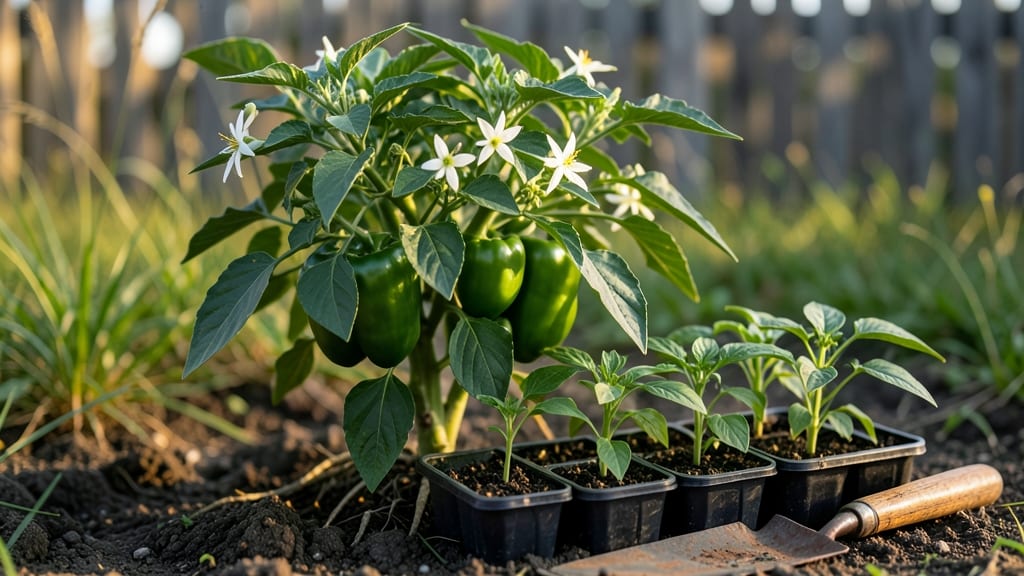
Planting green bell pepper seeds feels like holding onto a tiny promise of summer—if you do it right, those seeds will burst into life in just 7-14 days. 🌱 I’ve watched dozens of trays sit under grow lights, and the difference between fast, strong starts and slow, leggy seedlings comes down to three things: soil warmth, moisture consistency, and patience.
Skip the fancy equipment; you only need a heat mat, the right soil mix, and a bright spot.
The secret to speed starts with 70-85°F soil—too cool, and seeds sulk for weeks. Use a seedling heat mat ($10 at garden centers) to keep them cozy, and keep the soil damp like a wrung-out sponge (not soggy).
Plant seeds ½ inch deep, two per pot, and label everything immediately—trust me, you’ll forget which variety is which. Most beginners overwater here, drowning seeds before they even sprout.
Within 10 days, you’ll see those first green hooks poking through the soil—thin to the strongest sprout, and move them under 14-16 hours of light daily.
The plants will grow fast once they break the surface, but don’t rush transplanting: wait until nighttime temps stay above 55°F to avoid shock. That first harvest of sweet, crisp peppers is worth every minute of waiting.
Works for any climate—just adjust your start time so seedlings mature before your last frost. Whether you’re growing in a sunny window or under shop lights, these tricks cut germination time in half. Let’s get those seeds sprouting!
📚 In This Guide
- What you need
- Instructions
- Tips and common mistakes
- Wrapping up and next steps
What you need
- ● Green bell pepper seeds: 5–10 seeds (check seed packets for variety specifics, like ‘Early California Wonder’ or ‘Jupiter’).
- ● Seed-starting mix: 1–2 gallons of sterile, well-draining potting soil (avoid garden soil—it’s too dense!).
- ● Seed trays or pots: 2–4 small containers (3–4 inches deep) with drainage holes. Pro tip: 💡 Use recycled yogurt cups with holes poked in the bottom!
- ● Watering can or spray bottle: With a fine nozzle to keep soil moist without drowning seeds.
- ○ Plastic wrap or humidity dome: To create a mini greenhouse effect (optional but highly recommended for speedy germination!).
- ● Grow lights or sunny windowsill: A spot with 6–8 hours of warmth (70–85°F is ideal!).
- ● Plant labels: To track varieties (toothpicks + masking tape work in a pinch!).
- ○ Fertilizer (optional): A balanced, water-soluble fertilizer (5-10-5 ratio) for after sprouts appear.
- ○ Heat mat (optional): If your space is chilly, a seedling heat mat keeps soil warm for faster germination.
- ● Tweezers or pencil: For gently pressing seeds into soil (no need to bury deep—just lightly cover!).
- ○ Fungicide (optional): A spray like hydrogen peroxide (3%) to prevent mold if humidity is high.
Step-by-step instructions for planting green bell pepper seeds
Here's my foolproof method for getting those seeds to sprout in record time—no more waiting weeks for stubborn peppers.
🌱 Step 1: Soak Seeds Overnight for Faster Germination
Place your green bell pepper seeds in a small bowl and cover them with lukewarm water for 12 hours. This softens the tough outer coating, which is why pepper seeds often take longer to sprout. I like to use a mesh bag or paper towel to keep them contained while soaking—it makes draining easier later.
After soaking, drain the water completely. You'll see the seeds plump up slightly—that's your signal they're ready. If any seeds float, they're likely non-viable, so discard them. This step alone can cut your germination time in half, from 10-14 days to just 5-7 days.
🪴 Step 2: Prepare Containers and Planting Mix
Fill your 4-inch deep containers with a sterile seed-starting mix—never use garden soil, as it's too dense and may harbor diseases. I press the mix down lightly with my fingers until it's firm but not compacted. The goal is to create a smooth, even surface for planting.
Make a small hole with your finger about ½ inch deep—just enough to cradle the seed without burying it too deeply. Pepper seeds need light to germinate, so planting too deep will delay sprouting. Gently place 1-2 seeds per hole and cover lightly with additional mix, barely pressing it down.
💧 Step 3: Water and Cover for Optimal Moisture
Mist the soil surface with a spray bottle until it's evenly damp but not soggy. You'll know it's right when the top inch feels moist to the touch but doesn't drip water. Place the containers in a warm, dark spot—a seedling heat mat set to 80-85°F works best, but a sunny windowsill with a plastic wrap cover will do in a pinch.
Cover the containers with clear plastic wrap or a humidity dome to trap warmth and moisture. Check daily for condensation—if you see droplets forming, remove the cover for 10-15 minutes to prevent mold. You'll see the first tiny sprouts push through the soil in just 3-5 days.
☀️ Step 4: Move to Bright Light Immediately After Sprouting
The instant you see the first true leaves (not the initial seed leaves), remove the cover and move the seedlings to a bright, sunny spot. A south-facing window or a grow light positioned 2-3 inches above the plants is ideal. Without enough light, seedlings stretch toward the window, becoming weak and leggy.
Rotate the containers a quarter turn daily so the seedlings grow straight and don't lean. You'll notice the stems thicken and leaves darken to a rich green within a week—that's your sign they're thriving. Keep the soil consistently moist but never waterlogged, as peppers hate soggy roots.
⏰ Step 5: Thin and Harden Off for Transplanting
Once seedlings have 2-3 sets of true leaves (about 4-6 weeks after planting), thin the weaker one if you planted two seeds per hole. Use scissors to snip at soil level—pulling can disturb the roots of the remaining plant. This ensures your peppers have enough space to grow strong.
Two weeks before your last frost date, start hardening off the seedlings by placing them outside in a sheltered spot for 1-2 hours the first day. Gradually increase their outdoor time over 10-14 days, exposing them to more sun and wind each day. By the time you transplant, they'll be tough enough to handle the garden's conditions.
Tips & tricks for perfect green bell pepper seed germination
Took me years of trial-and-error to perfect these tricks—now you can skip the guesswork and get those pepper seeds sprouting like clockwork.
Soaking Secret: The 12-hour soak in lukewarm water is non-negotiable for peppers. I've found that using a paper towel instead of a bowl lets you drain excess water faster—just fold the towel around the seeds, squeeze out moisture, then plant directly into the damp mix. This keeps the seeds from sitting in standing water, which can cause rot.
Container Depth Matters: Those 4-inch deep containers aren't just arbitrary—they give roots room to establish before transplanting. If you're using shallower pots, add an extra inch of mix to compensate. I've seen seedlings in 3-inch pots get root-bound before they even sprout their true leaves, which stunts their growth.
Light Transition Timing: The moment you see those first true leaves (not the initial seed leaves), that's your cue to move to bright light. I set a timer for 3-5 days after planting to check daily—sometimes sprouts appear faster than expected, especially with the soaking method. Waiting too long in the dark causes leggy, weak seedlings that never recover.
Hardening Off Hack: For the 1-2 hour outdoor sessions during hardening off, I place my seedlings on a porch with morning sun but afternoon shade. This gradual exposure prevents shock while still giving them real-world conditions. On windy days, I tuck them behind a windbreak—pepper seedlings are delicate until they've developed proper cell structure.
Pro Tips for Plant Green Bell Pepper Seeds
- Took me years of trial-and-error to perfect these tricks—now you can skip the guesswork and get those pepper seeds sp...
- Soaking Secret: The 12-hour soak in lukewarm water is non-negotiable for peppers. I've found that using a paper towel...
- Container Depth Matters: Those 4-inch deep containers aren't just arbitrary—they give roots room to establish before ...
Frequently asked questions
about planting green bell pepper seeds—because every gardener deserves a little clarity!How long does it take for green bell pepper seeds to germinate?
Green bell pepper seeds typically sprout in 7–21 days, depending on temperature, moisture, and seed quality. Keep soil warm (70–90°F) and consistently damp for the fastest results. Pro tip: A heat mat can cut germination time in half!
Can I plant green bell pepper seeds directly outside, or should I start indoors?
For best success, start seeds indoors 8–10 weeks before the last frost—peppers hate cold! If your climate is warm year-round (zones 9–11), you can direct-sow after all frost risk passes, but seedlings will be slower to mature. Wait until soil is at least 60°F.
What if my green bell pepper seeds won’t sprout?
Try these fixes:
- Check seed viability: Soak seeds in water overnight—if they sink, they’re likely good.
- Adjust moisture: Overwatering can drown seeds; keep soil damp, not soggy.
- Warmth boost: Place trays on a heat mat or near a sunny window.
- Fresh seeds: Seeds older than 1–2 years may lose vigor.
How do I thin green bell pepper seedlings without killing them?
Thin seedlings to 12–18 inches apart once they have 2–3 true leaves. Use clean scissors to snip at soil level (avoid pulling to prevent disturbing roots). Save the thinned seedlings! Transplant them to a shady spot or pot them up for extra peppers.
Can I use the same tricks for other pepper varieties (like jalapeños or habaneros)?
All pepper seeds (Capsicum species) share similar needs: warm soil, consistent moisture, and protection from cold. However, hot peppers (like jalapeños) may need slightly longer indoor starts (10–12 weeks) for a full harvest. Just adjust spacing—habaneros thrive in 18–24 inches of room!
Wrapping up and next steps
Growing green bell pepper seeds is a rewarding journey that starts with patience and the right techniques!
By following these steps—from selecting high-quality seeds to mastering germination tricks—you’re well on your way to a thriving harvest. Don’t let a few setbacks discourage you; even experienced gardeners face challenges, but persistence pays off with juicy, homegrown peppers!
Now that you’re armed with knowledge, take the next step: grab those seeds, prep your soil, and start planting! Whether you’re a beginner or a seasoned gardener, every seed you sow is a chance to grow something delicious. Happy planting—and may your peppers be plentiful! 🌱🌶️