
Watering
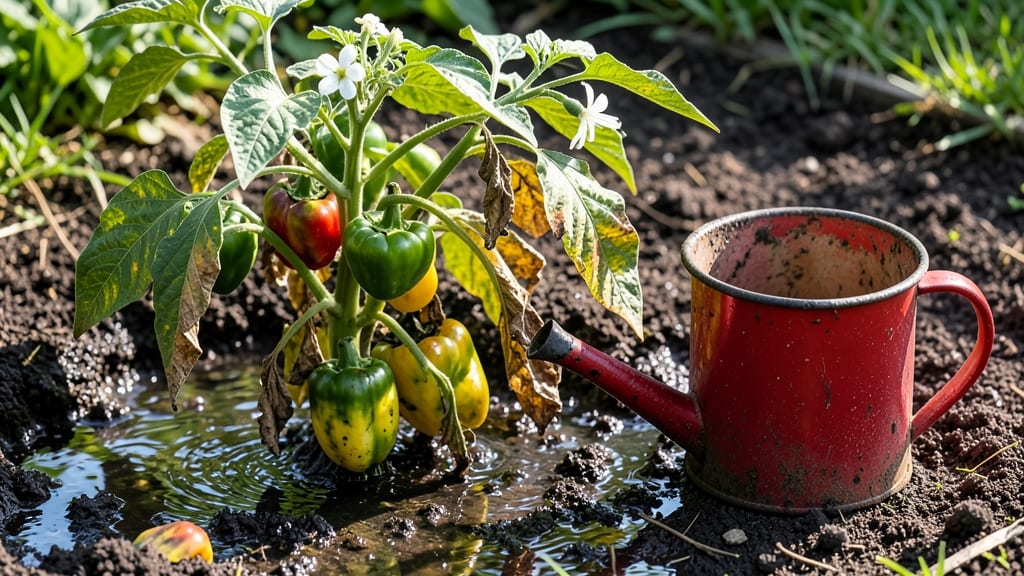
Those sad, droopy overwatered pepper plant leaves are a dead giveaway—your plants are drowning, and luckily, the fix is easier than you’d think: just pull back on the water and let the roots breathe.
The key is adjusting your watering rhythm, not just cutting back but fixing the soil’s drainage too.
First, check the soil: if it’s soggy or smells like wet socks, you’ve been overdoing it. Pepper roots need room to breathe—think damp sponge, not swamp. Grab a trowel, loosen the top inch of soil, and let excess water drain away.
This alone can stop the rot within 24 hours, but you’ll also need to tweak your routine.
By the end of the week, you’ll see new, crisp green leaves pushing through. The trick is watering only when the top inch feels dry—stick your finger in the soil before grabbing the hose.
Add perlite or coarse sand to heavy pots to improve drainage, and your peppers will bounce back faster than you expect.
Prevention is just as easy: mulch around the base to slow evaporation, and choose pots with drainage holes. Once you master this, your peppers will stay lush and productive all season—no more sad, wilted foliage. Here’s how to make it happen without stress.
Root Causes Of Leaf Stress
When your pepper plant’s leaves start drooping, yellowing, or developing mushy spots, the issue often traces back to how water interacts with the plant’s biology. Overwatering doesn’t just mean "too much water"—it disrupts the delicate balance of oxygen, nutrients, and cellular function in the roots and foliage.
Let’s break down the key scientific triggers that turn your well-intentioned watering into a recipe for leaf distress.
Pepper plants thrive in aerated soil, where roots can access both water and oxygen. When you overwater, two problems arise:
- Waterlogged soil: Excess moisture fills the tiny air pockets between soil particles, suffocating roots. Without oxygen, roots can’t perform cellular respiration—the process that converts glucose into energy. This leads to:
- Stunted growth (roots "starve" for energy)
- Weakened cell walls (leaves lose turgor pressure and wilt)
- Increased susceptibility to root rot (a fungal/bacterial infection that clogs root tissues)
- Anaerobic conditions: In low-oxygen environments, roots switch to fermentation (a backup energy process), producing ethanol and lactic acid. These toxins:
- Damage root membranes, preventing nutrient absorption
- Trigger leaf yellowing (chlorosis) as chlorophyll breaks down
- Cause brown, crispy edges on leaves due to nutrient starvation
Actionable insight: Test your soil’s drainage by scooping a handful—if water drips like syrup, your plant is drowning. Pepper plants prefer soil that feels like a slightly damp sponge, not a swamp.
Overwatering doesn’t just drown roots—it flushes away essential nutrients faster than they can be replenished. Here’s how it happens:
| Nutrient | Role in Pepper Plants | What Overwatering Does |
|---|---|---|
| Nitrogen (N) | Builds leafy green tissue; supports photosynthesis | Leaches out rapidly in saturated soil, causing pale, yellow leaves (even if soil looks "fertile") |
| Phosphorus (P) | Boosts root development and flower/fruit formation | Binds to iron in waterlogged conditions, making it unavailable to roots (leads to weak stems and poor fruiting) |
| Potassium (K) | Regulates water balance and disease resistance | Washes away easily; deficiency shows as brown leaf margins or blossom end rot in peppers |
| Micronutrients (Fe, Mn, Zn) | Enable chlorophyll production and enzyme function | Become oxidized or insoluble in waterlogged soil, causing interveinal chlorosis (yellowing between veins) |
Pro tip: 💡 If your pepper plant’s leaves look "washed out" despite regular feeding, flush the soil with dechlorinated water to reset nutrient levels. Add a balanced fertilizer (10-10-10) only after the soil is dry to the touch 1–2 inches down.
Stagnant water creates the perfect breeding ground for pathogens. The most common culprits in overwatered pepper plants:
- Pythium/Pyhtophthora (Water Mold):
- Thrives in anaerobic soil (no oxygen = no competition)
- Attacks roots first, causing them to turn black and mushy
- Symptoms: Sudden wilting despite moist soil, leaves yellowing from the bottom up
- Phytophthora blight:
- Produces sporangia (spore sacs) in water films on leaves
- Leaves develop oily, dark brown lesions with a halo effect
- Spreads via splashing water (overhead watering = high risk)
- Erwinia (Bacterial Soft Rot):
- Enter through wounded roots (e.g., from overzealous watering)
- Causes pungent, foul-smelling decay in stems and leaves
- Leaves collapse into a watery, slimy mess
Critical warning: 🚨 If you spot moldy soil or blackened stems, act fast—fungal infections can kill a pepper plant in 3–7 days. Prune affected leaves with sterilized shears and treat with copper fungicide or hydrogen peroxide (3%).
Water isn’t just a nutrient—it’s a structural stressor when applied improperly. Here’s how excess moisture harms leaves directly:
- Cell Bursting (Cytolysis):
- Pepper leaves have semi-permeable membranes that regulate water intake.
- When soil is chronically soggy, roots absorb water faster than leaves can expel it via transpiration.
- Result: Leaf cells swell and rupture, causing blistered, translucent patches (common in humid climates).
- Osmotic Imbalance:
- Overwatering dilutes the soil’s salt concentration, disrupting the plant’s ability to absorb water efficiently.
- Leaves wilting despite wet soil is a classic sign of osmotic shock.
- Fungal Leaf Spots (Alternaria/Colletotrichum):
- Water droplets on leaves create micro-environments where spores germinate.
- Look for target-shaped lesions with concentric rings (a hallmark of Alternaria).
Fix it: 🌡️ Avoid wetting foliage—use drip irrigation or soaker hoses to deliver water directly to the soil. If leaves are already damaged, prune them and apply a fungicidal soap to prevent spread.
Revive Your Pepper Plant in 3 Steps
Now that you know the signs and causes of overwatered pepper plant leaves, it’s time to take action! The good news? With the right steps, your plant can bounce back—often faster than you think.
Below, we’ll map out practical fixes for each common cause, along with prevention tips to keep your peppers thriving long-term.
---
#### 💧 If Your Soil Is Soggy or Muddy Overwatering creates anaerobic conditions, where roots suffocate and rot. Here’s how to fix it:
- 🔥 Drain the Excess Water - Move your pepper plant to a dry, shaded spot (like a porch or garage) for 24–48 hours to let the soil dry out. - If potted, empty excess water from the saucer and avoid placing it back on a wet tray.
- ✨ Improve Drainage Fast - Repot if needed: If your container has no drainage holes, transfer your plant to a pot with holes at the bottom. - Add perlite or sand (10–20%) to heavy clay soil to help it dry faster. - Use a moisture meter to check soil dampness—water only when the top 1–2 inches are dry.
- 🌡️ Water Less, But More Deeply - Peppers hate shallow watering.
Instead of frequent light watering, give them a deep soak (until water runs out the drainage holes) every 7–10 days (adjust for climate). - Morning watering is best—it allows foliage to dry before evening, reducing fungal risks.
#### 💡 Pro Tip: If your plant is severely wilted, trim yellowed or mushy leaves with clean scissors to redirect energy to healthy growth. 🌿
---
#### 🍳 If Roots Are Rotting or Waterlogged Overwatering weakens roots, making them prone to disease (like Phytophthora or Pythium). Act now to save them:
- 👨🍳 Prune Damaged Roots (For Potted Plants) - Gently remove the plant from its pot and rinse the roots with water to wash away excess soil. - Trim black, mushy, or soft roots with sterilized scissors (dip in rubbing alcohol). - Replant in fresh, well-draining soil (mix 60% potting mix + 30% perlite + 10% compost).
- 🔪 For Garden Peppers: Improve Soil Aeration - Loosen compacted soil around the base with a fork to boost oxygen flow. - Mix in organic matter (like compost or coconut coir) to improve drainage. - Avoid watering until the top 3–4 inches of soil are dry.
- 💊 Fungal Treatment (If Needed) - If roots smell foul or have a black, slimy coating, spray with a copper fungicide or hydrogen peroxide (3%) (1 part peroxide to 10 parts water). - Prevent future issues by sterilizing tools and rotating crops if growing in the same spot.
#### 💡 Pro Tip: Overwatered roots recover best in warmth (70–80°F). If your home is chilly, use a heat mat under pots to speed up healing. 🌡️
---
#### 🌤️ If Humidity or Light Is Off Peppers need bright light and moderate humidity—too much moisture in the air (from overwatering + high humidity) invites pests and disease.
- 🌞 Increase Airflow & Light - Move your plant to a sunny windowsill or under grow lights (12–16 hours of light daily). - Use a small fan on low setting to reduce humidity around the plant (but avoid direct drafts).
- 🌡️ Balance Humidity (40–60% Ideal) - For indoor plants: Use a dehumidifier or place a silica gel packet near the plant. - For outdoor plants: Space plants 12–18 inches apart for better airflow.
- 🍃 Adjust Fertilizer (If Over-Fed) - Overwatering + excess fertilizer = burned roots. Flush the soil with water (3x the pot size) to leach out salts. - Switch to a balanced, diluted fertilizer (like 5-5-5) every 4–6 weeks during growing season.
#### 💡 Pro Tip: Mulch with straw or wood chips (not plastic) to retain soil moisture without suffocating roots. Keep mulch 2–3 inches away from the stem. 🌾
---
Once your plant recovers, keep these habits to avoid future overwatering:
✅ Check soil moisture with your finger—top 1–2 inches should be dry before watering. ✅ Use self-watering pots (with moisture sensors) for busy gardeners. ✅ Group peppers with drought-tolerant plants (like basil or thyme) to reduce watering frequency. ✅ Monitor weather—adjust watering during rainy seasons or high humidity. ✅ Upgrade containers—terracotta pots dry faster than plastic.
--- Remember: Peppers are drought-tolerant once established—underwatering is easier to fix than overwatering! With these steps, your plant should perk up in 1–2 weeks, and you’ll be back to harvesting spicy, sweet peppers in no time. 🌶️🔥
Frequently asked questions
How do I tell if my pepper plant is overwatered vs. underwatered?
Check the soil first: if it's soggy or smells musty, you're overwatering. Look for yellowing leaves, drooping foliage, or mushy stems—these are classic overwatering signs. Underwatered plants have crispy, brown leaf edges and dry soil that pulls away from the pot. Stick your finger in: if the top 1-2 inches are dry, it's thirsty!
Can I save my pepper plant if the leaves are already mushy?
Yes, but act fast! First, remove all mushy leaves with clean scissors. Then, let the soil dry completely (24-48 hours) and repot in fresh, well-draining mix with perlite. Avoid watering for 3-5 days to let roots recover. If roots are black/mushy, trim them before replanting. With proper care, new growth should appear in 1-2 weeks.
Why do my pepper plant leaves turn yellow after overwatering?
Yellow leaves mean your plant's roots can't absorb nutrients properly due to lack of oxygen in waterlogged soil. The yellowing starts at the older leaves first because the plant prioritizes new growth. Overwatering also flushes out essential nutrients like nitrogen and potassium, causing chlorosis (yellowing). Fix it by improving drainage and using a balanced fertilizer (10-10-10) once soil is dry.
How often should I water my pepper plants to prevent overwatering?
Peppers prefer deep but infrequent watering. Water when the top 1-2 inches of soil are dry—usually every 7-10 days for potted plants (less in humid climates). For garden peppers, water at the base and avoid wetting leaves to prevent fungal issues. Terracotta pots dry faster than plastic, so adjust your schedule accordingly. Always ensure pots have drainage holes!
Will my pepper plant recover if I stop overwatering immediately?
Pepper plants are resilient. Within 3-5 days of stopping overwatering, you'll see improvement as roots get oxygen again. For severe cases, it may take 2-3 weeks to fully recover. Focus on drying the soil completely, improving drainage, and avoiding water on leaves. New growth should appear once the plant redirects energy to healthy roots and foliage.