
Blooming
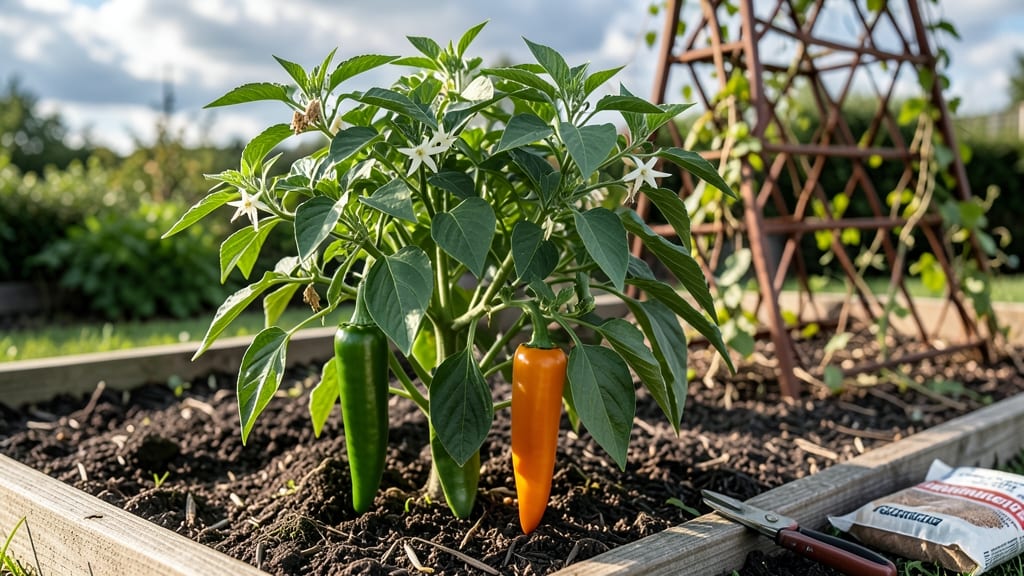
Growing Italian long sweet peppers like dolce italiano means 60 days of pole-trained sweetness—no bitter aftertaste, just vibrant, 12-inch-long pods perfect for fresh eating or drying. 🌿 I learned the hard way that these peppers need heat, patience, and the right support to reach their full potential, but the payoff is worth every effort.
Their delicate flavor and striking appearance make them a showstopper in any garden.
The secret starts with warm soil (at least 70°F) and a sturdy trellis or cage—these peppers grow 4-6 feet tall if given room. Plant seeds indoors 8-10 weeks before last frost, then transplant seedlings 18-24 inches apart in full sun.
They thrive in well-draining soil with a pH of 6.0-6.8, so amend with compost if your soil is heavy. Overcrowding leads to disease, so space is non-negotiable.
By mid-summer, you’ll see long, slender pods forming—harvest them when they’re 8-12 inches long and glossy, but before they toughen. A consistent watering schedule (1-1.5 inches per week) keeps them sweet, while too much nitrogen can make them bitter.
Prune suckers early to focus energy on fruit production, and watch your plants climb like vines, producing dozens of peppers per season.
These peppers store well in a cool, dry place, so you can enjoy their mild, slightly sweet flavor long after harvest. Whether you’re drying them for winter or snacking fresh, the key is patience and proper support—no shortcuts here.
Ready to grow your own? Let’s get started with the full guide.
📚 In This Guide
- What you need
- Instructions
- Tips and common mistakes
- Wrapping up and next steps
What you need
- ● Italian long sweet pepper seeds – 20-30 seeds (or 3-4 plants if starting with transplants). Look for varieties like 'Dolce Vita' or 'Napoli' for sweet, mild flavors.
- ● Well-draining potting mix – 10-15 lbs (or a blend of 60% peat moss, 30% perlite, and 10% compost for DIY mixes).
- ● Containers or garden beds – 5-gallon pots (if container gardening) or full-sun garden plots (6+ hours/day) with 18-24 inches of spacing between plants.
- ● Pole or trellis system – 6-8 ft tall (bamboo stakes, metal cages, or sturdy wooden poles work great).
- ● Organic fertilizer – Balanced 10-10-10 or compost tea (apply at planting and every 4-6 weeks).
- ● Mulch – 2-3 inches of straw or shredded leaves to retain moisture and suppress weeds.
- ● Watering can or hose with a gentle spray nozzle – Peppers need 1-1.5 inches of water weekly (more in extreme heat).
- ○ Pruning shears – For shaping plants and removing suckers (optional but helpful).
- ● Grow lights – If starting seeds indoors 6-8 weeks before last frost.
- ● Copper tape or row covers – To deter pests like aphids or flea beetles.
- ● Epsom salt – A tablespoon per plant every few weeks boosts magnesium for sweeter peppers.
- ● Plant markers – To track varieties if growing multiple types.
Step-by-step instructions for growing Italian long sweet peppers pole-trained
Here's how I grow tender, bite-free Italian long sweet peppers on trellises—ready for harvest in just 60 days.
🌱 Step 1: Start Seeds Indoors 8-10 Weeks Before Last Frost
Fill 2-3 inch deep seed trays with sterile seed-starting mix and sow seeds ¼ inch deep. Italian long sweet peppers germinate best at 75-85°F, so use a seedling heat mat if your home runs cooler. Keep the soil consistently moist but never soggy—you'll see sprouts in 7-14 days.
Once seedlings emerge, move them to a sunny windowsill or under grow lights 12-16 hours daily. Thin to one strong seedling per cell, snipping weaker stems at the base. You'll know they're ready for transplant when they develop 4-5 true leaves and sturdy stems.
🪴 Step 2: Transplant to Outdoor Trellis System After Frost
Choose a location with full sun (6+ hours daily) and prepare the trellis first. I use 5-6 foot tall bamboo stakes driven into the ground 12 inches apart, with horizontal strings spaced 18 inches apart for vining support. This vertical method prevents fruit rot and makes harvesting effortless.
Transplant seedlings at the same depth they grew in trays, spacing them 18-24 inches apart. Bury the trellis stakes 6 inches deep for stability, then gently weave the main stem through the strings as it grows. Water deeply after planting to settle roots and encourage new growth.
☀️ Step 3: Maintain Consistent Moisture and Fertility
Italian long sweet peppers thrive with 1-1.5 inches of water weekly, delivered at the base to avoid wetting leaves. Mulch with 2-3 inches of straw to retain moisture and suppress weeds. You'll notice the vines growing aggressively upward—this is when you should gently tie new growth to the trellis strings every 3-4 days.
Feed plants with a balanced organic fertilizer (10-10-10) every 4-6 weeks, starting when flowers appear. The goal is sweet, tender peppers—so avoid over-fertilizing with nitrogen, which can make them bitter. Watch for yellowing leaves, a sign of overwatering or nutrient imbalance.
✂️ Step 4: Prune and Harvest for Maximum Sweetness
Begin harvesting when peppers reach 6-8 inches long and still feel tender. Use sharp scissors to cut stems, leaving ¼ inch of stem attached to encourage more production. Regular harvesting prevents bitterness by signaling the plant to keep producing sweet fruit.
Prune suckers (side shoots) that form in the leaf axils to direct energy upward. This keeps the plant focused on producing long, sweet peppers rather than bushy growth. You'll know you're on track when vines cover the trellis and peppers dangle gracefully—ready for 60 days of continuous harvests.
⏰ Step 5: Extend the Season with Simple Tricks
To keep producing sweet peppers into fall, cover plants with frost blankets when temperatures dip below 50°F. Remove the cover during the day to allow sunlight. In warmer climates, succession plant seeds every 2-3 weeks for a staggered harvest.
Save seeds from your best peppers by allowing a few to mature fully on the plant. Dry them completely before storing in a cool, dark place. Next season, you'll have homegrown seed stock tailored to your climate—guaranteed sweet and tender.
Tips & tricks for perfect pole-trained Italian long sweet peppers
Real talk: Growing these delicate peppers successfully comes down to a few key details that most gardeners overlook at their peril.
Seedling Heat Control: That 75-85°F germination range isn't just a suggestion—it's critical. I've seen seeds fail to sprout when kept at room temperature (around 68°F) because the metabolic processes stall. If your home runs cooler, invest in a seedling heat mat. For the 12-16 hours of daily grow light, position lights 2-3 inches above seedlings to prevent legginess while maintaining that ideal temperature. The difference between 75°F and 68°F at this stage can mean the difference between thriving seedlings and weak, etiolated plants that struggle to establish.
Trellis Stability Secret: Bury those 5-6 foot bamboo stakes 6 inches deep—this isn't just about looks. Wind can snap shallow stakes, and you don't want your entire trellis system collapsing when vines start aggressively climbing. I reinforce mine with a third stake in the center for extra stability. Also, use soft twine or plant ties—not wire—to weave stems through the strings. Wire can cut into tender vines as they grow, causing stress points that lead to breakage.
Watering Precision: The 1-1.5 inches of water weekly measurement assumes average conditions. In hotter climates (above 85°F), you might need to increase to 2 inches weekly, while cooler climates may only require 1 inch. The key is consistency—never let the soil dry out completely between waterings, especially during flowering and fruiting. I water in the early morning to allow foliage to dry before evening, which prevents fungal diseases that thrive in damp conditions. And always water at the base, never overhead—wet leaves are an open invitation to problems.
Harvest Timing Nuance: Those 6-8 inches of length are just the starting point. The real indicator is tenderness—peppers should feel soft when gently squeezed, not firm. I harvest every 3-4 days during peak production to maintain sweetness. When you leave peppers too long on the vine, they start converting sugars to starches, which is when bitterness creeps in. And that quarter-inch stem attachment? It's not optional—it's what triggers the plant to produce more flowers and fruit.
Pro Tips for Italian Long Sweet Pepper
- Real talk: Growing these delicate peppers successfully comes down to a few key details that most gardeners overlook at their peril.
- Seedling Heat Control: That 75-85°F germination range isn't just a suggestion—it's critical.
- Trellis Stability Secret: Bury those 5-6 foot bamboo stakes 6 inches deep—this isn't just about looks.
Frequently asked questions
about growing Italian long sweet peppers—your quick guide to troubleshooting, timing, and tasty tips!How long does it take for Italian long sweet peppers to mature?
These peppers are fast growers! With warm soil (60°F+), expect 60–70 days from transplant to harvest. Pole-trained varieties may take 2–3 weeks longer to fully mature but yield more peppers over time. Start seeds indoors 8–10 weeks before your last frost for a summer-long harvest.
Can I grow Italian long sweet peppers in containers?
They thrive in 5-gallon containers or larger with well-draining soil. Use a trellis or tomato cage for support—peppers can grow 2–3 feet long! Just ensure the pot has drainage holes and place it in full sun (6+ hours daily). Container-grown peppers may need weekly watering to stay moist.
Why are my Italian long sweet peppers turning bitter?
Bitterness usually means stress or overmaturity. Common culprits:
- Heat stress: Peppers develop bitterness in extreme heat (above 90°F). Provide afternoon shade with shade cloth if needed.
- Underwatering: Keep soil consistently moist (1 inch of water weekly). Drought triggers bitterness.
- Overcrowding: Thin plants to 18–24 inches apart for airflow and sunlight.
What’s a good substitute if I can’t find Italian long sweet peppers?
Try these mild, sweet alternatives for stir-fries or stuffing:
- Banana peppers (smaller but sweeter, 6–8" long).
- Sweet Italian frying peppers (shorter, 4–6", but similar flavor).
- Yellow wax peppers (milder and crunchy, 3–4" long).
- Bell peppers (yellow/orange) (sweeter than red, but thicker walls).
How do I prevent pests like aphids or pepper maggots?
Use these organic defenses:
- Neem oil spray (weekly preventative for aphids/spider mites).
- Row covers (early season to block flying pests like pepper maggots).
- Diatomaceous earth (food-grade, around plant bases for crawling insects).
- Beneficial nematodes (for soil-dwelling maggots—apply at dusk).
Wrapping up and next steps
Growing Italian long sweet peppers is a rewarding journey that delivers bursting flavors in just 60 days—no bitterness, all sweetness! 🌱 With the right pole training, soil prep, and care, you’ll harvest vibrant, crisp peppers perfect for fresh eating, grilling, or preserving.
Whether you’re a seasoned gardener or a curious beginner, this guide makes it simple to cultivate a thriving crop.
Now that you’re armed with tips and tricks, roll up your sleeves and get planting! Start with a seedling, set up your trellis, and watch your garden transform into a sweet pepper paradise. Happy growing—your taste buds will thank you! 🌿