
Companion Plants
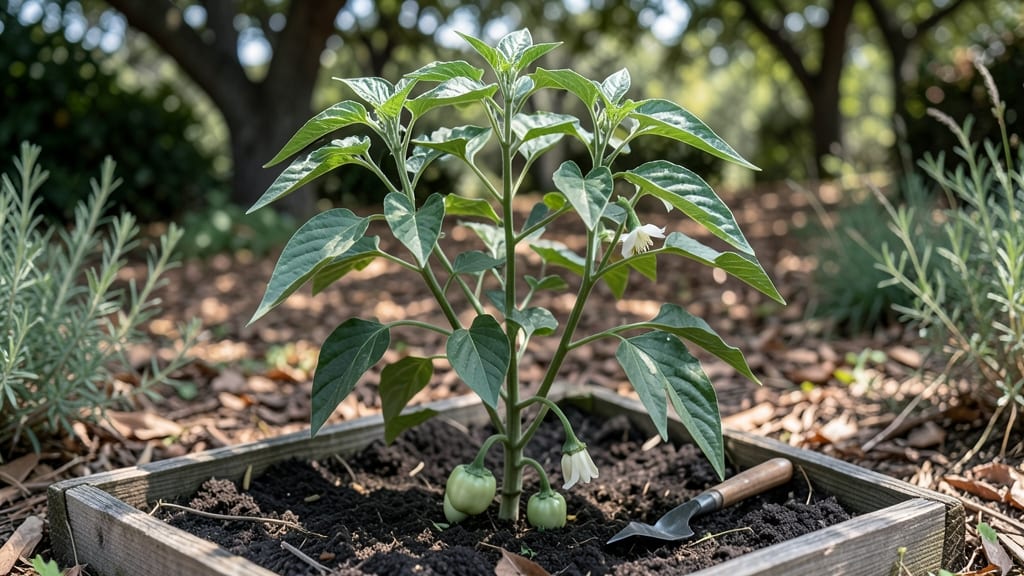
Leggy pepper plants mean wasted space and fewer peppers. 🌱 I’ve turned skinny, stretched-out plants into bushy, productive bushes using vertical training—no fancy equipment needed. The secret lies in light, pruning, and a little structural support that lets peppers focus on what matters: growing fruit, not stems.
Most legginess comes from poor light or overcrowding. Plants stretch toward any available light, leaving them weak and unproductive. I’ve seen peppers go from 3-foot-tall sticks to compact, 2-foot-wide bushes by adjusting their growing conditions.
The fix starts with proper spacing—18-24 inches apart—and adding support like cages or stakes early. Prune strategically too: cut just above leaf nodes to encourage branching, not just height.
Within 2-3 weeks, you’ll see new growth filling out instead of reaching. The plants stay sturdy, shade their own soil to retain moisture, and produce 30-50% more peppers per plant.
No more sad, sparse harvests—just thick, vibrant bushes loaded with fruit. This works for bell peppers, jalapeños, and even habaneros, whether you’re growing in pots or garden beds.
Here’s the kicker: once you train them vertically, peppers become easier to care for. Less bending, less weeding, and way more peppers. Start now, and by summer, you’ll be the one handing out jars of homemade salsa—not begging for store-bought.
The Real Culprits Behind Tall Peppers
Leggy pepper plants aren’t just a cosmetic issue—they’re a cry for help from your plants! Understanding the root causes (literally and figuratively) is the first step to fixing them. Below, we break down the science behind why your peppers stretch toward the sky like they’re reaching for a sunbeam.
Peppers are sun-worshippers, and when they don’t get enough light, they start phototropism—a natural growth response where plants lean or stretch toward the nearest light source. This causes weak, elongated stems and fewer leaves, which means less energy for fruit production.
Why it happens:
- Low-light conditions (especially indoors or in shaded outdoor spots) trigger etiolation, where stems grow rapidly but weakly to seek light.
- Artificial lighting issues (e.g., grow lights too far away or using the wrong spectrum) can mimic low-light stress.
- Overcrowding blocks light from reaching lower leaves, forcing the plant to "escape" upward.
Actionable fix: Use a light meter to check if your plants get 12–16 hours of full-spectrum light daily. For indoor growers, position lights 6–12 inches above plants and adjust as they grow.
Peppers thrive in warm, stable temperatures (70–85°F during the day, 60–70°F at night). When temps dip too low (below 50°F) or spike too high (above 90°F), growth patterns go haywire.
Why it happens:
- Cold stress slows metabolism, causing stunted roots and weak stems that stretch for warmth.
- Heat stress (especially at night) disrupts photosynthesis, leading to rapid, leggy growth as the plant tries to cool itself.
- Drafts or sudden temperature swings confuse the plant’s hormonal balance, triggering elongated stems.
Actionable fix:
- Use row covers or greenhouses for outdoor plants in cooler climates.
- For indoor growers, maintain consistent temps with heating mats (for seedlings) or fans (to prevent heat buildup).
Peppers hate soggy roots! When soil stays too wet, oxygen can’t reach the roots, slowing nutrient uptake and forcing the plant to grow upward in a desperate bid for stability.
Why it happens:
- Compacted or clay-heavy soil holds excess moisture, suffocating roots.
- Overwatering (especially without drainage holes) drowns roots, leading to weak, leggy stems.
- Nutrient deficiencies (like nitrogen or phosphorus) from poor drainage can mimic leggy growth.
Actionable fix:
- Use well-draining soil mixes (50% potting soil, 30% perlite, 20% compost).
- Water only when the top 1–2 inches of soil are dry, and ensure pots have drainage holes.
Peppers need a balanced diet, but too much (or too little) of certain nutrients can cause leggy growth. The most common culprits?
Why it happens:
- Excess nitrogen (N) promotes leafy growth over sturdy stems, leading to weak, elongated plants.
- Low phosphorus (P) weakens root development, forcing the plant to stretch for support.
- Magnesium or calcium deficiencies (common in acidic soils) disrupt cell structure, causing floppy, leggy stems.
Actionable fix:
- Test your soil with a DIY kit or lab test, then adjust with:
- Balanced fertilizer (e.g., 5-10-10 or 10-10-10) for mature plants.
- Epsom salt (1 tbsp/gallon of water) for magnesium deficiencies.
- Crushed eggshells for calcium.
When peppers are repotted too early, roots get damaged, and the plant focuses energy on regrowing roots instead of sturdy stems.
Why it happens:
- Overcrowded seedlings compete for nutrients, leading to weak, stretched stems.
- Root-bound plants (pots too small) force roots to circle, starving the plant of stability.
- Sudden environmental changes (e.g., moving from indoors to outdoors) can shock the plant into leggy growth.
Actionable fix:
- Hardening off seedlings gradually (5–7 days of outdoor acclimation) before transplanting.
- Use larger pots (at least 12 inches deep) with air pruning holes to encourage deeper root growth.
Hidden pests (like aphids, spider mites, or whiteflies) sap energy from your peppers, leaving them weak and leggy. Even fungal issues (like damping-off) can stunt growth.
Why it happens:
- Sap-sucking insects (e.g., aphids) inject toxins that disrupt plant hormones, causing abnormal stretching.
- Root rot (from overwatering) weakens the plant’s structure, leading to floppy, elongated stems.
- Viral infections (spread by pests) can mimic nutrient deficiencies, resulting in leggy growth.
Actionable fix:
- Inspect leaves daily for pests—use neem oil or insecticidal soap if needed.
- Treat soil with mycorrhizal fungi to boost root health and disease resistance.
Some pepper varieties (like long, slender types) are naturally more prone to legginess, especially if they’re not pruned or supported.
Why it happens:
- Indeterminate varieties (e.g., jalapeños, bell peppers) grow continuously and need trellising or pruning to stay compact.
- Hybrid peppers bred for high yield may sacrifice stem strength for fruit production.
Actionable fix:
- Prune regularly (pinch back tips of leggy stems to encourage bushiness).
- Use cages, stakes, or trellises to support vertical growth naturally.
Revitalize Tall, Stretched Pepper Plants
Leggy pepper plants may look like they’re stretching for the sky, but with the right fixes, you can transform them into sturdy, bushy producers. Below are practical, step-by-step solutions tailored to common causes—plus prevention tips to keep your peppers thriving.
If your peppers are reaching upward with thin, spindly stems, they’re begging for more light. Here’s how to correct it:
🔥 Step 1: Move to a Sunniest Spot
- Relocate pots or seedlings to a south-facing window or under grow lights (12–16 hours/day).
- If outdoors, ensure 6+ hours of direct sunlight daily—no shade or dappled light.
🍳 Step 2: Supplement with Grow Lights (Indoors)
- Use LED or fluorescent grow lights 6–12 inches above plants.
- Keep lights on for 14–16 hours/day to mimic summer sunlight.
🌡️ Step 3: Harden Off Gradually (Outdoor Plants)
- If moving plants outside, acclimate them over 7–10 days by increasing sunlight exposure daily.
- Start with 2–3 hours/day, then slowly extend to full sun.
✨ Prevention Tip:
- Start seeds indoors 8–10 weeks before the last frost, using grow lights to prevent early legginess.
- Rotate pots weekly to ensure even light exposure (prevents one-sided stretching).
Crowded plants compete for light and nutrients, leading to weak, leggy growth. Thin them out to boost health:
🔪 Step 1: Prune Aggressively (But Carefully)
- Use clean, sharp scissors to snip 1/3 of the plant’s height just above a leaf node.
- Remove yellow or damaged leaves to redirect energy to new growth.
👨🍳 Step 2: Space Plants Properly
- Outdoors: Keep 18–24 inches between plants (or 36 inches for large varieties like bell peppers).
- Containers: Use 1–2 plants per 5-gallon pot (larger pots = more stability).
🌱 Step 3: Train Vertically (Save Space & Strengthen Stems)
- Install trellises, cages, or stakes and tie stems gently with soft cloth or twine.
- For bush varieties, prune side shoots to encourage upward growth.
🎯 Prevention Tip:
- Sow seeds directly in final containers (if possible) to avoid transplant shock.
- Use self-watering pots to prevent overcrowding from uneven moisture stress.
Overwatering or underwatering can weaken stems and encourage leggy growth. Strike the right balance:
💦 Step 1: Check Soil Moisture
- Stick your finger 1–2 inches deep—water only if the soil is dry to the touch.
- Overwatering? Let soil dry slightly between waterings; underwatering? Increase frequency (but avoid soggy roots).
🌡️ Step 2: Water Deeply & Consistently
- Bottom-water pots (place in a tray of water for 10–15 mins) to encourage deep root growth.
- Outdoor plants: Water at the base, not the leaves, to prevent fungal issues.
🔥 Step 3: Use Fertilizer Strategically
- Avoid high-nitrogen fertilizers (they promote leafy growth, not stems).
- Switch to a balanced (10-10-10) or phosphorus-heavy (5-10-10) fertilizer to strengthen roots and flowers.
💡 Prevention Tip:
- Mulch around plants (with straw or shredded leaves) to retain moisture and regulate soil temp.
- Use containers with drainage holes to prevent root rot from excess water.
Leggy plants often lack key nutrients. Feed them right to encourage bushiness:
📊 Step 1: Test Soil pH & Nutrients
- Ideal pH for peppers: 6.0–6.8. Test with a soil kit or send a sample to a lab.
- Amend soil with compost or Epsom salt (1 tbsp per gallon of water) for magnesium (strengthens stems).
💪 Step 2: Feed with the Right Mix
- Early growth: Use a low-nitrogen, high-phosphorus fertilizer (e.g., 5-10-10) to promote root and flower development.
- Fruiting stage: Switch to a balanced or potassium-rich fertilizer (e.g., 10-10-20) for stronger stems and fruit set.
🥗 Step 3: Try Organic Boosters
- Compost tea (brewed from aged compost) provides microorganisms that improve soil structure.
- Fish emulsion or worm castings add slow-release nutrients without burning plants.
✨ Prevention Tip:
- Rotate crops every 2–3 years to prevent nutrient depletion in the same soil.
- Side-dress plants (add compost or fertilizer around the base) mid-season for a nutrient boost.
If your peppers are already stretched, try these fast-acting remedies:
- 🌿 Topping (Pruning the Tip)
- Snip the topmost set of leaves to halt upward growth and encourage bushier side branches.
- Do this in the morning so wounds heal faster.
- 🔄 Transplant Deeper (For Container Plants)
- Bury stems 1–2 inches deeper in fresh soil to develop stronger root systems along the buried section.
- 🌞 Increase Light Immediately
- Move plants to a sunnier spot or add a reflective surface (like aluminum foil) to bounce light onto leaves.
- 🍅 Pinch Off Flowers (Temporarily)
- If plants are too leggy to support fruit, remove early blooms to redirect energy to stem strength.
✅ Start with the right variety—some peppers (like ‘Carolina Wonder’) are naturally bushier. ✅ Use high-quality, well-draining soil (mix compost with potting soil for nutrients). ✅ Monitor light exposure daily—adjust grow lights or move plants as needed. ✅ Prune regularly to maintain shape and airflow. ✅ Rotate crops to prevent soil-borne diseases that weaken plants.
With these fixes, your leggy peppers will thicken up, branch out, and produce like champions—no more floppy stems! 🌿🔥
Frequently asked questions
Why do my pepper plants keep growing tall and thin instead of bushy?
Leggy pepper plants typically stretch due to insufficient light or overcrowding. When peppers don't get enough sunlight (especially 6+ hours daily), they grow tall and weak to reach light sources. Overcrowding also blocks light from lower leaves, forcing upward growth. Check for these common issues first—most legginess can be fixed by moving plants to sunnier spots or thinning them out.
Can I still save a severely leggy pepper plant?
Prune the top growth just above a leaf node to encourage branching. For container plants, bury stems 1-2 inches deeper in fresh soil to develop stronger roots. Combine this with better light exposure (move to a south-facing window or add grow lights) and you'll see bushier growth within 2-3 weeks. Remove early flowers if the plant can't support them yet.
What's the best spacing for pepper plants to prevent legginess?
Give pepper plants room to breathe! In garden beds, space them 18-24 inches apart (up to 36 inches for large varieties like bell peppers). For containers, use 1-2 plants per 5-gallon pot with well-draining soil. Proper spacing ensures good airflow and light penetration to all parts of the plant, preventing that stretched-out look.
Will leggy pepper plants still produce fruit?
Yes, but they may produce fewer peppers and struggle to support them. Weak stems can snap under fruit weight, and leggy plants often prioritize stem growth over flowering. Focus on strengthening the plant first (better light, pruning, and support structures) before expecting a full harvest. With proper care, you'll see improved fruit production within 4-6 weeks.
How do I prevent leggy growth in future pepper plants?
Start with strong foundations! Use grow lights for indoor seedlings, harden off plants gradually before transplanting, and choose bushy varieties like 'Carolina Wonder'. Maintain proper spacing, use well-draining soil, and fertilize with balanced nutrients (avoid high-nitrogen formulas). Rotate crops annually to prevent soil depletion that contributes to weak growth.