
Propagation
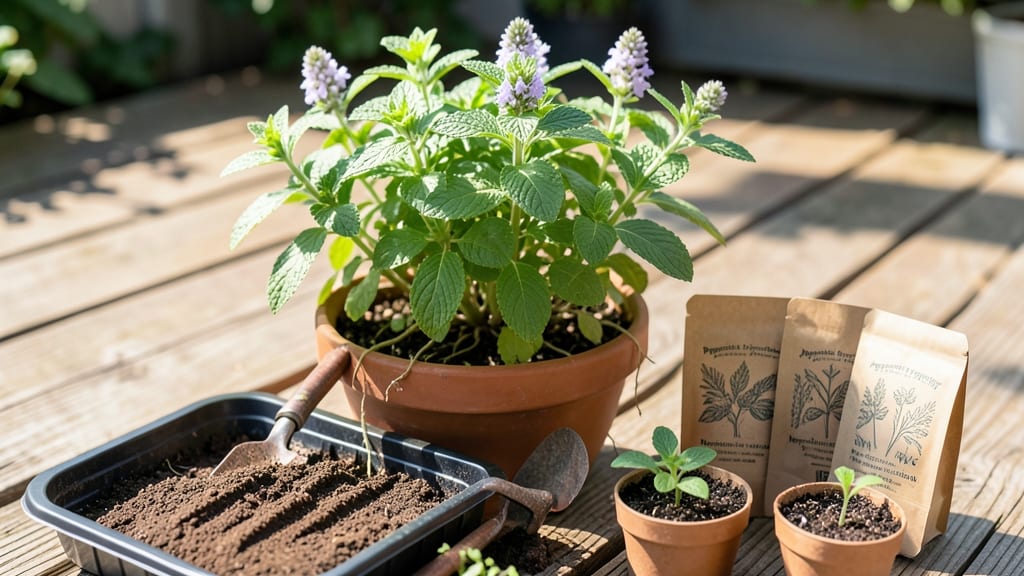
Growing peppermint from seed gives you a fast-growing, fragrant herb for tea and remedies—just don’t plant it where you want it to stay. 🌱 The secret to success lies in patience (seeds take 2-3 weeks to germinate) and the right conditions: moist, well-draining soil and bright but indirect light.
Unlike cuttings, seeds let you grow true peppermint without worrying about root rot or disease from store-bought plants.
You’ll need a shallow container, seed-starting mix, and a spray bottle for gentle watering—no fancy equipment required. Plant seeds just 1/8 inch deep, spacing them 12 inches apart since peppermint spreads aggressively. Thin seedlings to the strongest ones, or you’ll end up with a mint monster crowding out everything else.
The first true leaves appear in about 10-14 days, and that’s when the real fun begins.
Once seedlings have 2-3 sets of leaves, transplant them outdoors after the last frost or keep them indoors near a sunny window. Peppermint thrives in 4-6 hours of sunlight daily and needs consistent moisture—think damp, not soggy.
The leaves will turn a vibrant green, and within 6-8 weeks, you’ll have enough for tea, remedies, or sharing with neighbors (who’ll thank you for the fresh supply).
Watch for slow growth at first—peppermint is a patient plant—and contain its roots with a buried pot or barrier if it starts spreading beyond your garden. Harvest leaves regularly to encourage bushier growth, and avoid overwatering, which leads to yellowing.
With these simple steps, you’ll have a thriving peppermint patch in no time—just be ready to enjoy (and control) its rapid growth.
📚 In This Guide
- What you need
- Instructions
- Tips and common mistakes
- Wrapping up and next steps
What you need
- ● Peppermint seeds: 1 packet (500–1,000 seeds, non-GMO preferred for best flavor and growth). Look for Mentha × piperita varieties.
- ● Seed-starting mix: 1–2 bags (1–2 cubic feet) of high-quality, sterile potting soil (avoid garden soil—it may contain pathogens).
- ● Containers: Seed trays or small pots (4–6 inches deep) with drainage holes, or
- ● A shallow tray with cell inserts (for organized planting).
- ● Grow lights or sunny windowsill: A full-spectrum LED grow light (12–16 hours/day) or a south-facing window (6+ hours of sunlight).
- ● Misting bottle or spray nozzle: For gentle watering without disturbing seeds.
- ● Plastic wrap or humidity dome: To retain moisture while seeds germinate.
- ○ Fertilizer (optional but helpful): A balanced, water-soluble fertilizer (5-5-5 or 10-10-10) for seedlings.
- ○ Fine-mesh screen or paper towels: For pre-soaking seeds (optional but speeds up germination).
- ○ Heat mat (optional): A seedling heat mat (70–75°F) to encourage faster germination.
- ● Pruning shears or scissors: For transplanting seedlings later.
- ● Labels and markers: To track seed varieties and planting dates.
- ● Permanent containers (for transplanting): 12-inch pots or garden beds (peppermint spreads aggressively—use containers to control growth!).
Step-by-step instructions for growing peppermint from seed
Here's how to cultivate vigorous peppermint plants that'll be ready for harvest in just a few months.
🌱 Step 1: Prepare Your Containers and Soil Mix
Peppermint thrives in moist, well-draining soil, so start by filling 4-inch deep containers with a blend of 2 parts potting mix and 1 part perlite for aeration. I like to use biodegradable pots because peppermint spreads aggressively—you'll want to transplant easily without disturbing roots. Moisten the mix until it feels like a damp sponge, but not soggy.
Press the soil down gently to remove air pockets, then create small ¼-inch deep planting holes using your finger or a pencil. Peppermint seeds are tiny, so I use a toothpick to handle them carefully. Space your holes about 2 inches apart—this gives seedlings room to grow before you'll need to thin them.
💧 Step 2: Sow Seeds and Maintain Ideal Germination Conditions
Place 1-2 seeds in each hole, then cover them with a thin layer of soil—no deeper than ⅛ inch. Mist the surface lightly with water until evenly moist, but avoid soaking it. Peppermint seeds germinate best at 70-75°F, so if your home runs cooler, place the containers on a seedling heat mat. You should see first sprouts in 14-21 days.
Once germination begins, remove the heat mat and place the containers under grow lights or in a south-facing window where they'll get 6-8 hours of indirect light daily. Keep the soil consistently moist—peppermint roots need steady hydration, but don't let the mix sit in water. You'll know it's right when the top inch feels damp but not wet to the touch.
☀️ Step 3: Thin Seedlings and Provide Proper Light
When seedlings reach 2 inches tall, thin them so only the strongest plant remains in each container. Use clean scissors to snip the weaker stems at soil level—this prevents disturbing the roots of the plants you're keeping. Peppermint grows quickly, so you'll see first true leaves (the second set after the initial cotyledons) within 3-4 weeks.
At this stage, increase light exposure to 10-12 hours daily. Peppermint needs bright conditions to prevent leggy growth, so if stems stretch toward the light, move the grow lamp closer—2-3 inches above the plants is ideal. You'll notice strong seedlings have deep green leaves and thick stems. If leaves appear pale or stems get weak, they're not getting enough light.
🪴 Step 4: Transplant and Encourage Bushy Growth
After 6-8 weeks, when seedlings have 4-6 leaves, transplant them into 12-inch pots or directly into the garden. Peppermint spreads aggressively, so if growing in containers, choose deep pots with drainage holes. Fill the new pots with the same 2:1 potting mix and perlite blend, then water deeply to settle the soil around the roots.
Pinch back the top set of leaves when plants reach 6 inches tall to encourage bushier growth. This simple step prevents leggy stems and promotes thicker foliage. Water at the base to keep leaves dry—peppermint is prone to fungal issues if moisture lingers on the leaves. You'll see new side shoots emerge within 2-3 weeks, signaling healthy regrowth.
✂️ Step 5: Harvest and Maintain for Continuous Growth
Peppermint is ready for harvest 8-10 weeks after transplanting, when leaves reach 3-4 inches long. Cut stems just above a leaf node to encourage regrowth—this keeps the plant productive. For tea or remedies, harvest in the morning when essential oils are most concentrated. You'll get multiple harvests per season if you maintain consistent care.
To keep plants thriving, fertilize every 4-6 weeks with a balanced liquid fertilizer (10-10-10). Peppermint appreciates regular watering, so check soil moisture daily—it should never dry out completely. In colder climates, bring containers indoors before first frost or mulch heavily to protect roots. With proper care, your peppermint will keep producing fresh leaves for years.
Tips & tricks for growing vigorous peppermint from seed
These insider tricks will help you skip the common pitfalls and get your peppermint thriving faster than you'd expect.
Seedling Handling: Peppermint seeds are microscopic, so I recommend using a toothpick to place them in the ¼-inch deep holes—this precision prevents overcrowding. After sowing, gently pat the soil surface rather than pressing down, which can bury seeds too deep and prevent germination. A light misting with water (not soaking) keeps the soil evenly moist without disturbing seeds.
Lighting Strategy: The 6-8 hours of indirect light during germination is crucial, but don't overlook the transition to 10-12 hours daily after thinning. I use a simple LED grow light on a timer to automate this—position it 2-3 inches above seedlings to prevent stretching. Watch for leaves turning pale yellow as a sign they need more light, and adjust immediately to avoid leggy growth.
Transplanting Timing: The 6-8 week transplant window is your best chance to establish strong root systems before harvest. Choose a cloudy day for transplanting to reduce stress on seedlings. When moving to 12-inch pots, water thoroughly before and after to help roots settle into their new space. Peppermint's aggressive spread means you'll need to monitor roots—if they start escaping the pot's bottom, it's time to upgrade containers.
Harvest Optimization: For maximum essential oil concentration, harvest in the morning after the dew has dried but before the sun gets too intense. Cut stems just above a leaf node using clean scissors—this encourages regrowth from the node below. I've found that harvesting every 4-6 weeks keeps plants productive year-round, especially when combined with consistent watering and the balanced liquid fertilizer mentioned in the instructions.
Pro Tips for Peppermint From Seed
- These insider tricks will help you skip the common pitfalls and get your peppermint thriving faster than you'd expect.
- Seedling Handling: Peppermint seeds are microscopic, so I recommend using a toothpick to place them in the ¼-inch deep holes—this precision prevents overcrowding.
- Lighting Strategy: The 6-8 hours of indirect light during germination is crucial, but don't overlook the transition to 10-12 hours daily after thinning.
Frequently asked questions
How long does it take for peppermint seeds to germinate?
Peppermint seeds are notoriously slow to germinate, often taking 2–4 weeks (or even longer) in warm, moist conditions. For faster results, try soaking seeds in water for 24 hours or using a heat mat to maintain soil temps around 70–75°F (21–24°C). Patience is key—this herb isn’t known for speed!
Is peppermint hard to grow from seed?
Yes! Peppermint (Mentha × piperita) is difficult to grow from seed compared to cuttings, which root almost effortlessly. Many gardeners opt for nursery plants instead. If you’re committed to seeds, use fresh, high-quality seeds and keep soil consistently moist. Struggling? Try layering seeds lightly (don’t bury deeply) for better light exposure.
When will my peppermint plant be ready for harvest?
With proper care, you can harvest peppermint leaves as early as 6–8 weeks after germination, but the flavor intensifies as the plant matures (aim for 3–4 months for the best tea or remedy). For continuous harvests, pinch back new growth to encourage bushier plants. Pro tip: Harvest in the morning after dew dries for the strongest essential oils!
Can I grow peppermint indoors from seed?
Peppermint thrives indoors with 6+ hours of sunlight daily (a south-facing window or grow lights work). Use a well-draining pot (at least 12 inches wide) and keep soil moist. Just watch for spreading roots—peppermint is invasive! Contain it with a root barrier or grow it in a hanging basket to manage its vigor.
Why isn’t my peppermint growing? Troubleshooting tips
| Issue | Likely Cause | Fix It! |
|---|---|---|
| Slow/no germination | Cold soil or old seeds | Use a heat mat and fresh seeds (<1 year old). Try scarification (lightly sanding seeds) to break dormancy. |
| Leggy, weak stems | Not enough light | Move to a sunnier spot or add grow lights (12–16 hours/day). |
| Yellowing leaves | Overwatering or poor drainage | Let soil dry slightly between waterings. Ensure pots have drainage holes. |
| Pests (aphids, spider mites) | Humid conditions | Spray with neem oil or introduce ladybugs. Improve airflow. |
Bonus Tip: Should I start with seeds or cuttings?
If you’re new to peppermint, cuttings are the easier route—they root in water or soil within 2–3 weeks. Seeds are a gamble but rewarding for patient growers. For a hybrid approach, try stratifying seeds (mimicking winter cold) to boost germination rates. Either way, wear gloves—peppermint’s oils can irritate skin!
Wrapping up and next steps
Growing peppermint from seed is a rewarding journey that brings fresh, fragrant herbs right to your doorstep! 🌱 Whether you're brewing soothing tea, crafting natural remedies, or simply enjoying a homegrown garden, this fast-growing herb is a game-changer.
With the right care, patience, and a dash of enthusiasm, you’ll soon be harvesting lush, vibrant leaves to savor or share.
Ready to dive in? Start by gathering your supplies, following the steps with confidence, and don’t hesitate to experiment—maybe even try growing a few different varieties! Now’s the perfect time to plant those seeds and turn your green thumb into a peppermint powerhouse. Happy gardening! 🌿