
Picking
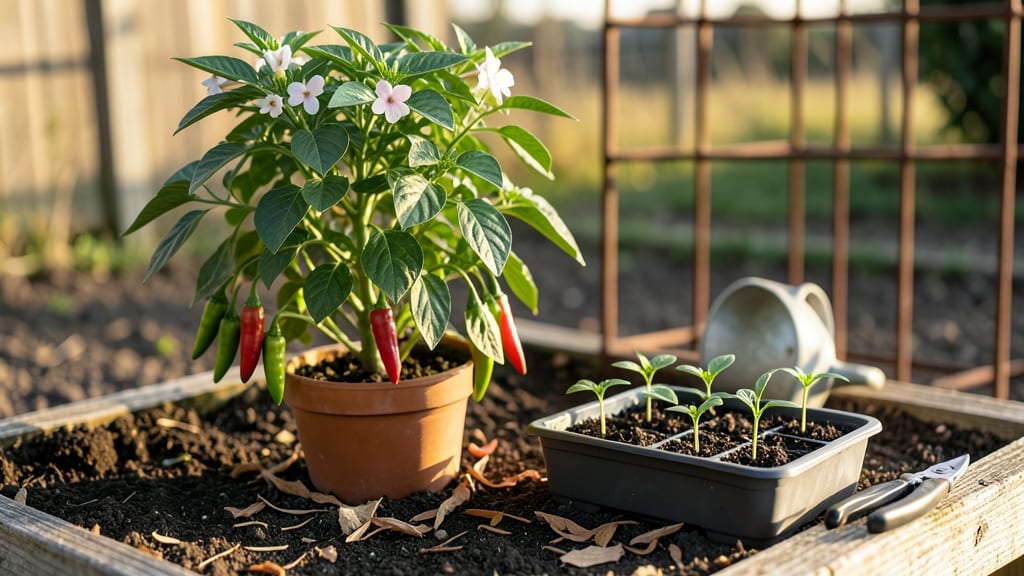
Tabasco peppers transform a tiny balcony into a fiery spice powerhouse. 🌱 I planted mine last spring in a 5-gallon fabric pot, and by mid-July, I had enough peppers to make my own hot sauce—no grocery store trip needed.
The key is starting with strong seedlings and giving them the right conditions from day one. These peppers thrive in full sun and well-draining soil, but they’re surprisingly adaptable. Even in containers, they’ll grow 3-4 feet tall if you provide sturdy support.
Water consistently—about 1 inch per week—but let the top inch of soil dry between waterings to prevent rot. The first harvest comes 60-70 days after transplanting, and the heat builds as the season progresses.
What you’ll end up with is a compact, high-yield plant that produces small but mighty peppers packed with flavor. The vertical growth habit makes them perfect for small spaces, and the peppers mature in clusters, so you’ll have a steady supply for cooking or drying.
Just be ready for the heat—these aren’t for the faint of heart! Common challenges include overwatering and poor airflow, so spacing plants 12-18 inches apart (or using a trellis in containers) keeps them healthy.
Start indoors 8-10 weeks before your last frost if you’re in a cooler climate, and always use fresh, fertile soil to give them the best start.
📚 In This Guide
- What you need
- Instructions
- Tips and common mistakes
- Wrapping up and next steps
What you need
- ● Tabasco pepper seeds or seedlings: Choose a variety like Capsicum frutescens (e.g., 'Tabasco,' 'Carolina Reaper,' or 'Habanero'). Start with 3–5 plants for a small harvest.
- ● Containers: Vertical planters or trellises (e.g., 5–10 gallon fabric grow bags or hanging pockets for each plant).
- ● Drainage holes are a must—no soggy roots allowed!
- ● Potting mix: Use a well-draining, nutrient-rich mix (e.g., 50% coco coir, 30% perlite/vermiculite, 20% compost). Avoid garden soil—it compacts too easily!
- ● Fertilizer: Balanced liquid fertilizer (e.g., 10-10-10) for seedlings.
- ● High-phosphorus fertilizer (e.g., 5-10-10) once flowering begins.
- ● Support system: Install trellises, stakes, or cages (e.g., 3–4 ft tall bamboo stakes) to guide vines upward.
- ● Pruning shears or scissors: For trimming vines and shaping plants.
- ● Watering can or spray bottle: Peppers hate soggy feet—aim for 1 inch of water per week.
- ● Mulch: Straw or shredded leaves to retain moisture and suppress weeds.
- ● Grow lights: If growing indoors, use full-spectrum LEDs (12–16 hrs/day) for seedlings.
- ● Glove & eye protection: Just in case your peppers get too spicy to handle!
- ● Harvesting tools: Small pruners or a sharp knife for clean cuts.
Step-by-step instructions for planting Tabasco peppers vertically
Here's how to grow fiery Tabasco peppers in a space-saving vertical system that keeps plants healthy and productive.
🌱 Step 1: Choose and Prepare Your Vertical Growing System
Start with a sturdy 5-gallon fabric grow bag or 12-inch deep wall-mounted pocket planter—both work perfectly for this project. The fabric bag lets roots breathe while the wall planter saves floor space. Cut a small slit in the bottom of the bag if it doesn't have drainage holes, or ensure your wall planter has at least 4 drainage holes spaced evenly.
Fill the container 3/4 full with a well-draining mix of 50% potting soil and 50% perlite. Tabasco peppers hate soggy roots, so this blend prevents rot while still holding moisture. Tap the container gently to settle the mix without compacting it—you want fluffy soil that won't suffocate roots.
☀️ Step 2: Plant Seedlings at the Right Depth and Spacing
Dig a hole in the center of your container that's twice as wide as the seedling's root ball but only as deep as the root ball itself. Tabasco peppers grow best when planted slightly shallow—they'll develop stronger root systems this way. Place your seedling in the hole and fill around it with the remaining soil, pressing gently to eliminate air pockets.
For vertical growth, install a 3-foot bamboo trellis or metal tomato cage immediately after planting. Tie the main stem loosely to the support with soft plant ties—you'll adjust as it grows. Space multiple plants 12 inches apart if using a larger container, but since we're growing vertically, one plant per container works perfectly.
💧 Step 3: Water and Fertilize for Strong Vertical Growth
Water thoroughly until water runs freely from the drainage holes, then let the container drain completely. Tabasco peppers need consistent moisture but will rot if kept soggy. After initial watering, wait until the top inch of soil feels dry before watering again—this usually means every 2-3 days in warm weather.
Feed with a balanced liquid fertilizer (10-10-10) diluted to half-strength every 2 weeks starting when you see the first flowers. The vertical structure means you'll need to fertilize more frequently than ground plants—roots can't spread as widely. You'll know you're doing it right when new leaves appear with a deep green color and the plant grows 1-2 inches per week.
✂️ Step 4: Prune and Train for Maximum Vertical Yield
When your Tabasco reaches 24 inches tall, pinch off the top set of leaves just above a leaf node with 3-4 leaves. This encourages bushier growth and more fruiting branches. Remove any suckers (shoots growing from the stem junction) that appear below the first flower cluster—these drain energy from fruit production.
Gently weave new growth through the trellis as it appears, tying stems loosely every 6-8 inches. The vertical support helps prevent the peppers from touching the ground, reducing disease risk. You'll see the first peppers form 60-70 days after planting—harvest when they're 1-2 inches long for classic Tabasco heat.
🌿 Step 5: Maintain Through Harvest Season
Continue watering when the top 2 inches of soil feel dry, and fertilize monthly with a low-nitrogen (5-10-10) formula once fruiting begins. The vertical system means you'll need to check for pests like aphids more frequently—spray with neem oil if you spot any. You'll know your plants are thriving when they produce continuous new flowers and fruit sets overlap at different stages.
Harvest peppers in the morning when they're firm and vibrant. For classic Tabasco sauce, use only the smallest red peppers (1-1.5 inches). Wear gloves—they pack serious heat! With proper care, your vertical Tabasco plant will produce 50-100 peppers per season, enough for multiple batches of homemade sauce.
Tips & tricks for perfect vertical Tabasco pepper growth
These space-saving secrets will help your fiery peppers thrive in tight quarters.
Container Selection: The 5-gallon fabric grow bag or 12-inch deep wall planter isn't just about space—it's about airflow. Fabric bags allow roots to breathe while preventing compaction, which is crucial for Tabasco peppers that hate soggy conditions. If using a wall-mounted planter, make sure the drainage holes are evenly spaced to prevent water pooling at the bottom. I always test my containers first by filling them with water to check for leaks before planting.
Soil Mix Matters: That 50/50 blend of potting soil and perlite isn't arbitrary—it's the perfect balance for Tabasco peppers. The perlite creates air pockets that prevent root rot while still holding enough moisture for consistent growth. When filling your container, tap it gently on the counter to settle the mix without compacting it. You want soil that's light and fluffy, almost like a cloud that won't suffocate your plant's roots.
Pruning for Productivity: The 24-inch height trigger for pinching isn't random—it's when your Tabasco starts developing its main lateral branches. When you see that first flower cluster appear below the 24-inch mark, that's your cue to remove any suckers growing below it. These energy vampires drain resources from your peppers. I've found that removing suckers within 24 hours of appearance gives me the best results, as the plant redirects energy immediately to fruit production.
Harvest Timing: Those 1-1.5 inch peppers might seem small, but they pack serious heat! Harvesting at this size ensures maximum capsaicin content while keeping the peppers tender enough for classic Tabasco sauce. I always harvest in the morning when the peppers are firmest and most vibrant. The smaller peppers also have thinner skins, which makes them easier to process for sauce-making. Remember, the first peppers take about 60-70 days to develop, but subsequent ones will come faster as your plant matures.
Pro Tips for Planting Tabasco Peppers
- These space-saving secrets will help your fiery peppers thrive in tight quarters.
- Container Selection: The 5-gallon fabric grow bag or 12-inch deep wall planter isn't just about space—it's about airf...
- Soil Mix Matters: That 50/50 blend of potting soil and perlite isn't arbitrary—it's the perfect balance for Tabasco p...
Frequently asked questions
Got questions about growing your own Tabasco peppers? You’re not alone! Here are some of the most common concerns—and answers—to help you grow a thriving vertical spice garden.
When is the best time to plant Tabasco peppers?
Tabasco peppers thrive in warm soil (at least 60°F/15°C) and need full sun (6+ hours daily). Start seeds indoors 8–10 weeks before your last frost, then transplant outdoors after all danger of frost has passed. In warmer climates (Zones 9–11), you can direct-sow in early spring.
Can I grow Tabasco peppers in containers or small spaces?
Tabasco peppers are perfect for vertical gardening or containers. Use a 5-gallon pot or larger with well-draining soil. Train vines upward with a trellis or cage to save space. Just ensure the container has drainage holes to prevent root rot.
Why aren’t my Tabasco peppers producing heat?
Several factors can dull spice levels:
- Inconsistent watering (keep soil evenly moist but not soggy).
- Nutrient deficiencies (use a balanced fertilizer like 10-10-10).
- Overcrowding (space plants 18–24 inches apart).
- Cool temperatures (below 70°F/21°C slows heat production).
How do I protect Tabasco peppers from pests?
Common pests like aphids, spider mites, and whiteflies can stress your plants.
- Preventively: Use neem oil or insecticidal soap.
- Physically: Install floating row covers early in the season.
- Encourage predators: Ladybugs and lacewings love these pests!
What can I do with excess Tabasco peppers?
Don’t let your harvest go to waste!
- Dry and grind into homemade Tabasco sauce (ferment peppers in vinegar).
- Freeze for later use in salsas, soups, or marinades.
- Share with neighbors—fresh peppers make great gifts!
- Preserve in oil or vinegar for long-term storage.
Wrapping up and next steps
Growing your own Tabasco peppers is a rewarding journey—whether you’re a spice enthusiast or a space-saving gardener! With the right vertical setup, you can enjoy fresh, fiery peppers year-round, even in small areas. Start small, experiment with varieties, and let your green thumb shine!
Ready to take the next step? Try planting a few seeds today and watch your vertical spice garden thrive! 🌱 For more tips, check out our guide on harvesting and preserving Tabasco peppers.