
Picking
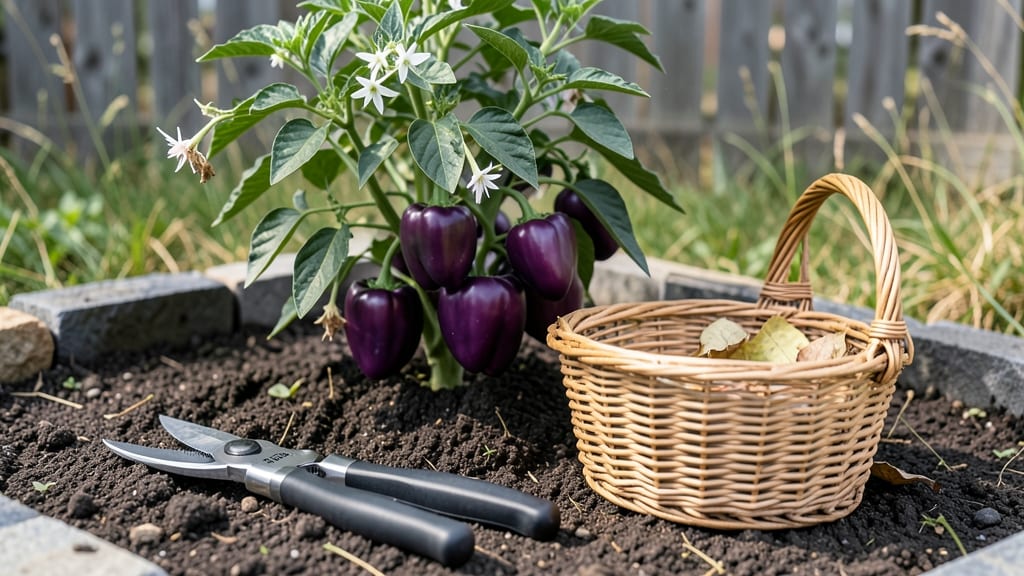
Purple peppers taste sweeter and milder than green peppers but often less fruity than fully ripe red peppers, with a subtle berry-like undertone and a firmer texture. Their flavor intensifies as they ripen toward red.
Purple peppers pack a unique flavor profile that sets them apart from their green and red counterparts. 🔥 The natural sugars in these peppers develop as they ripen, but unlike red peppers, they lack the deep, jammy sweetness that comes with full maturation.
Instead, you'll find a gentle, almost floral sweetness with hints of berries—think blueberries or blackberries—rather than the tropical fruit notes you might expect.
This makes them perfect for dishes where you want a mild yet distinctive flavor, like fresh salsas or raw salads where their color adds visual appeal without overpowering other ingredients.
What's fascinating is how their texture plays into the experience—they stay firmer longer than red peppers, which means they hold their shape better when roasted or grilled. This characteristic makes them ideal for stuffing or slicing into ribbons for garnishes.
I've found that purple peppers shine in recipes where you want a touch of sweetness without the heat or intensity of red peppers, like in Mediterranean-inspired dishes or when paired with creamy cheeses and nuts.
💡 In This Article
- Purple Pepper Flavor Chemistry: Why They Taste Different
- Best Culinary Uses for Purple Peppers vs Red Peppers
Purple pepper flavor chemistry: why they taste different
The unique taste of purple peppers stems from their biochemical composition during the ripening process. Unlike green peppers, which contain higher levels of capsaicin (the compound responsible for heat), purple peppers have minimal capsaicin—typically around 0.01-0.05% capsaicin content—making them naturally milder.
What sets them apart is their anthocyanin content, the same pigments that give blueberries and blackberries their color. These antioxidants contribute to that subtle berry-like undertone and a slightly earthier depth compared to red peppers.
As peppers ripen from green to red, their sugar content increases dramatically—green peppers have about 3-4 grams of sugar per 100 grams, while red peppers can reach 6-8 grams.
Purple peppers fall in between, with roughly 4-5 grams of sugar per 100 grams, giving them that gentle sweetness.
The key difference lies in their volatile compounds: purple peppers contain more terpenes and esters (aromatic molecules) that create floral and fruity notes, while red peppers develop more carotenoid-derived compounds that contribute to their deeper, jammy sweetness.
This is why purple peppers often taste like a cross between a bell pepper and a berry.
Texture plays a role too. Purple peppers maintain a firmer bite than red peppers due to higher cellulose content in their cell walls. This structural integrity means they hold up better in cooking—ideal for roasting or stuffing—without turning mushy.
The firmer texture also affects flavor release: when sliced thinly, the cells rupture more slowly, allowing those berry-like notes to develop gradually on the palate. 🌿 This makes them particularly satisfying in raw applications, where their crunch and sweetness complement fresh ingredients.
What most people don't realize is how temperature affects their flavor profile. When cooked at 375°F (190°C) or higher, purple peppers develop a caramelized edge that enhances their natural sweetness, while lower temperatures (300°F/150°C) preserve their delicate berry notes.
This is why they excel in dishes where you want to highlight their unique character without overpowering other flavors, like in raw salads or lightly sautéed sides.
Comparing them to red peppers reveals another interesting detail: purple peppers have a slightly higher moisture content (92-94% vs. 90-92% in red peppers), which contributes to their juicier texture when raw.
This moisture also helps distribute their sugars more evenly, creating that balanced sweetness without the concentrated fruitiness of fully ripe red peppers. The trade-off? Their flavor is more subtle, which is why they work beautifully in dishes where you want a supporting rather than dominant flavor.
One final twist: purple peppers' flavor actually intensifies as they begin to turn red. The transition phase (when they're 50-70% purple with red streaks) is where their sweetness peaks before becoming more fruity.
This is why selecting peppers at this stage gives you the best of both worlds—a milder sweetness with just a hint of that deeper red pepper character. 🍇