
Planting
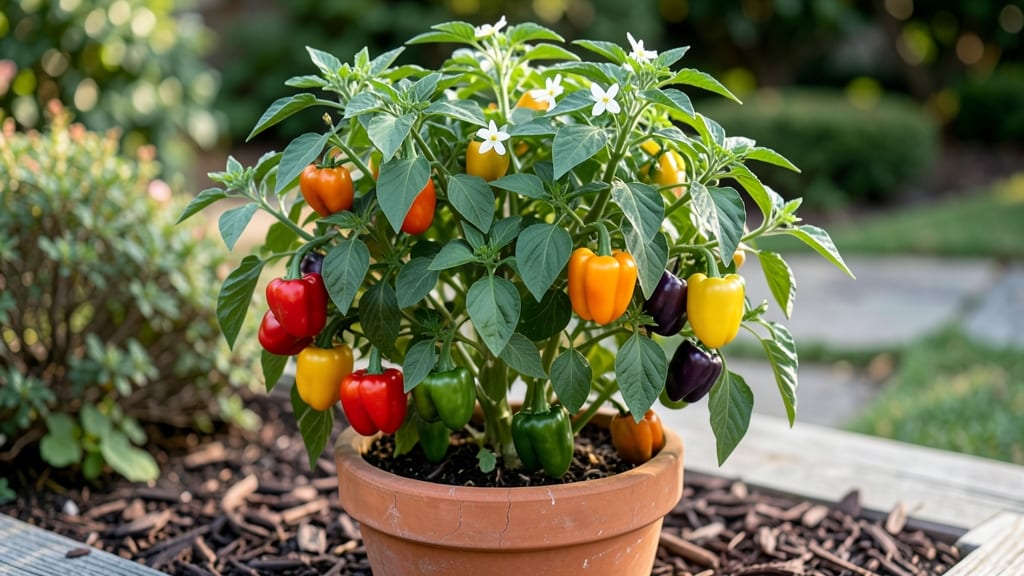
Growing rainbow pepper plants transforms your garden into a living rainbow. 🌈 These vibrant peppers aren't just colorful—they're packed with flavor and grow faster than you'd expect, with mature peppers in just 55 days.
The secret lies in pole training, which maximizes space and boosts production while keeping those stunning hues vibrant from start to finish.
Start with well-draining soil rich in compost, and place your plants where they'll get 6-8 hours of sunlight daily. Pole training isn't complicated—just tie the main stem to a sturdy trellis as it grows, and watch those peppers climb higher for easier harvesting.
Water consistently, keeping the soil moist but never soggy, and feed with a balanced fertilizer every 2-3 weeks once flowers appear.
By mid-summer, you'll be snipping peppers in every shade of the rainbow—red, yellow, orange, and even purple—all on the same plant. The pole system keeps fruits off the ground, reducing rot and pests while making harvesting a breeze.
Plus, the vertical display adds a showstopping element to your garden that neighbors will envy.
Rainbow peppers thrive in containers or garden beds, making them perfect for small spaces or urban gardens. Just ensure your pots are at least 12 inches deep and provide support from the start.
The real magic happens when you let them ripen fully—some peppers change color multiple times as they mature, creating an ever-shifting palette of flavors and hues.
📚 In This Guide
- What you need
- Instructions
- Tips and common mistakes
- Wrapping up and next steps
What you need
- ● Rainbow Pepper Seeds: 3–5 seeds per plant (or 10–15 for multiple plants). Choose heirloom varieties like 'Rainbow Mix' or 'Colorado Rainbow' for a mix of colors.
- ● Growing Containers or Garden Bed: Containers: 5–7 gallon pots (minimum 12" deep) with drainage holes. Use 3–4 containers if planting multiple pepper varieties.
- ● Garden Bed: Full sun (6+ hours/day) with well-draining soil. Space plants 18–24 inches apart in rows 2–3 feet apart.
- ● Pole or Trellis System: 6–8 ft tall bamboo stakes, wooden posts, or a tomato cage (modified for peppers). Secure with soft plant ties or twine.
- ● Potting Mix: High-quality, sterilized mix with compost (e.g., 60% peat moss, 30% perlite, 10% compost). Avoid garden soil—peppers hate soggy roots!
- ● Fertilizer: Balanced Fertilizer (10-10-10 or 5-5-5): 1 tbsp per plant at planting.
- ● Organic Option: Composted manure or worm castings (½ cup per plant).
- ● Mulch: Straw or shredded leaves (2–3 inches thick) to retain moisture and suppress weeds.
- ● Essential Tools: Trowel or hand shovel for transplanting.
- ● Pruning shears (sterilized with rubbing alcohol).
- ● Watering can or drip irrigation system (peppers hate wet leaves!).
- ● Gloves (to protect from thorns on some varieties).
- ○ Optional (But Helpful!): Plant Support: Velcro plant ties or soft cloth strips (gentler on stems).
- ● Shade Cloth: 30–50% shade for seedlings if temperatures exceed 90°F.
- ● Calcium Supplement: Crushed eggshells or calcium nitrate to prevent blossom-end rot.
- ● Grow Lights: LED bulbs (for indoor starts or short-season climates).
- ● Warmth: Rainbow peppers thrive in 70–90°F soil temps. Start seeds indoors 8–10 weeks before last frost or sow directly after soil warms (use a soil thermometer!).
- ● Sunlight: Commit to a sunny spot—no compromises! Peppers are sun-worshippers.
- ● Patience: Pole-trained peppers take 55–70 days to maturity, but the wait is worth the colorful harvest!
Step-by-Step instructions for growing pole-trained rainbow peppers
Here's how to coax vibrant, productive rainbow peppers up a sturdy trellis in just 55 days.
🌱 Step 1: Start Seeds Indoors for a Head Start
Fill 4-cell seed trays with sterile seed-starting mix and plant 2 seeds per cell at ¼-inch depth. The reason for two seeds is that germination rates vary—you'll thin to the strongest sprout later. Keep the soil consistently moist but not soggy, and maintain 70-80°F warmth using a seedling heat mat if needed.
Place the trays under grow lights positioned 2-3 inches above the seedlings, providing 14-16 hours of light daily. Without sufficient light, seedlings stretch weakly toward any available source. You'll know they're getting enough when the stems stay thick and sturdy, not spindly. Germination typically occurs in 7-14 days, but some varieties may take longer.
🪴 Step 2: Transplant Seedlings to Containers with Support
Once seedlings develop 3-4 true leaves (about 6-8 weeks after sowing), transplant them into 5-gallon containers filled with well-draining potting mix. Each container should hold one pepper plant to avoid competition. Bury the stem up to the first set of leaves—this encourages stronger root growth later.
Install a 5-foot tall bamboo stake or trellis in each container immediately after transplanting. Gently tie the main stem to the stake with soft plant ties, leaving 6 inches of slack for growth. Peppers are vining plants that climb naturally, but they need support early to avoid flopping over as they mature. Water deeply after transplanting to help roots establish in their new home.
☀️ Step 3: Train Vines and Provide Consistent Care
As your peppers grow, guide the main stem upward along the trellis, tying it at 12-inch intervals with plant ties. Once the plant reaches the top of the trellis (about 4-5 weeks after transplanting), pinch off the growing tip to encourage lateral branching. This creates a bushier plant with more fruiting sites.
Peppers thrive in full sun (6+ hours daily) and need regular watering—keep the soil evenly moist but never waterlogged. A good rule of thumb is to water when the top 1-2 inches of soil feel dry. Fertilize every 2 weeks with a balanced organic fertilizer (10-10-10) to support vibrant fruit production. You'll notice new flowers forming along the branches within 3-4 weeks after pinching.
✂️ Step 4: Prune and Harvest for Continuous Production
Remove any suckers (shoots growing in the leaf axils) to direct the plant's energy toward fruit production. Also, prune off any yellowing or diseased leaves to improve air circulation. When peppers reach 3-4 inches long and develop their signature colors, they're ready for harvest. Use clean pruners to snip the stem just above the fruit.
Harvesting encourages more flowers and fruit to develop. With proper care, your pole-trained rainbow peppers will produce continuously through the season. The key is to harvest regularly—peppers left on the vine too long become overripe and stop producing new blooms. Store harvested peppers in a cool, dark place for up to 2 weeks to enjoy their vibrant colors and flavors all season long.
Tips & tricks for pole-trained rainbow peppers
Here's what nobody tells you about maximizing those vibrant pepper vines—lessons I learned after watching my first batch flop from flimsy supports.
Lighting is Everything: Those 14-16 hours of grow light aren't just about duration—they're about quality too. If your seedlings stretch toward the light, they're not getting enough intensity. Move the lights closer to just 1-2 inches above the tallest seedlings. I use a timer to automate this, and it's saved me from leggy disasters every time. The goal is thick, sturdy stems that can support themselves later.
Transplanting Hack: When you bury that stem up to the first leaves during transplanting (Step 2), you're not just hiding the stem—you're creating a stronger root system. This technique, called "stem burial," encourages roots to grow from those buried nodes. Just make sure your 5-gallon containers have drainage holes, or you'll end up with soggy roots that can't support your climbing plant.
Trellis Timing: The 4-5 weeks it takes to reach the top of your 5-foot trellis might seem long, but here's the secret: Start tying at 12-inch intervals from day one. This prevents the plant from getting top-heavy and flopping over. I use soft plant ties that can stretch as the plant grows—no need to retie every week. And remember, that 6-inch slack you leave when tying? It's not just for show; it gives the stem room to thicken.
Pruning Strategy: When you pinch off that growing tip at the top, you're not stopping growth—you're redirecting it. The plant will respond by producing more lateral branches, each capable of bearing fruit. I've found that doing this when the main stem reaches the trellis top (around 4-5 weeks) gives the best balance between vine strength and fruit production. And those suckers? Remove them within 24 hours of appearance—they're energy vampires that steal from your fruit production.
Pro Tips for Rainbow Pepper Plant
- Here's what nobody tells you about maximizing those vibrant pepper vines—lessons I learned after watching my first batch flop from flimsy supports.
- Lighting is Everything: Those 14-16 hours of grow light aren't just about duration—they're about quality too.
- Transplanting Hack: When you bury that stem up to the first leaves during transplanting (Step 2), you're not just hiding the stem—you're creating a stronger root system.
Frequently asked questions
How long does it take for rainbow pepper plants to produce peppers?
Rainbow pepper plants are fast growers! With proper care, you can expect to see tiny peppers forming in about 55–65 days after transplanting. The full-color spectrum (red, yellow, orange, purple, and green) typically appears 70–80 days post-transplant, depending on sunlight and temperature. Pro tip: Harvest early for sweeter flavors!
Can I grow rainbow peppers in containers, or do they need a garden bed?
Rainbow peppers thrive in 5-gallon containers or larger, as long as they get 6+ hours of sunlight daily. Use well-draining soil with compost, and ensure the pot has drainage holes. If space is tight, opt for bush varieties—they’re compact but still productive. Bonus: Containers let you move plants to sunny spots easily!
What’s the best temperature range for rainbow pepper plants?
Rainbow peppers love warmth! Ideal temps are 70–85°F (21–29°C) during the day and 60–70°F (15–21°C) at night. Below 55°F (13°C), growth slows, and flowers may drop. Use row covers or a mini greenhouse if your climate dips. Warning: Avoid frost—these peppers are not cold-hardy.
Why are my rainbow pepper flowers falling off before fruiting?
This usually happens due to temperature stress (too hot or cold), lack of pollinators, or overwatering. Hand-pollinate by gently shaking plants or using a small brush. Ensure temps stay consistent (avoid sudden drops) and water at the base (not leaves). Quick fix: Try a light spray of water on flowers to attract bees!
Are rainbow peppers spicier than regular bell peppers?
Not at all! Rainbow peppers are mild and sweet, just like bell peppers, but with a burst of color. The variety you choose (e.g., ‘Rainbow Mix’ or ‘Colorado’) determines size and heat—most stay 0–5,000 Scoville units (bell pepper level). Fun fact: The more colors, the sweeter the flavor!
Can I save seeds from rainbow peppers for next year?
Yes! Harvest mature peppers, scoop out seeds, rinse them, and dry on a paper towel for 3–5 days. Store in a cool, dark place (like a jar in the fridge) for up to 2 years. Note: Colors may vary slightly year-to-year, but you’ll likely get a fun mix of hues again!
Wrapping up and next steps
Growing a rainbow pepper plant is a vibrant, rewarding journey that brings bursts of color and flavor to your garden in just 55 days! 🌈 With the right setup—whether pole-trained or in containers—you’ll enjoy a bountiful harvest of sweet, crunchy peppers that double as stunning decor.
Whether you’re a seasoned gardener or a curious beginner, this colorful adventure proves that growing your own food can be as fun as it is fulfilling.
Ready to dive in? Start by gathering your supplies and plant those seeds—your future harvest (and Instagram-worthy garden) is waiting! 🌱✨