
Vegetables
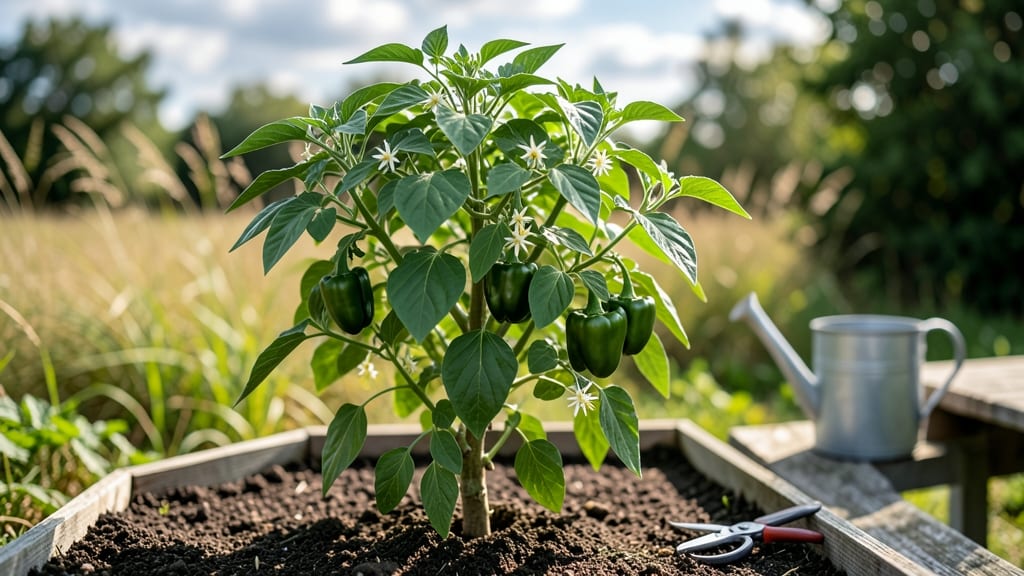
Sweet green peppers thrive when you train them on poles—no bitter surprises here. 🌱 I learned the hard way that letting them sprawl leads to fewer fruits and more pests, but vertical growing changes everything.
These aren’t your typical bell peppers; they stay sweet, crisp, and perfect for snacking straight off the vine. The secret starts with 6-8 hours of direct sun and well-draining soil mixed with compost.
Plant seeds indoors 8-10 weeks before last frost, then transplant seedlings 18 inches apart on sturdy poles. Water consistently—1-1.5 inches per week—but avoid wetting leaves to prevent disease. You’ll harvest 3-4 weeks after flowering, with each plant yielding 10-20 peppers if pollinated well.
The key? Hand-pollinate if bees are scarce, and prune suckers to focus energy on fruit production. Bitterness fades when you pick them young and green. Works in containers too—just use a 5-gallon pot and a trellis. Here’s how to keep them productive all season.
📚 In This Guide
- What you need
- Instructions
- Tips and common mistakes
- Wrapping up and next steps
What you need
- ● Sweet Green Pepper Seeds: Choose disease-resistant varieties like 'Sweet Banana,' 'California Wonder,' or 'Gypsy.' Quantity: 3-5 seeds per plant (start 2-3 plants for a small harvest).
- ● Potting Mix: High-quality, well-draining seed-starting mix (avoid garden soil). Quantity: 1 small bag (or DIY: 60% peat moss, 30% perlite, 10% compost).
- ● Containers or Seed Trays: Biodegradable pots (3-4" deep) or cell trays with drainage holes. Quantity: 1 container per seed (or 1 tray with 12+ cells).
- ● Fertilizer: Seedling Stage: Balanced liquid fertilizer (10-10-10) or fish emulsion.
- ● Transplant Stage: Slow-release granular fertilizer (10-20-20) or compost.
- ● Grow Lights or Sunny Window: LED grow lights (12-16 hrs/day) or a south-facing window (60°F+).
- ● Pole Trellis or Cage: 6-8 ft tall bamboo stakes, tomato cages, or a DIY wire trellis (2-3 per plant).
- ● Basic Tools: Small hand trowel, pruning shears, spray bottle (for watering seedlings).
- ● pH Test Kit: To ensure soil pH is 6.0–6.8 (peppers are picky!).
- ● Mulch: Straw or shredded leaves (1–2" layer) to retain moisture and deter weeds.
- ○ Optional (But Helpful!): Epsom salt (1 tbsp per gallon of water) for magnesium boosts.
- ● Row covers (floating fabric) to protect from pests.
- ● Drip irrigation kit for consistent watering.
Step-by-Step instructions for growing pole-trained sweet green peppers
Here's how to transform a small space into a pepper powerhouse using vertical training—no sprawling plants, just upward growth and fewer pests.
🌱 Step 1: Select and Prepare Your Pepper Varieties
Choose sweet green pepper varieties bred for vertical growth, like 'Sweet Banana' or 'Aristotle.' These varieties produce fewer seeds and thicker walls, reducing bitterness. Start seeds indoors 8-10 weeks before your last frost in 72°F soil—peppers are heat-lovers and won't germinate well in cool conditions.
Use biodegradable pots for seedlings to avoid disturbing roots later. Plant 2-3 seeds per pot at ¼-inch depth—pepper seeds are large, so don’t bury them too deep. Once seedlings develop true leaves (not the initial cotyledons), thin to the strongest one per pot. You’ll need 4 plants for a full harvest, so plan accordingly.
🪴 Step 2: Set Up Your Pole System and Plant
Install 5-6 foot tall trellis poles or a cage system in your garden bed or containers. Use galvanized wire or sturdy bamboo stakes—peppers get heavy with fruit, so the structure must support 10+ pounds per plant. Space poles 18-24 inches apart to allow airflow and easy harvesting.
Transplant seedlings outdoors after all danger of frost and soil reaches 60°F. Bury seedlings deeper than their pots—pepper stems develop roots along their length, giving them extra stability. Water deeply at planting to settle soil and remove pots gently to avoid root damage. Mulch with 2-3 inches of straw to retain moisture and suppress weeds.
☀️ Step 3: Train and Prune for Vertical Growth
When plants reach 12 inches tall, tie the main stem to the pole with soft plant ties—never use wire, which can cut into stems. Prune side shoots (suckers) that grow in the V-shaped junction of the main stem and branches. Remove these suckers weekly to direct energy upward. You’ll see stronger central stems and more upward fruit production.
Peppers need full sun (6-8 hours daily) and consistent warmth. If your climate dips below 55°F at night, cover plants with frost cloth or move pots to a sheltered spot. You’ll notice slower growth or blossom drop if temperatures fluctuate—peppers are sensitive to cold snaps. Fertilize with a balanced 10-10-10 formula every 3-4 weeks to encourage fruit set.
💧 Step 4: Water and Harvest for Maximum Sweetness
Water deeply 1-2 times per week, aiming for 1 inch of water per week. Peppers are drought-tolerant but produce bitter fruit when stressed. Water at the base (not overhead) to prevent fungal diseases like anthracnose. You’ll know your watering is right when the soil feels damp 2 inches down but not soggy.
Harvest peppers when they reach 3-4 inches long and are firm to touch. Use pruning shears to cut stems—this encourages more fruit production. Sweetness peaks when peppers are fully green but still firm. If left on the plant too long, they’ll turn yellow or red and become less sweet. Store harvested peppers in the fridge for up to 2 weeks or freeze for longer storage.
✂️ Step 5: Extend the Season and Prevent Common Issues
To keep producing through fall, prune spent flowers and remove overripe peppers—this redirects energy to new growth. If your season is short, start a second batch indoors 4-6 weeks before the first frost and transplant into containers. Move pots to a sunny indoor spot or under grow lights for a winter harvest.
Watch for aphids or spider mites—they thrive in dry conditions. Spray plants with neem oil or insecticidal soap at the first sign of pests. You’ll see sticky residue on leaves if aphids are present. Rotate poles quarter-turn weekly to ensure even sunlight exposure—this prevents one-sided growth and maximizes fruit production.
Tips & tricks for pole-trained sweet green peppers
Transforming your garden into a vertical pepper paradise takes strategy—here's how to maximize flavor and yield while avoiding common pitfalls that turn sweet peppers bitter.
Variety Selection Matters: While 'Sweet Banana' and 'Aristotle' are excellent choices, don't overlook 'Carmen' or 'NuMex RNaky' for even thicker walls and less bitterness. These varieties are specifically bred to handle vertical training without compromising sweetness. I've found that starting with seeds from a reputable supplier like Johnny's Selected Seeds gives you the best germination rates at that critical 72°F soil temperature—any cooler and you'll see slower, uneven sprouting.
Support System Stability: The 5-6 foot poles must be anchored deeply—at least 18 inches into the ground—to prevent toppling when peppers reach their 10-pound weight limit. I recommend using T-posts for extra stability, especially in windy areas. For container gardens, secure poles to the sides of your pots using zip ties wrapped around the pot's edges. This prevents the entire system from tipping when you harvest heavy pepper clusters.
Pruning Precision: In Step 3, when you're removing those weekly suckers, focus on the V-shaped junctions where side shoots emerge. These suckers compete with your main stem for energy, so removing them early directs all resources upward. I've seen gardeners accidentally prune too aggressively—never remove more than one-third of the plant's foliage at once, or you'll shock the plant and reduce fruit production. Always prune with clean, sharp shears to prevent disease transmission between cuts.
Temperature Troubleshooting: Those 55°F nighttime lows can be deadly for peppers. If you notice blossoms dropping, it's a sure sign of temperature stress. Move your plants to a sheltered location or cover them with frost cloth immediately. For indoor winter growing, maintain temperatures between 65-75°F during the day and no lower than 58°F at night. A simple heat mat under containers can make all the difference in extending your growing season.
Pro Tips for Sweet Green Pepper
- Transforming your garden into a vertical pepper paradise takes strategy—here's how to maximize flavor and yield while avoiding common pitfalls that turn sweet peppers bitter.
- Variety Selection Matters: While 'Sweet Banana' and 'Aristotle' are excellent choices, don't overlook 'Carmen' or 'NuMex RNaky' for even thicker walls and less bitterness.
- Support System Stability: The 5-6 foot poles must be anchored deeply—at least 18 inches into the ground—to prevent toppling when peppers reach their 10-pound weight limit.
Frequently asked questions
Got questions about growing and enjoying sweet green peppers? You’re not alone! Here are some of the most common queries—plus quick, practical answers to help you grow a bountiful harvest without a hint of bitterness.
How do I prevent my sweet green peppers from turning bitter?
Sweet green peppers can develop bitterness if left on the vine too long (turning red) or stressed by heat, drought, or overcrowding. Harvest them when fully green but firm—about 60–70 days after transplanting. Keep soil consistently moist (but not soggy) and mulch to retain moisture. Avoid over-fertilizing with nitrogen, which can also trigger bitterness.
How long does it take for sweet green peppers to mature?
Sweet green peppers typically mature in 60–75 days from transplanting, depending on the variety and growing conditions. Check your seed packet for exact days, but aim to harvest when peppers are glossy, firm, and 3–4 inches long. Early varieties (like ‘Sweet Banana’ or ‘Aristotle’) may mature faster—sometimes in as little as 55 days!
Can I substitute sweet green peppers for red or yellow bell peppers in recipes?
Sweet green peppers are milder and slightly crunchier than their red or yellow counterparts, making them a great swap in stir-fries, stuffings, or salads. However, they lack the natural sweetness of ripe red/yellow peppers. For extra flavor, roast them first or pair with a touch of honey or balsamic vinegar to balance their brightness.
What pests or diseases should I watch for with sweet green peppers?
Common pests include aphids, spider mites, and hornworms—handpick larger pests or use neem oil for mild infestations. Diseases like powdery mildew or blight thrive in humid conditions, so ensure good airflow and avoid overhead watering. Rotate crops yearly to prevent soil-borne issues, and remove affected plants promptly to stop spread.
Can I grow sweet green peppers in containers or small gardens?
Yes! Sweet green peppers thrive in containers as long as the pot is at least 12–18 inches deep and has drainage holes. Use a lightweight potting mix and place the container in full sun (6+ hours daily). For small gardens, try pole training—trellising peppers vertically saves space and improves air circulation. Dwarf varieties like ‘Snackable’ or ‘Lunchbox’ are perfect for tight spaces!
Bonus Tip: How do I store harvested sweet green peppers?
Store peppers in the fridge crisper drawer (unwashed) for up to 1–2 weeks to retain crispness. For longer storage, blanch and freeze them whole or slice them for later use in cooked dishes. Never store them at room temperature—they’ll soften and spoil faster!
Wrapping up and next steps
Growing sweet green peppers in small spaces is not only possible—it’s rewarding! With the right pole-training techniques, you’ll enjoy a bountiful harvest of crisp, flavorful peppers without the bitterness. Whether you’re a beginner or a seasoned gardener, this method maximizes space and yields while keeping maintenance simple.
Ready to turn your tiny garden into a pepper paradise? Start by gathering your supplies, choose your favorite sweet variety, and get planting! 🌱🍃 Happy growing—and enjoy those delicious harvests soon!