
Picking
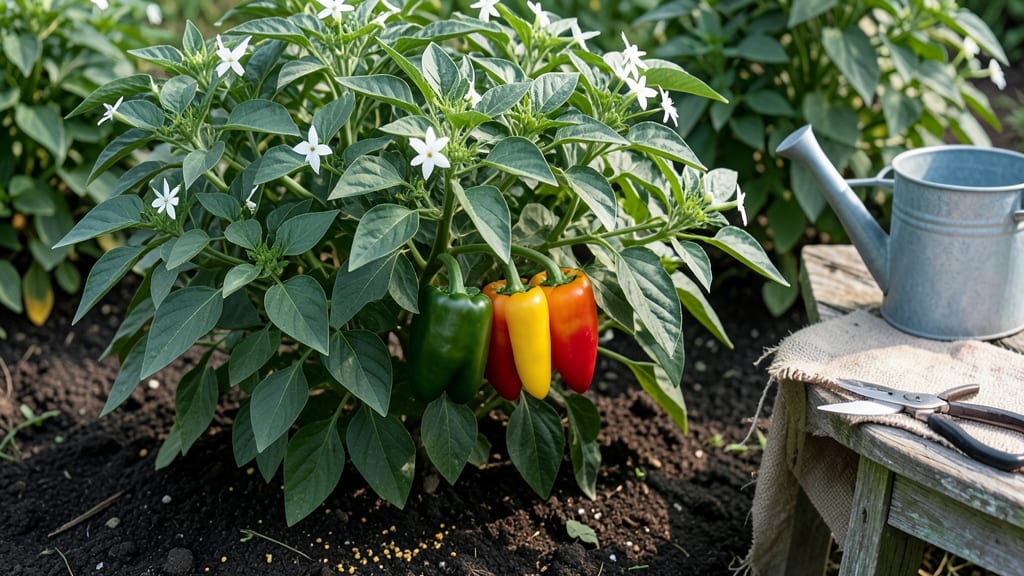
Growing Sweet Hungarian peppers means no more bland store-bought peppers—just bold, sweet heat in every bite, even in small spaces. 🌶️ These compact plants thrive on trellises, producing 10-15 peppers per plant with minimal fuss, and their thick walls make them perfect for stuffing or grilling.
The secret? Pole training turns them into vertical powerhouses while keeping flavor sharp and bitterness at bay.
Start with well-draining soil (mix in compost for extra sweetness) and plant after your last frost when soil hits 60°F. Space them 18 inches apart on sturdy trellises—they’ll climb 4-5 feet without sprawling.
Water deeply once a week, keeping soil moist but never soggy, and watch those peppers swell from 3-4 inches long by mid-summer. A balanced fertilizer every 4-6 weeks keeps them productive until frost.
By late summer, you’ll harvest glossy red, orange, or yellow peppers bursting with flavor—sweeter than bell peppers but with a subtle kick. The best part? They store for weeks in cool, dark spots, so you’ll enjoy homegrown heat long after the garden fades.
Even beginners crush this variety—just avoid overwatering (their biggest enemy) and watch them thrive.
Pro tip: Prune lower leaves to improve airflow, and pinch off early blooms for bigger, sweeter peppers later. Works in containers, raised beds, or small gardens—no excuses for store-bought blandness again. Ready to grow yours?
📚 In This Guide
- What you need
- Instructions
- Tips and common mistakes
- Wrapping up and next steps
What you need
- ● Sweet Hungarian Pepper Seeds: Choose a Capsicum annuum variety like ‘Sweet Hungarian’ or ‘Lamuyo.’ Aim for 3–5 seeds per plant (start 2–3 indoors for transplanting).
- ● Growing Containers or Soil: Containers: 5-gallon pots or larger (minimum 12" deep) with drainage holes. Use 3–5 containers for a small harvest.
- ● Garden Beds: Well-draining, loamy soil with a pH of 6.0–6.8. Amend with compost for fertility.
- ● Pole-Training Supports: Bamboo stakes (5–6 ft tall) or trellis netting for vertical growth.
- ● Soft plant ties or twine to secure vines (avoid wire, which can damage stems).
- ● Fertilizer: Balanced fertilizer (10-10-10) or compost for planting.
- ● Low-nitrogen, high-phosphorus fertilizer (5-10-10) when flowers appear to boost fruit production.
- ● Pruning shears (sterilized with rubbing alcohol).
- ○ Gloves (optional but helpful for handling prickly stems).
- ● Watering can or hose with a gentle spray nozzle (peppers hate soggy soil!).
- ● Mulch (straw or shredded leaves) to retain moisture and suppress weeds.
- ● Sunlight access: 6–8 hours of full sun daily (partial shade in extreme heat).
- ● Patience! Sweet Hungarian peppers take 70–90 days to mature from transplant.
- ● Row covers for early-season frost protection.
- ● Cucumber trellis or A-frame structure for larger setups.
- ● Liquid seaweed extract to boost stress resistance.
- ● Harvest basket or mesh bag to avoid bruising peppers.
Step-by-step instructions for growing Sweet Hungarian peppers pole-trained
Sweet Hungarian peppers thrive when given vertical support—here's how to coax their heat into compact spaces while keeping the flavor sweet and vibrant.
🌱 Step 1: Start Seeds Indoors for Early Heat
Begin seeds 8-10 weeks before your last frost date in 72-78°F soil. Use biodegradable peat pots (they transplant easily) filled with sterile seed-starting mix. Plant 2-3 seeds per pot just ¼ inch deep—too shallow and they won’t germinate; too deep and they’ll struggle to break through.
Cover with a humidity dome or plastic wrap to retain moisture, then place under grow lights (14-16 hours daily). Sweet Hungarian peppers need warmth to germinate—if your home runs cooler, use a seedling heat mat. You’ll see sprouts in 7-14 days, but don’t remove the dome until 50% have emerged to prevent damping-off.
🪴 Step 2: Transplant to Larger Pots with Vertical Support
Once seedlings have 2-3 true leaves (about 4-6 weeks after germination), transplant them into 5-gallon containers with well-draining potting mix. Sweet Hungarian peppers are heavy feeders—mix in 2 cups of compost per pot at planting. Install a 4-5 foot tall bamboo stake or trellis in the center of each container to support their climbing habit.
Tie the main stem loosely to the stake with soft plant ties as it grows. This prevents wind damage and encourages upward growth instead of sprawling. Place pots in full sun (6+ hours daily)—Sweet Hungarian peppers need intense light to develop their signature sweetness. If outdoors, wait until nighttime temperatures stay above 55°F to avoid stunting.
☀️ Step 3: Prune and Train for Compact, Productive Growth
When plants reach 12-18 inches tall, begin pruning side shoots to focus energy on the main stem. Remove any branches growing below the first 12 inches—these won’t produce fruit efficiently. For Sweet Hungarian peppers, pinch off flowers until the plant reaches the top of the stake (about 4-5 feet). This delays fruiting until the plant is fully established.
Once the main stem is trained, allow 2-3 side branches to develop at each node. These will bear fruit while keeping the plant compact. Use soft twine to gently weave vines around the stake—never pull tightly, as this can damage stems. You’ll know you’re on track when the plant looks like a tight, leafy spiral rather than a sprawling bush.
💧 Step 4: Water and Fertilize for Sweet, Non-Bitter Fruit
Water deeply 2-3 times per week, ensuring the top 2-3 inches of soil dry out between waterings. Overwatering leads to bitter peppers—Sweet Hungarian varieties are particularly sensitive. Use drip irrigation or a soaker hose to keep foliage dry, which prevents fungal diseases like powdery mildew.
Feed every 2-3 weeks with a balanced liquid fertilizer (10-10-10) diluted to half strength. When flowers appear, switch to a low-nitrogen, high-phosphorus fertilizer (5-10-10) to encourage fruiting. You’ll know the fertilizer is working when new leaves are dark green and glossy, and flowers appear bright yellow rather than pale.
✂️ Step 5: Harvest and Prune for Continuous Production
Harvest peppers when they reach 3-4 inches long for the sweetest flavor. Use clean pruners to snip the stem just above a leaf node—this encourages more fruit to form. Sweet Hungarian peppers are prolific, so check plants every 2-3 days during peak production. Overripe peppers turn bitter, so don’t let them stay on the vine past their prime.
After each harvest, prune any dead or yellowing leaves to improve airflow. If the plant begins to slow in late summer, give it a final boost with compost tea to extend the season. With proper care, a single pole-trained Sweet Hungarian pepper plant can yield 20-30 peppers—enough for fresh eating, roasting, or preserving.
Tips & tricks for pole-trained Sweet Hungarian peppers
Sweet Hungarian peppers reward patience with their vibrant, compact growth—here's how to maximize your harvest while avoiding common pitfalls.
Seed Starting Precision: The 8-10 week indoor start window is non-negotiable for most climates. Use a seedling heat mat if your home stays below 72°F—pepper seeds need consistent warmth to germinate. I've seen germination rates drop by 30% when soil temps fall below 70°F. That humidity dome isn't optional either: remove it only after 50% of seeds sprout to prevent damping-off, which can wipe out your entire batch in days.
Transplanting Technique: When moving to 5-gallon containers, bury the peat pots slightly deeper than they were indoors—this encourages stronger root development at the stem base. The 2 cups of compost per pot is your insurance policy against nutrient deficiencies. I've noticed plants with less compost produce smaller peppers with less sweetness, so don't skimp here. Use soft plant ties that can stretch as the plant grows—tight ties will strangle your pepper's main stem.
Pruning Strategy: That first 12-inch pruning threshold is crucial—any branches below this won't contribute meaningful fruit. I learned this the hard way when I let side shoots grow unchecked, resulting in a bushy plant with tiny, bitter peppers. For the pole-trained method, think of your plant as a spiral staircase: each node should have just 2-3 side branches, no more. This creates the perfect balance between yield and plant health.
Harvest Timing: The 3-4 inch size guideline is your sweetness benchmark—peppers beyond 4 inches often develop bitter notes. Use clean pruners to avoid introducing diseases through contaminated blades. I check my plants every morning during peak season and harvest immediately when peppers reach that ideal size. This consistent harvesting triggers more flower production, which means more peppers throughout the season.
Pro Tips for Sweet Hungarian Pepper
- Sweet Hungarian peppers reward patience with their vibrant, compact growth—here's how to maximize your harvest while avoiding common pitfalls.
- Seed Starting Precision: The 8-10 week indoor start window is non-negotiable for most climates.
- Transplanting Technique: When moving to 5-gallon containers, bury the peat pots slightly deeper than they were indoors—this encourages stronger root development at the stem base.
Frequently asked questions
Got questions about growing sweet Hungarian peppers?
You’re not alone! Here are some of the most common queries—plus quick, practical answers to help you cultivate a bountiful harvest without the bitterness.
When is the best time to pick sweet Hungarian peppers?
Pick them when they’re firm, glossy, and reach their mature size (usually 3–4 inches long). For the sweetest flavor, harvest when the skin is smooth and fully colored—typically 60–90 days after transplanting. Pro tip: Use a sharp knife or pruners to avoid damaging the plant.
How long does it take for sweet Hungarian peppers to mature?
These peppers are fast growers! From seed, expect 80–90 days to maturity, but if you start with transplants (6–8 weeks old), you’ll see fruit in about 60 days. Key factor: Warm soil (70°F+) and consistent watering speed up the process.
Can I grow sweet Hungarian peppers in containers?
They thrive in pots as long as the container is at least 12–18 inches deep with drainage holes. Use a lightweight potting mix and place them in full sun. Just be sure to fertilize regularly (every 2–3 weeks) to compensate for limited root space.
Why are my sweet Hungarian peppers turning bitter?
Bitterness often stems from stress—like inconsistent watering, extreme heat, or overcrowding. Ensure your plants get 1–1.5 inches of water per week and mulch to retain moisture. Also, avoid harvesting when temps exceed 90°F; peppers develop bitterness as a defense mechanism.
What can I do with extra sweet Hungarian peppers?
Versatility is their superpower! Roast them for smoky flavor, stuff them with cheese or grains, or blend into sauces. Freeze tip: Wash, dry, and slice before freezing in airtight bags for up to 6 months. They’re also great pickled or grilled!
How do I prevent pests from ruining my pepper plants?
Keep pests at bay with neem oil or insecticidal soap for aphids/spider mites. Use row covers early in the season to deter flying insects. Prevention tip: Plant companion crops like basil or marigolds nearby—they repel pests naturally!
Wrapping up and next steps
Sweet Hungarian peppers are a game-changer for gardeners craving bold flavor without the heat—and with the right care, you’ll harvest a bounty in tight spaces! Whether you’re a seasoned gardener or just starting, these peppers prove that big rewards come in small packages. 🌱✨
Ready to level up your garden? Start by planting a few seeds or seedlings this season, and soon you’ll be sharing jars of homemade sweet Hungarian pepper jam or stuffing them into your favorite dishes. Grab your gloves and get growing—your taste buds will thank you!