
Plants
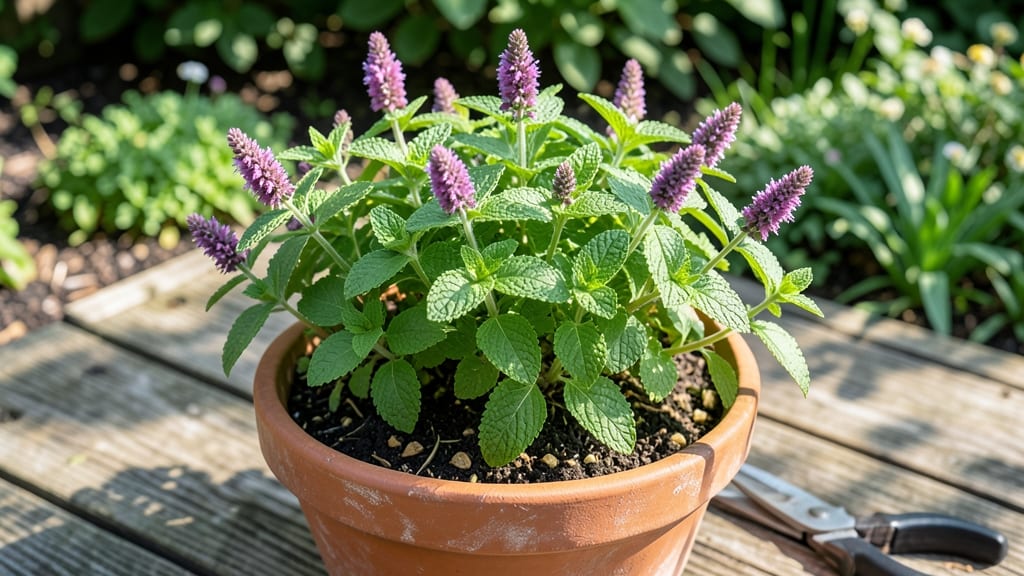
Peppermint's visual signature starts with its square stems—a key trait that sets it apart from other mints.
The leaves grow directly opposite each other, creating a symmetrical pattern that's easy to spot in gardens or grocery store pots. 🌿 What really makes them stand out is the slightly fuzzy surface, which gives the leaves a velvety appearance when you brush your fingers across them.
This plant thrives in bright sunlight and spreads aggressively, often forming dense patches that can reach waist height if left unchecked.
The bright green color remains vibrant year-round, though the leaves may develop a slightly purplish tint in cooler weather. One of my favorite identification tricks is to crush a leaf between my fingers—the intense, refreshing aroma is unmistakable and much stronger than spearmint's milder scent.
This combination of visual and olfactory traits makes peppermint instantly recognizable to both gardeners and tea enthusiasts alike.
💡 In This Article
- Identifying Peppermint Leaves vs Other Mint Varieties
- Growing and Harvesting Peppermint Plants for Visual Recognition
Identifying peppermint leaves vs other mint varieties
The most reliable way to distinguish peppermint is by its square stems, which house oil glands that give the plant its signature aroma. These stems are a dead giveaway—unlike spearmint's round stems, peppermint's four-sided structure is visible even from a distance.
The leaves, typically 1-3 inches long, have a distinctive lance-shaped form with serrated edges that curve slightly at the tips, creating a scalloped appearance when viewed closely.
Spearmint leaves, while similar in shape, are usually smoother-edged and grow on round stems, plus they emit a milder, almost carrot-like scent when crushed.
Apple mint leaves are broader with rounded tips and a sweeter fragrance, while hybrid mints often display irregular leaf shapes and weaker aromas. 🌿 The key visual difference is the fuzzy texture of peppermint leaves—this velvety coating comes from tiny hairs that trap essential oils, intensifying the scent compared to other mints.
Growth patterns also differ significantly: peppermint spreads aggressively through underground runners, forming dense patches that can reach 3 feet tall if unpruned. Spearmint grows more upright at 2-3 feet, while apple mint tends to be bushier with more branching.
The bright green color of peppermint leaves remains consistent, though they may develop a faint purple hue in cooler weather—a trait shared with some hybrid mints but never as pronounced.
For a foolproof identification test, crush a leaf between your fingers. Peppermint releases an intense, cooling aroma with notes of menthol, while spearmint smells more like fresh green beans. Apple mint has a sweeter, almost floral scent, and hybrid mints often lack this distinct menthol punch.
This sensory difference is crucial because visual traits alone can be misleading—especially when dealing with young plants or hybrid varieties.
Consider these visual comparison points when identifying:
- Stem shape: Peppermint = square; spearmint = round
- Leaf texture: Peppermint = fuzzy; others = smoother
- Scent intensity: Peppermint = strong menthol; spearmint = mild carrot-like
- Growth habit: Peppermint = sprawling; spearmint = upright
The serrated edges of peppermint leaves are another key detail—these tiny teeth along the leaf margins create a subtle saw-like pattern when viewed under good light.
This feature, combined with the square stems, forms a visual signature that's nearly impossible to confuse with other mint varieties once you know what to look for. 🔍