
Companion Plants
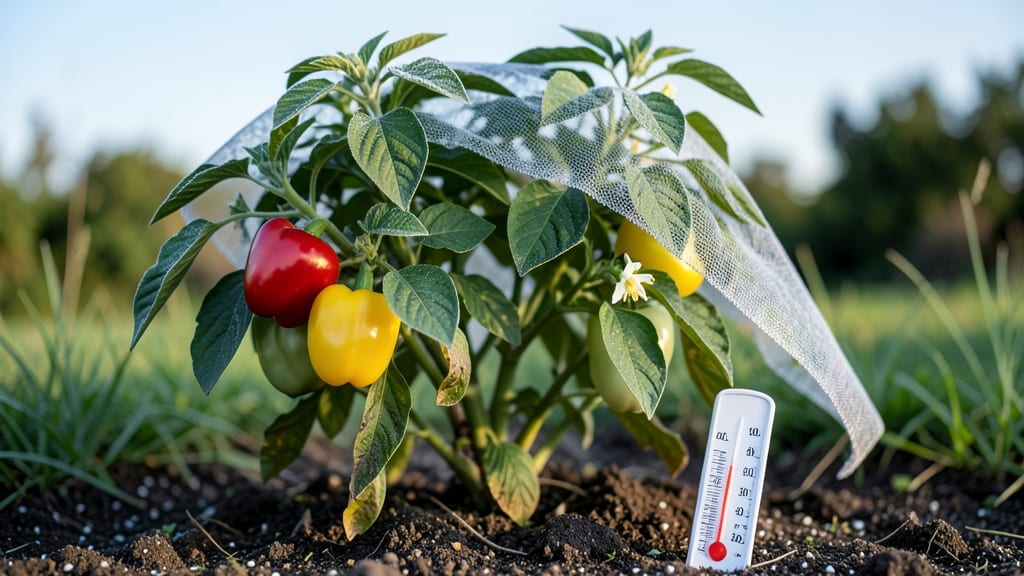
When temperatures dip near or below 50°F (10°C), pepper plants start showing stress signs like stunted growth or yellowing leaves. 🌱 The real danger zone begins at 40°F (4°C), where cold-sensitive varieties can suffer irreversible damage.
Unlike hardy vegetables, peppers are tropical plants that need consistent warmth—even a single frost night can kill them. I've seen jalapeños wilt completely after just one night below 45°F (7°C), proving how delicate they can be compared to other garden plants.
What's crucial to understand is how nighttime temperatures affect peppers differently than daytime ones. While daytime warmth can temporarily revive stressed plants, cold nights prevent them from recovering. This is why gardeners in cooler climates often use protective measures like row covers or move plants indoors before the first frost.
The key is monitoring both minimum nighttime temperatures and overall seasonal trends in your growing zone.
💡 In This Article
- Cold Temperature Thresholds for Pepper Varieties
- Protecting Pepper Plants from Early Cold Snaps
Cold temperature thresholds for pepper varieties
Pepper plants originate from tropical regions, so their cold tolerance varies dramatically between varieties. Bell peppers—one of the hardiest types—can handle brief dips to 45°F (7°C) without permanent damage, though growth slows significantly below 55°F (13°C).
Their thick leaves and sturdy stems help them recover better than thinner-leaved varieties like jalapeños, which begin showing cold stress at 50°F (10°C) and often die if exposed to 40°F (4°C) for more than a few hours. 🌶️
The real vulnerability lies in the root system. Peppers have shallow roots that struggle to absorb nutrients efficiently below 55°F (13°C). When temperatures drop further, the roots stop functioning properly, cutting off the plant's water and nutrient supply.
This is why you'll often see wilting leaves even when daytime temps seem mild—it's the nighttime chill damaging the roots overnight. Habaneros and other hot peppers are even more sensitive, requiring consistent daytime temps above 65°F (18°C) and nighttime temps above 55°F (13°C) to survive.
Nighttime temperatures matter more than daytime ones because peppers need a full 24-hour recovery period. Even if daytime temps reach 75°F (24°C), a cold night at 45°F (7°C) can set back growth by days.
The plant's metabolism slows dramatically below 50°F (10°C), and prolonged exposure leads to cellular damage in the leaves and stems. This is why gardeners in USDA zones 8 and below often lose entire crops when an early frost arrives—peppers simply can't bounce back from sustained cold exposure.
What's fascinating is how different pepper parts react to cold. The foliage shows visible signs first—yellowing leaves, brown edges—but the real damage happens at the cellular level. Cold stress causes ice crystals to form in plant cells, rupturing membranes and disrupting normal metabolic functions.
This explains why some plants appear fine above ground while their roots are already dead below soil level. The damage compounds quickly: a single night at 40°F (4°C) can kill a pepper plant outright, while repeated exposure to 50°F (10°C) weakens it over time.
Consider this comparison: a bell pepper might survive one night at 45°F (7°C) with only minor leaf damage, while a habanero would show severe stress at 55°F (13°C) nighttime temps.
The difference comes down to their tropical origins—bell peppers evolved in slightly cooler highland regions of Central America, while habaneros originated in the steamy lowlands where temps rarely dip below 60°F (15°C). This evolutionary adaptation explains why some varieties handle cooler climates better than others.
For gardeners, understanding these thresholds means planning accordingly. If you're growing peppers in zones with unpredictable fall weather, it's wise to choose cold-tolerant varieties like 'Aristotle' bell peppers or 'NuMex Sandia' chiles, which can handle brief dips to 40°F (4°C) better than most.
The key is matching your pepper variety to your local climate patterns rather than pushing the limits of what they can tolerate. 🌡️