
Propagation
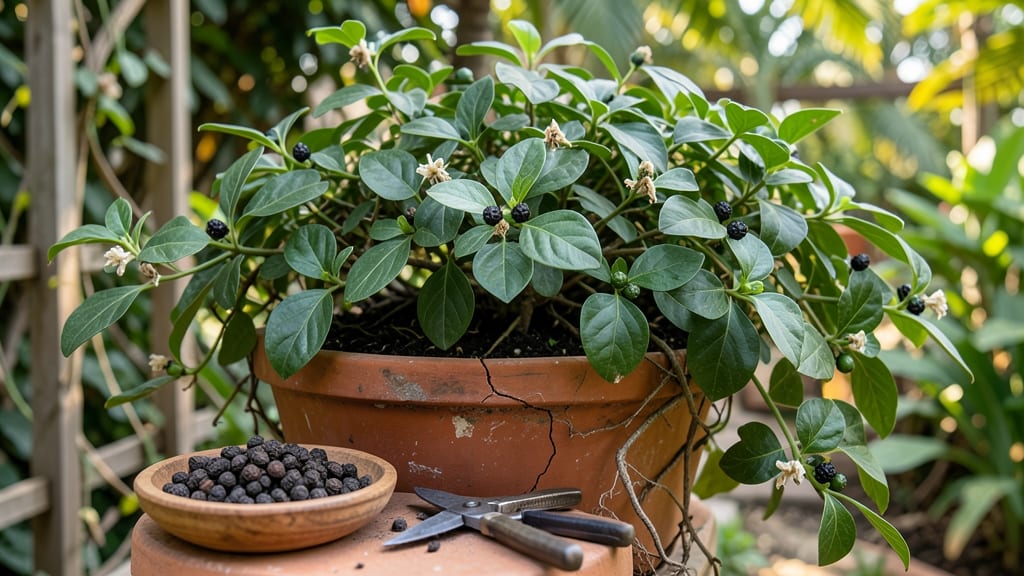
Black peppercorns come from the Piper nigrum vine, originally found wild along southern India’s Malabar Coast in lush tropical forests. Today, they’re grown commercially in Kerala, Vietnam, Indonesia, and Brazil’s dense, shaded canopies.
The Piper nigrum plant thrives in humid, shaded environments with temperatures between 70–90°F, where heavy rainfall and high humidity create ideal growing conditions. 🌿 These factors contribute to the pepper’s signature spiciness, as the vines need consistent moisture to develop their potent compounds.
The Malabar Coast remains the spiritual homeland of black pepper, but modern cultivation has spread to regions with similar climates, adapting traditional growing techniques to new terrains.
Kerala’s Tellicherry pepper is prized for its intense heat, while Vietnam’s white pepper—created by soaking and drying the berries—offers a milder, earthier profile. Brazilian pepper stands out with its slightly fruity undertones, shaped by the country’s high-altitude plantations.
Each region’s unique microclimate influences flavor, proving that geography shapes more than just where pepper grows—it defines what your spice cabinet tastes like.
💡 In This Article
- Tropical Climate Requirements for Black Pepper Growth
- Top Black Pepper-Producing Regions and Their Unique Varieties
Tropical climate requirements for black pepper growth
The Piper nigrum vine demands precise tropical conditions to thrive, starting with temperatures between 70–90°F (21–32°C). This range mirrors the climate of its native Malabar Coast, where daytime heat pairs with cooler nights—ideal for photosynthesis and resin production (the compound that gives black pepper its kick).
The vines also require 70–90% humidity, creating a perpetual mist that prevents the delicate flowers from drying out before pollination.
Soil acidity plays a critical role too: Piper nigrum flourishes in acidic, well-draining soil (pH 5.0–6.5), rich in organic matter from decomposed leaves. Unlike coffee plants, pepper vines can't handle direct sunlight for long periods—their thin, waxy leaves burn easily under intense tropical sun.
Growers use shade cloths or taller canopy trees to filter light, maintaining 50–70% shade during peak sunlight hours. This mimics the dappled light of their native forest understory, where vines grow as climbing perennials up trees.
The monsoon season is non-negotiable for pepper potency. Heavy rains between June–September trigger the vine’s flowering phase, while the dry season (December–February) concentrates the berries' piperine content—the compound responsible for heat.
In Kerala, the first flush of flowers after monsoons yields the most potent peppercorns, with piperine levels reaching 8–10% of dry weight. Without this seasonal rhythm, the pepper’s signature spiciness dulls significantly.
Altitude further refines flavor profiles. Vines grown below 3,000 feet (like in Vietnam’s Central Highlands) produce milder, sweeter peppercorns, while those at 3,000–5,000 feet (Brazil’s São Paulo state) develop more complex, slightly fruity notes.
The cooler high-altitude nights slow berry maturation, allowing more time for sugar development before harvest. This geographic variation explains why Tellicherry pepper from Kerala’s coastal plains packs 2–3x more heat than its Brazilian counterparts.
One often-overlooked factor is wind patterns. Pepper vines need gentle breezes (3–10 mph) to pollinate their tiny flowers—too much wind scatters pollen, while still air reduces fruit set. In Indonesia’s Lampung province, growers plant vines along windbreaks to create microclimates where humidity and airflow balance perfectly.
This careful cultivation explains why Indonesia’s peppercorns often rank among the world’s most aromatic, with higher essential oil content (the compounds that carry aroma to your nose).
What most people don't realize is how these climate factors interact with post-harvest processing. Green peppercorns (unripe) dried in the sun become black pepper, while fully ripe berries fermented and dried turn white.
The monsoon’s timing dictates which method yields better—wet seasons in Kerala favor black pepper production, while Vietnam’s controlled drying environments suit white pepper’s milder profile. 🌱