
Vegetables
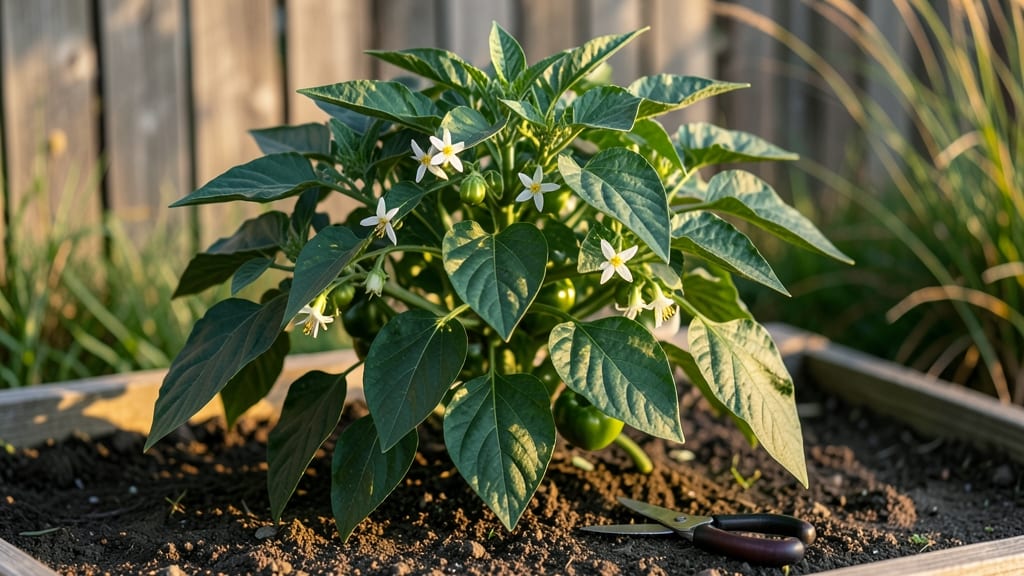
Bell peppers are not perennial in most climates, meaning they typically die back after producing fruit unless grown as annuals or in frost-free zones where they can overwinter with proper care. Some varieties may regrow in warm regions with protection.
Most gardeners treat bell peppers as annuals because they're sensitive to frost and channel all their energy into fruit production. 🌱 After harvesting, the plant's resources deplete, leaving it vulnerable to cold temperatures.
Unlike true perennials like asparagus, which regrow from roots each year, bell peppers lack the hardy underground structure to survive winter in most climates.
In warmer regions (USDA zones 9-11), you can extend their lifespan by providing winter protection like thick mulch or row covers. Pruning back plants after harvest and fertilizing lightly can encourage regrowth for a second season.
I've seen home gardeners in Florida successfully overwinter bell peppers by moving them to containers and bringing them indoors during cold snaps.
💡 In This Article
- Why Bell Peppers Die After Harvest in Most Gardens
- How to Extend Bell Pepper Lifespan in Warm Climates
Why bell peppers die after harvest in most gardens
Bell peppers are classified as short-day annuals—they complete their entire life cycle (seed to fruit) in one growing season. Unlike true perennials like asparagus or rhubarb, which store energy in underground rhizomes or roots to regrow yearly, bell peppers allocate nearly all their resources to fruit production.
This leaves their stems and leaves vulnerable once harvest ends, especially when nighttime temperatures drop below 50°F.
The real killer is cold sensitivity—bell peppers originate from tropical regions and can't tolerate frost. Their cells lack the protective compounds (like antifreeze proteins) found in hardy perennials. When temperatures fall below 32°F, cell membranes rupture, causing irreversible damage.
Even in milder climates, the plant's energy reserves deplete after fruiting, making it unable to sustain regrowth without intervention.
Compare this to tomatoes: both are annuals, but tomatoes produce multiple fruit waves, while bell peppers focus all energy on a single flush of peppers. This intense fruiting cycle exhausts the plant's biomass, leaving it with only 10-20% of its original leaf mass by harvest's end.
Without stored energy reserves, the plant simply can't recover—unlike strawberries, which regrow from crowns each spring.
What most gardeners miss is the hormonal shift post-harvest. Bell peppers produce ethylene gas during fruit ripening, which triggers leaf senescence (aging). This natural process accelerates after harvest, causing leaves to yellow and drop within 2-4 weeks unless the plant is protected.
The root system, already stressed from fruit production, can't support regrowth without external support like mulch or fertilizer.
Here's the science: bell peppers have a determinate growth habit, meaning they stop growing once they reach maturity. Their apical meristem (growth tip) hardens into a flower cluster, and lateral buds take over fruit production.
This architectural limitation prevents them from developing new shoots after harvest—unlike indeterminate plants (e.g., cucumbers) that continue growing seasonally.
For visual contrast, imagine asparagus: its thick, fibrous roots store starches year-round, allowing it to push new shoots annually. Bell peppers lack this storage capacity—their roots are fibrous but shallow, designed for rapid nutrient uptake during the growing season rather than long-term survival. 🌱