
Vegetables
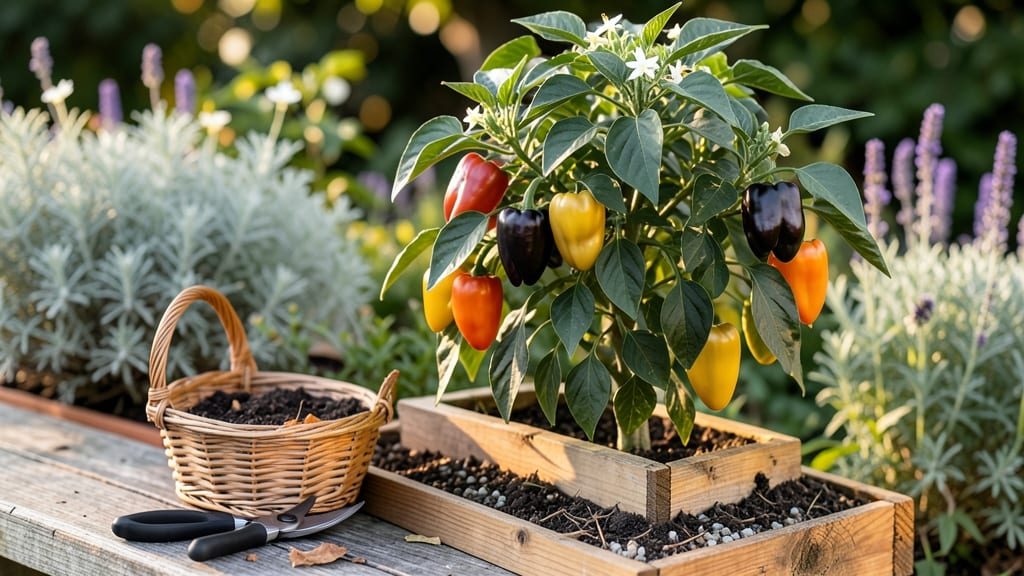
Ornamental peppers are indeed edible, though they often lack the bold flavors of cooking varieties and may contain mild heat or bitter notes. Some species even carry trace capsaicin or compounds that could cause mild stomach upset if consumed in large quantities.
Many gardeners assume these decorative plants are purely ornamental, but their peppers can actually be used in the kitchen—just with caution. 🌶️ Varieties like 'Black Pearl' and 'Joker' are popular choices for culinary experimentation, offering subtle sweetness or a gentle kick when prepared properly.
The key is to research each type before eating, as some ornamental peppers may contain higher concentrations of capsaicin or other compounds that could irritate sensitive stomachs. For best results, I recommend starting with small amounts and pairing them with other strong flavors to mask any bitterness.
If you're feeling adventurous, try fermenting or pickling these peppers to mellow their flavors and enhance their complexity. This method not only makes them safer to eat but also transforms them into delicious garnishes or condiments.
Just remember: what looks stunning in a vase might not always be the best choice for your spice rack!
💡 In This Article
- Edibility Risks and Toxicity in Ornamental Peppers
- How to Safely Use Ornamental Peppers in Cooking
Edibility risks and toxicity in ornamental peppers
The safety of ornamental peppers hinges on their capsaicin content and specific chemical compounds. Most varieties belong to the Capsicum genus, but their heat levels and edibility vary widely.
For instance, Capsicum annuum ornamentals like 'Black Pearl' typically contain 0.1-0.5% capsaicin, producing a mild tingle, while Capsicum frutescens types (e.g., 'Joker') may reach 0.5-1.0%, offering noticeable warmth.
The key risk lies in certain hybrid or wild species, which can accumulate higher concentrations of capsaicin or even toxic alkaloids like solanine in their leaves or stems.
Capsaicin itself isn't dangerous—it's the body's response to it that causes discomfort. When consumed in large quantities, it can trigger gastrointestinal irritation, heartburn, or even allergic reactions in sensitive individuals.
Some ornamental peppers also contain bitter glycosides, compounds that may cause mild stomach upset if eaten raw in excess. The visual clue? Bright red or purple peppers often signal higher capsaicin, while yellow or white varieties tend to be milder. Always cross-reference with botanical databases before consumption.
Toxicity risks escalate with improper identification. For example, the Angel Trumpet (Brugmansia), often confused with ornamental peppers, contains deadly alkaloids.
Even edible species can pose threats if prepared incorrectly—peeling or fermenting reduces capsaicin levels, but boiling alone doesn't eliminate it. 🌿 The safest approach is to start with 1-2 small peppers and monitor your body's reaction for 24 hours before increasing intake.
Scientific studies show that ornamental peppers' capsaicin distribution isn't uniform. The placenta (seed-bearing core) contains the highest concentrations, followed by the walls near the stem. Removing these parts can reduce heat by up to 70%.
Fermentation further breaks down capsaicin, transforming peppers into safe, flavorful ingredients—think of it as nature's way of detoxifying.
Consider these common ornamental varieties and their edibility profiles:
- Black Pearl (Capsicum annuum): Mild sweetness with 0.1-0.3% capsaicin—safe for raw consumption in moderation
- Joker (Capsicum frutescens): Fruity with 0.5-0.8% capsaicin—best pickled or cooked
- Fish Pepper (Capsicum frutescens): High heat (1.0-1.5% capsaicin)—use sparingly in spice blends
- Shishito-Like Ornamentals: Typically 0-0.2% capsaicin—excellent for grilling
For the cautious cook, always pair new ornamental peppers with acidic ingredients (lemon, vinegar) or dairy (yogurt, cheese) to neutralize capsaicin's effects. This isn't just folklore—studies confirm that casein proteins in dairy bind to capsaicin receptors, reducing perceived heat. 🔥