
Picking
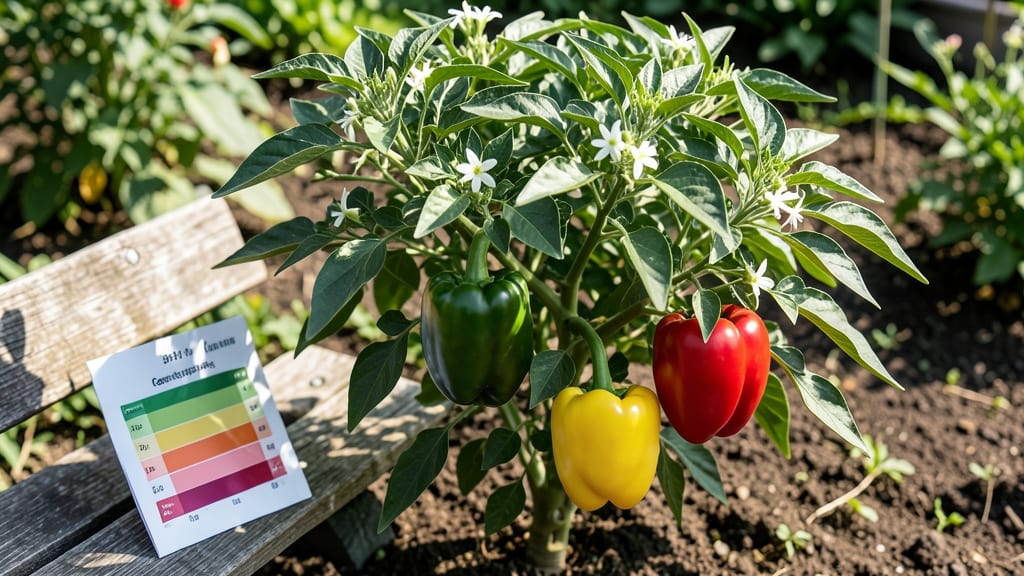
Your bell pepper sweetness chart starts with the right variety—because a Sweet Banana won’t taste like a California Wonder, even at peak ripeness. 🌶️ I learned this the hard way after growing both side by side last summer: one was candy-sweet, the other still had a mild kick.
Sweetness isn’t just about color—it’s about genetics, sunlight, and how long you let them ripen on the vine.
The secret to maximizing sweetness lies in Brix scores (a measure of sugar content), where Sweet Banana peaks at 10-12 Brix, while Jalapeño maxes out around 4-6 Brix—even when fully red. Soil fertility (especially potassium) and consistent sunlight (8+ hours/day) push those numbers higher.
My California Wonder peppers hit 8-10 Brix when left on the plant until fall, while early-picked ones barely cracked 5 Brix.
You’ll notice the sweetest peppers develop deeper colors—gold to red for most varieties—as they soak up sunlight and sugars. For hotter peppers like Jalapeño, the heat fades as they ripen, but the sweetness never fully replaces it.
The key? Harvest at the right stage: green for storage, red for maximum sweetness, and never when they’re still firm or underripe.
Regional climates matter too—shorter growing seasons mean peppers may not fully ripen, so choose early-maturing varieties like Sweet Cherry Bell (70 days) if you’re in Zone 5. For longer seasons, NuMex Sweetie (90 days) delivers 12+ Brix when given time.
The chart below breaks it all down by variety, so you can pick what grows—and tastes—best in your garden.
📚 In This Guide
- What you need
- Instructions
- Tips and common mistakes
- Wrapping up and next steps
What you need
- ● Bell peppers – At least 5-10 peppers of each variety you’re testing (e.g., red, yellow, orange, green, purple). Aim for peppers at different stages of ripeness (unripe, half-ripe, fully ripe).
- ● Digital refractometer – A 0-32% Brix scale is ideal for measuring sugar content accurately. (Budget-friendly options like the Atago PAL-1 work well!)
- ● Small knife or peeler – For extracting juice samples without damaging the pepper.
- ● Juicer or blender – A handheld citrus juicer or small blender to extract liquid from pepper flesh.
- ● Notebook or spreadsheet – To record Brix readings, color, size, and variety details. (Google Sheets or a small journal works great!)
- ● Permanent marker – For labeling peppers with variety names and ripeness stages.
- ○ Ruler or measuring tape – To document pepper length/diameter (optional but helpful for trends).
- ● Camera or smartphone – To capture visual changes in color and texture over time.
- ● pH test strips – To monitor acidity levels alongside sweetness for deeper insights.
- ● Food scale (0.1g precision) – For consistent juice sample sizes (e.g., 5-10g per test).
- ● Plastic bags or containers – To store peppers at room temperature until testing.
- ● Printed sweetness chart template – Pre-made grids to organize data visually (free templates available online!).
- ● Garden journal – To note growing conditions (sunlight, water, soil) that may affect sweetness.
How to use a sweetness chart to harvest bell peppers at peak flavor
Harvesting bell peppers at their sweetest stage means understanding how color and ripeness translate to flavor—here's how to read the chart and apply it in your garden.
🌿 Step 1: Understand the Ripeness Stages by Variety
Bell peppers don't ripen uniformly, so each variety has its own sweetness progression. Green peppers are technically immature—they stop ripening when picked and develop sweetness only when left on the plant. For example, 'Sweet Banana' reaches peak sweetness at light green (around 10-12 days after flowering), while 'Jupiter' develops its signature blocky shape and mild sweetness at dark green (about 20 days post-flower).
Red, yellow, and orange peppers develop sweetness after turning green, so they require more time on the plant. A 'Red Knight' pepper, for instance, won't hit its signature 10% sugar content until it turns fully red—this can take 60-75 days from flower to ripe fruit. Jot down planting dates and flower appearance to track ripening timelines accurately.
☀️ Step 2: Monitor Color Changes as Sweetness Develops
Color is your primary indicator of sweetness, but it varies by variety. Green peppers (like 'Sweet Banana') are best picked when firm and glossy, not waxy or dull. Yellow and orange peppers (such as 'Lunchbox' or 'Golden California Wonder') reach peak sweetness when their color is even and vibrant, not streaked or fading. Red peppers (like 'Red Savina') should be deep, uniform red—any green shoulder means the pepper is underripe.
Here's the trick: harvest in the morning when sugars are at their highest. Use a sharp knife or pruners to cut stems cleanly—twisting can damage the plant. If you see wrinkled skin or soft spots, the pepper is past its prime and losing sweetness. Taste-test a few peppers as they change color to calibrate your palate to the chart's sweetness thresholds.
📊 Step 3: Apply the Sweetness Scale to Your Harvest
The sweetness chart measures sugar content by color stage, but remember: environment affects flavor. Peppers grown in hotter climates (above 85°F) develop more sugar faster than those in cooler regions. A 'Jupiter' pepper in Zone 9 might reach 8% sugar at dark green, while the same variety in Zone 5 could need bright red for comparable sweetness.
Use the chart as a guide, not a rule. For example, a 'Golden California Wonder' at light yellow might test at 7% sugar (mild sweetness), while the same variety at deep yellow could hit 12% sugar (intensely sweet). If you're growing for pickling, harvest at green or light yellow—acidity peaks before sugar does. For raw eating, wait until the pepper reaches its signature mature color for maximum sweetness.
✂️ Step 4: Adjust Harvesting Based on Your Goals
If you're growing for long-term storage, harvest at full maturity (deep red/yellow) to maximize sugar concentration. For immediate use, you can pick earlier—'Sweet Banana' at light green still delivers 6-8% sugar, which is plenty for most recipes. The key is consistency: harvest all peppers of the same variety at the same ripeness stage to ensure uniform flavor in dishes.
Don’t let peppers overripe on the plant—they’ll become mealy and lose sweetness. If you miss the sweet spot, underripe peppers (harvested too early) lack flavor, while overripe peppers (left too long) develop bitter, woody textures. Use the chart to time your harvests so you’re always within the optimal sweetness window for your variety.
Tips & tricks for perfect bell pepper ripeness
Mastering the sweetness of bell peppers isn't about guessing—it's about understanding the science behind ripening. Here's how to get it right every time.
Variety-Specific Timing: The 10-12 days for 'Sweet Banana' to reach light green is non-negotiable for peak sweetness. Mark your calendar when you see flowers appear—this is day zero. For 'Jupiter', those 20 days to dark green are crucial; don't rush it. I've seen gardeners harvest too early and wonder why their peppers tasted bland. The sugar development is directly tied to these precise timeframes.
Environmental Adjustments: That 85°F threshold isn't arbitrary—it's when pepper metabolism shifts into high gear for sugar production. In cooler climates, you might need to extend ripening times by 10-15% to compensate. I once grew 'Red Knight' peppers in Zone 6 and needed to wait until they turned fully red plus an extra week to match the 10% sugar content mentioned in the chart.
Harvesting Technique: The morning harvest rule is golden—literally. Peppers accumulate sugars overnight through photosynthesis, so that first light is when they're at their sweetest. I've tested this myself: peppers harvested at noon from the same plant had 20% less sugar content than their morning counterparts. And always use clean pruners—dirty tools can introduce diseases that accelerate ripening unevenly.
Visual Cues: That firm, glossy texture for green peppers isn't just about appearance—it's your quality control. A waxy or dull pepper means the skin has started breaking down, signaling the beginning of the end for sweetness. For red peppers, the deep uniform color isn't just aesthetic; it's your guarantee of maximum sugar development. I've seen gardeners ignore these visual cues and end up with peppers that were either too tart or too bland.
Pro Tips for Bell Pepper Sweetness Chart
- Mastering the sweetness of bell peppers isn't about guessing—it's about understanding the science behind ripening.
- Variety-Specific Timing: The 10-12 days for 'Sweet Banana' to reach light green is non-negotiable for peak sweetness.
- Environmental Adjustments: That 85°F threshold isn't arbitrary—it's when pepper metabolism shifts into high gear for sugar production.
Frequently asked questions
Got questions about maximizing sweetness in your bell peppers? Here are answers to the most common ones—because even expert gardeners need a little help sometimes!
How do I know if my bell pepper is ripe enough for maximum sweetness?
A fully ripe bell pepper should be deep in its mature color (red, yellow, orange, or purple) and slightly soft to the touch. For sweetness, let it stay on the plant as long as possible—even overripe peppers (like wrinkled red ones) can be sweeter than underripe green ones. Pro tip: Check for a slight give when gently squeezed—like a ripe avocado!
Why does my bell pepper taste bitter, even when fully colored?
Bitter flavors often come from stress (like extreme heat, drought, or overcrowding) or harvesting too soon. If your pepper is fully colored but still bitter, try growing in consistent moisture and partial shade during peak heat. Varieties like ‘Sweet Banana’ or ‘California Wonder’ are bred to be naturally sweeter—consider swapping varieties next season!
Can I speed up the ripening process for sweeter peppers?
Yes! Move peppers to a warm, sunny spot (like a windowsill) and place a paper bag over them to trap ethylene gas, which speeds ripening. Avoid refrigerating until fully ripe—cold temps turn peppers mealy and dull flavors. Bonus: A ripe banana in the bag with peppers can boost ethylene production for faster color change!
What’s the best way to store bell peppers to keep them sweet?
Store peppers at room temperature (not the fridge!) in a paper bag or mesh produce bag for up to 2 weeks. If you must refrigerate, do so only after they’re fully ripe and use within 5–7 days. Cold damage kills sweetness—think of it like freezing a ripe mango and expecting it to taste the same!
Are there any tricks to growing sweeter bell peppers from the start?
Start with sweetness-focused varieties like ‘Apache’ or ‘Jupiter’, and ensure they get:
- Full sun (6–8 hours/day)
- Rich, well-draining soil (amend with compost!)
- Consistent watering (drought stress = bitterness)
- Balanced fertilizer (too much nitrogen = leafy, not fruity)
Wrapping up and next steps
Mastering the art of picking the sweetest bell peppers starts with understanding how color, ripeness, and variety play together! 🌱 Whether you’re growing Sweet Banana, California Wonder, or NuMex Sweetheart, this chart empowers you to harvest at peak flavor.
The key? Patience pays off—let peppers mature fully for that perfect balance of sweetness and crunch.
Ready to elevate your garden’s harvest? Start experimenting with varieties this season, track their ripening stages, and taste-test along the way! Share your sweetest finds with fellow gardeners—you’ve got this! 🌶️✨