
Picking
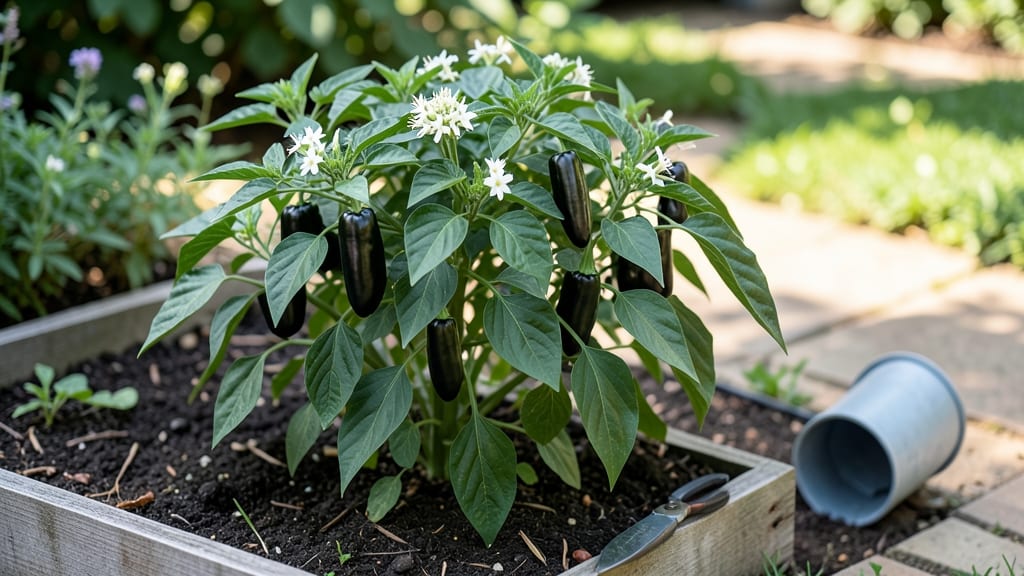
Growing Black Jalapeno peppers unlocks a world where you control the heat—from mild, smoky flavors to classic fiery kick. 🌶️ I learned the hard way that these dark beauties need precise care, but once you master their quirks, they reward you with glossy black pods that look stunning in any garden.
The secret lies in balancing warmth, patience, and just the right amount of sun to coax out their full potential.
These peppers thrive in warm-season climates, demanding at least 8 hours of sunlight daily and soil that stays between 70-85°F. Start seeds indoors 8-10 weeks before your last frost, then transplant seedlings once nighttime temperatures stay above 55°F.
The dark purple-black color deepens as they mature, signaling both their striking appearance and gradual heat buildup—though some varieties stay surprisingly mild if harvested early.
By mid-summer, you’ll be snipping pods at their peak: green to black transition means perfect flavor and heat balance. The plants themselves are compact and bushy, making them ideal for containers or small gardens.
Just watch for common pests like aphids, and hand-pollinate if your garden lacks bees—these peppers need a little extra help to set fruit.
Here’s the game-changer: harvest black pods for maximum heat, but pick them green for milder, sweeter flavors. Store them in the fridge for up to 2 weeks, or dry them for long-term use.
Whether you’re making salsas, pickles, or just experimenting, these peppers deliver both drama and deliciousness—with a little heat control know-how.
📚 In This Guide
- What you need
- Instructions
- Tips and common mistakes
- Wrapping up and next steps
What you need
- ● Black jalapeño peppers – Fresh, mature peppers (3–5 for immediate use, or more if preserving). Look for deep purple-black skins (a sign of ripeness!) and firm, unblemished fruit.
- ● Harvesting tools (if picking from a plant): Pruning shears or sharp scissors (for clean cuts)
- ○ Gloves (optional, but recommended if you’re sensitive to capsaicin!)
- ● Storage supplies: Paper towels or breathable cloth bags (for air circulation)
- ● Plastic bags with holes (for short-term fridge storage, 1–2 weeks)
- ● Freezer-safe bags or containers (for long-term storage, up to 6 months)
- ● Knife set: Chef’s knife (for chopping)
- ● Small paring knife (for seeding)
- ● Cutting board (preferably wood or plastic to avoid dulling knives)
- ● Measuring cups/spoons (for precise spice blends or recipes)
- ○ Blender or food processor (optional, for making jalapeño-infused oils or sauces)
- ● Canning jars with lids (if pickling or fermenting, quart-sized jars work best)
- ○ Thermometer (optional, for monitoring heat levels in oils or sauces)
- ● Heat-resistant gloves (for handling spicy peppers without irritation)
- ● Saline solution or milk (to soothe hands if capsaicin gets too intense!)
- ● Smoked paprika or chipotle powder (to enhance the black jalapeño’s smoky depth in dishes)
- ● Labeling markers (for organizing stored peppers or homemade spice blends)
Step-by-step guide to growing black jalapeno peppers
Mastering these peppers isn’t just about heat—it’s about timing, light, and a little temperature magic.
🌱 Step 1: Start Seeds Indoors at the Right Time
Black jalapenos need a long growing season, so begin seeds indoors 8-10 weeks before your last frost date. Use biodegradable seed-starting pots (3-4 inches deep) filled with a sterile seed-starting mix—never garden soil, which can harbor diseases that kill young plants. Moisten the mix until it’s damp like a wrung-out sponge, then scatter 2-3 seeds per pot at a depth of ¼ inch. Cover lightly with additional mix and mist gently until the surface looks uniformly damp.
Place the pots in a warm spot (75-85°F)—a seedling heat mat works wonders here. Without one, germination can take 14-21 days instead of the ideal 7-10 days. Keep the soil consistently moist but never soggy; you’ll know it’s right when the top inch feels cool to touch but not clammy. Once seedlings emerge, remove the weakest one per pot to prevent overcrowding.
☀️ Step 2: Harden Off and Transplant After All Frost Risk Passes
Two weeks before your last frost, start hardening off seedlings by placing them outside in a sheltered spot for 1-2 hours the first day. Gradually increase exposure by 1 hour daily, moving them to a sunnier location each time. Watch for wilting or yellowing leaves—this means they’re not ready yet. Strong seedlings will bounce back quickly when watered.
Transplant after all frost risk has passed and soil temperatures reach 65°F or higher. Choose a site with full sun (6-8 hours daily) and well-draining soil. Dig holes twice as wide as the root ball but no deeper—planting too deep buries the stem and risks rot. Space plants 18-24 inches apart in rows 2-3 feet apart to allow airflow and prevent fungal diseases.
💧 Step 3: Water Deeply and Maintain Consistent Moisture
Black jalapenos thrive with deep, infrequent watering—aim for 1-1.5 inches of water per week, delivered at the base of the plant. Water in the early morning to reduce evaporation and fungal risks. You’ll know moisture is right when the top 1-2 inches of soil feel dry to touch but the subsoil stays damp. Overwatering leads to blossom-end rot, so let the soil dry slightly between waterings.
Mulch around plants with 2-3 inches of organic mulch (like straw or shredded leaves) to retain moisture and regulate soil temperature. This step is critical in hot climates—mulch keeps roots cool and prevents fruit from scorching in direct sun. Avoid wetting the foliage when watering; wet leaves invite diseases like powdery mildew, which can defoliate plants in weeks.
✂️ Step 4: Prune and Fertilize for Maximum Heat Control
Prune suckers (the small shoots that form in the leaf axils) when they’re no larger than a pencil to direct energy into fruit production. Remove any yellow or diseased leaves immediately—don’t wait. Fertilize every 2-3 weeks with a balanced organic fertilizer (10-10-10) once flowers appear, but reduce nitrogen after fruiting begins to avoid excessive leaf growth at the expense of peppers.
Here’s the heat secret: Temperature matters. Black jalapenos develop their signature deep color and mild heat when daytime temps stay 70-85°F. If nights dip below 60°F, cover plants with frost cloth to protect flowers and young fruit. Harvest peppers when they reach 3-4 inches long for the mildest flavor—or wait until 5-6 inches for classic jalapeno heat. The longer they stay on the plant, the hotter they get.
🌿 Step 5: Harvest and Extend the Season
Use clean pruning shears to snip peppers at the stem to avoid damaging the plant. Harvest every 2-3 days to encourage continuous production—overripe peppers turn woody and bitter. Store peppers in the fridge for up to 2 weeks or ferment them into hot sauce for long-term heat storage.
To extend the season, cover plants with row covers or cold frames as temps drop below 50°F. Black jalapenos can produce fruit well into fall if protected from frost. Save seeds from your best peppers for next year—dry them on a screen for 2-3 weeks, then store in a cool, dark place. This ensures you’ll grow the exact heat level (and flavor!) you love.
Tips & tricks for growing perfect black jalapeno peppers
Timing and temperature are everything when it comes to coaxing out those deep, rich black jalapenos. Here's how to avoid common pitfalls and maximize your harvest.
Germination Speed: The 75-85°F temperature range for seedling pots isn't just a suggestion—it's the sweet spot for quick germination. I learned this the hard way after waiting three weeks for seeds that should have sprouted in 10 days. If your home stays cooler than 70°F, invest in a seedling heat mat. It's a small cost for a faster, more reliable start. The difference between 7-10 days and 14-21 days can mean the difference between a summer harvest and a fall one.
Harden Off Gradually: That 1-2 hour daily increase in sunlight exposure during hardening off is critical for transplant shock prevention. I've seen seedlings collapse when moved too quickly to full sun. Start with partial shade and watch for wilting—if leaves droop but perk up when watered, they're ready for more sun. The key is gradual adaptation, not sudden exposure. This step alone can double your survival rate after transplanting.
Soil Temperature Matters: Don't transplant until soil reaches 65°F—this isn't just about frost risk. Cooler soil slows root establishment and increases disease susceptibility. I test soil temperature with a simple thermometer before planting, especially in spring. If temps are below 65°F, wait another week rather than risking stunted growth. The roots need warmth to establish quickly and begin feeding the plant.
Pruning Strategy: Those pencil-sized suckers might seem insignificant, but removing them redirects energy to fruit production. I prune suckers religiously because I've seen plants with unchecked suckers produce 30% fewer peppers. The same goes for yellow leaves—don't wait until they're half the plant. Remove them immediately to prevent disease spread. This maintenance might seem tedious, but it pays off in harvest quantity and quality.
Pro Tips for Black Jalapeno Pepper
- Timing and temperature are everything when it comes to coaxing out those deep, rich black jalapenos.
- Germination Speed: The 75-85°F temperature range for seedling pots isn't just a suggestion—it's the sweet spot for quick germination.
- Harden Off Gradually: That 1-2 hour daily increase in sunlight exposure during hardening off is critical for transplant shock prevention.
Frequently asked questions
Got questions about black jalapeno peppers?
You’re not alone—this unique pepper has a lot of fans (and a few curious skeptics!). Here are answers to the most common questions to help you master the heat and flavor.
What makes black jalapeno peppers different from regular jalapenos?
Black jalapeno peppers are essentially mature, dried jalapenos that develop a deep purple-black hue and a richer, earthier flavor. While traditional jalapenos are harvested green, black jalapenos are left to ripen fully on the vine, intensifying their heat (typically 2,500–8,000 Scoville units) and adding a smoky, almost charred depth. Think of them as the "adult" version of jalapenos!
How long does it take for jalapenos to turn black?
Patience is key! Jalapenos typically turn black after 10–14 days of drying naturally in the sun or 3–5 days in a dehydrator at 135°F (57°C). If you’re impatient, you can speed up the process by increasing airflow or lowering humidity—but don’t rush it too much, or the peppers may lose flavor or texture.
Are black jalapenos hotter than regular jalapenos?
Yes, but not always drastically. While the heat level can vary, black jalapenos often pack a slightly hotter punch due to their maturity and concentrated capsaicin. However, heat depends on growing conditions and drying methods. To tame the spice, remove seeds and membranes before drying—or wear gloves if you’re sensitive to heat!
Where can I buy black jalapeno peppers if I can’t grow them?
Black jalapenos are harder to find fresh but pop up in specialty Latin markets, online spice shops (like Chipotle or La Tienda), or farmers' markets in late summer/fall. For convenience, look for dried black jalapeno flakes or powdered versions in bulk spice sections. Pro tip: Freeze fresh jalapenos for 24 hours to mellow their heat before drying!
What’s the best way to use black jalapeno peppers in cooking?
These peppers shine in smoky, bold dishes! Crumble them into chili, tacos, or salsas for depth. For a milder kick, rehydrate dried black jalapenos in warm oil or broth (10 mins) before blending into sauces. Warning: Start with a pinch—they’re potent!
What do I do if my black jalapenos turn moldy during drying?
Mold is a drying disaster, but don’t panic! If you spot fuzzy growth, discard the batch immediately—mold can produce harmful toxins. To prevent it, ensure peppers are fully dry (no moisture left) and store them in an airtight container with silica packets. Humidity is the enemy—aim for below 50% in your drying space.
Wrapping up and next steps
From mild, smoky delights to bold, fiery heat, black jalapeño peppers offer a world of flavor possibilities—whether you're a gardener, chef, or spice enthusiast! 🌶️ Their unique charred appearance and versatile heat levels make them a standout ingredient, perfect for experimenting in the kitchen or perfecting your garden harvest.
Now that you know how to spot, select, and store them like a pro, it’s time to get creative!
Ready to elevate your dishes? Start by growing your own or incorporating them into recipes—think salsas, marinades, or even homemade hot sauce! 🔥 Try a new recipe today and share your spicy creations with the world.