
Companion Plants
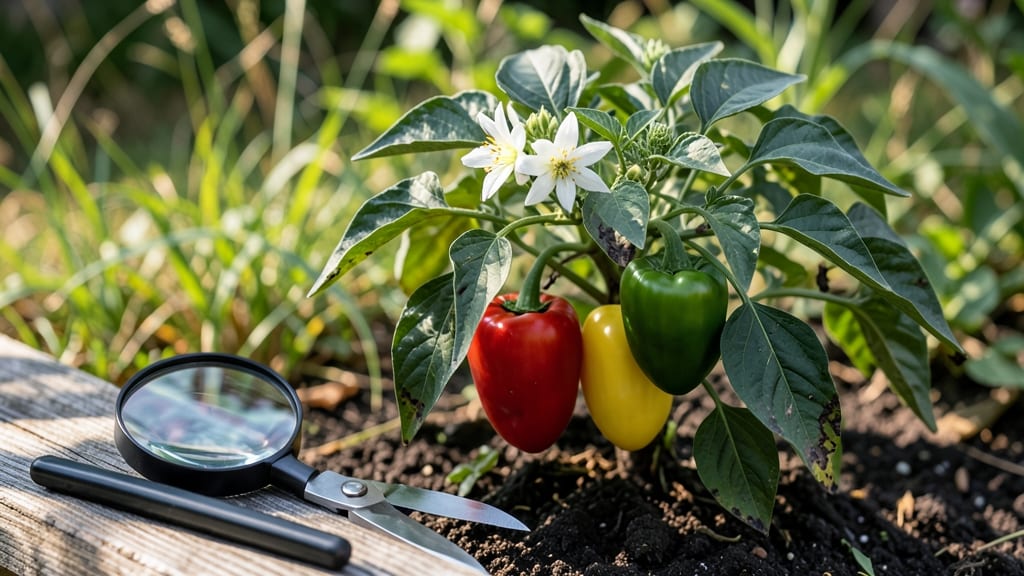
Black joints on pepper plants turn your thriving garden into a frustrating mystery. 🌱 I’ve seen this happen more than once—healthy-looking plants suddenly develop dark, shriveled joints between stems and branches, leaving you wondering what went wrong.
The good news? With the right approach, you can often rescue your peppers and prevent future outbreaks.
This issue usually stems from bacterial or fungal infections, often worsened by stress from overwatering, poor air circulation, or nutrient deficiencies. The blackened joints appear brittle and dead, but the real damage happens below the surface where the disease spreads.
Catching it early makes all the difference—sometimes you can save the plant, other times it’s better to remove it before the problem spreads.
Here’s the game-changer: a mix of pruning infected areas, improving airflow, and applying copper-based fungicides can stop the spread. I’ve found that preventing future stress—like adjusting watering habits or spacing plants properly—keeps peppers healthy and productive. The key is acting fast before the disease takes hold.
Whether you’re growing in containers, raised beds, or your backyard, these steps work across all setups. The goal isn’t just to fix the problem but to build a garden where peppers stay strong and resilient. Let’s get those plants back on track!
Root Causes of Pepper Plant Discoloration
Blackened joints on your pepper plants aren’t just unsightly—they’re a cry for help from your plants. Understanding the why behind these dark spots is the first step toward restoring your peppers’ health.
Below, we break down the most common culprits, backed by science, so you can diagnose the issue and take action.
---
Fungi like Phytophthora (root rot) or Colletotrichum (anthracnose) thrive in damp, warm conditions and attack pepper plants at their weakest points—often the joints where stems meet leaves or branches. These pathogens block nutrient flow, causing tissues to darken and die.
How it happens: - Overwatering or poor drainage creates soggy soil, inviting fungal spores to multiply. - High humidity (especially in greenhouses or shaded areas) gives fungi the perfect breeding ground. - Wounded stems (from pruning, hail, or pests) act as entry points for infection.
🔍 Tell-tale signs: - Black, mushy spots that spread upward from the soil. - Wilting leaves even when the soil is moist. - A foul, rotting smell near the base.
---
Pepper plants need a balanced diet of nitrogen (N), phosphorus (P), and potassium (K) to stay vibrant. When one or more of these nutrients are lacking, the plant’s cellular structure weakens, leading to discoloration—especially in high-stress areas like joints.
Key deficiencies to watch for: | Nutrient | Symptom | Cause | |--------------|--------------------------------------|--------------------------------------------| | Magnesium | Blackened leaf edges, yellowing between veins | Poor soil pH (<6.0) or over-fertilization with nitrogen. | | Calcium | Dark, crinkled joints (blossom end rot’s cousin) | Dry soil, compacted roots, or uneven watering. | | Potassium | Weak stems, blackened tips on leaves | Overwatering leaches potassium from the soil. |
💡 Pro tip: Test your soil’s pH (ideal: 6.0–6.8 for peppers). If it’s off, amend with lime (to raise pH) or sulfur (to lower pH) before fertilizing.
---
Sap-sucking pests like aphids, spider mites, or thrips don’t just drain nutrients—they inject toxins that disrupt the plant’s vascular system. Over time, this causes blackened, sticky joints (a sign of honeydew buildup and sooty mold).
Pests to suspect: - Aphids: Cluster on new growth, leaving black residue. - Spider mites: Tiny yellow specks on undersides of leaves → blackened webbing. - Cutworms: Chew stems at the base, causing sudden wilting and blackened joints.
🚨 Act fast: - Blast pests off with a strong stream of water. - Apply neem oil or insecticidal soap (repeat every 5–7 days). - Introduce predator insects (ladybugs, lacewings) for organic control.
--- Pepper plants are tough, but they can’t handle extreme heat, cold snaps, or sudden droughts without reacting. Stress triggers oxidative damage, which manifests as blackened, necrotic tissue—especially at vulnerable joints.
Stress triggers: - Temperature swings: Below 50°F (10°C) or above 95°F (35°C) stuns growth. - Windburn: Dries out stems, causing cracks that turn black. - Salt buildup: From tap water or over-fertilization, which burns roots and restricts nutrient uptake.
🌿 Quick fixes: - Mulch heavily to stabilize soil temperature. - Use shade cloth (30–50%) during heatwaves. - Water deeply but infrequently to avoid salt accumulation.
--- Too much synthetic fertilizer (especially high in nitrogen or salts) can scorch plant tissues, leading to blackened, crispy joints.
This is common when: - You over-fertilize without leaching the soil. - You use osmocote or slow-release granules too close to the stem. - Your tap water has high sodium or chlorine levels.
🧪 How to recover: - Flush the soil with 2–3 inches of water to dilute salts. - Switch to organic fertilizers (compost tea, fish emulsion) for gentler nutrient delivery. - Avoid fertilizing until the plant shows new growth (usually 2–3 weeks after pruning).
--- Healthy roots = healthy joints. If roots are rotting, compacted, or girdled, they can’t support the plant’s nutrient transport system, leading to blackened stems.
Root problems to check: - Root rot (from Phytophthora or Pythium): Black, mushy roots that smell foul. - Compacted soil: Restricts oxygen, causing roots to suffocate. - Girdling roots: Roots growing in circles around the stem, cutting off circulation.
🛠️ Solutions: - Repot (if in containers) into fresh, well-draining soil. - Aerate the soil with a fork or add perlite/compost to improve drainage. - Prune girdling roots carefully with sterilized scissors.
Fixing black joints in pepper plants
Black joints on your pepper plants don’t have to be a harvest-ending nightmare—with the right approach, you can nurse them back to health and even prevent future outbreaks.
Below are practical, step-by-step solutions tailored to the most common causes, plus pro tips to keep your peppers thriving. Let’s get your plants back on track!
---
If your peppers are showing blackened, leathery spots at the joints—especially on younger plants—calcium deficiency is likely the culprit. Unlike classic blossom end rot (which affects fruit), this issue targets the stems and joints, weakening structural integrity.
How to Fix It: - 🔥 Boost Calcium Immediately: - Epsom salt soak (quick fix): Mix 1 tablespoon of Epsom salt (magnesium sulfate) + 1 tablespoon of calcium nitrate in a gallon of water. Soak the roots for 15–20 minutes once a week for two weeks. - Crushed eggshells (organic option): Dry and crush eggshells into a fine powder, then sprinkle 1–2 teaspoons per plant around the base. Water lightly to activate. Repeat every 2–3 weeks. - Lime or gypsum (soil amendment): Work 1–2 cups of garden lime or gypsum into the top 6 inches of soil per plant. Avoid overdoing it—test soil pH first (aim for 6.0–6.8).
- 👨🍳 Adjust Watering Habits: - Water deeply but infrequently (1–2 times per week) to prevent calcium leaching. - Avoid wetting foliage—water at the base only to reduce disease risk.
💡 Prevention Tips: ✔ Use calcium-rich fertilizers like kelp meal or bone meal every 4–6 weeks. ✔ Mulch heavily (straw or grass clippings) to retain moisture and calcium in the soil. ✔ Avoid over-fertilizing with nitrogen—it competes with calcium uptake.
---
If the black joints are squishy, oozing, or spreading rapidly, a fungal (like Phytophthora) or bacterial infection (e.g., Xanthomonas) may be at fault. These are more aggressive and require aggressive action to contain.
How to Fix It: - 🔪 Prune Infected Areas Immediately: - Use sterilized pruners (wipe with rubbing alcohol) to cut off blackened joints and 1 inch of healthy tissue below. - Do not compost infected clippings—bag and discard them in the trash.
- 🌡️ Apply Fungicide/Bactericide: - Copper-based sprays (e.g., Bordeaux mixture or copper fungicide)—spray every 7–10 days until new growth appears. - Neem oil (preventative): Mix 1 tbsp neem oil + 1 tsp dish soap + 1 quart water.
Spray foliage and soil weekly to deter spores. - Hydrogen peroxide (3%): Dilute 1 part peroxide to 3 parts water and spray roots and soil to kill pathogens.
- 🌧️ Improve Drainage & Airflow: - Raise containers (if potted) or amend soil with perlite/sand to prevent waterlogging. - Space plants 18–24 inches apart and prune lower leaves to improve airflow.
💡 Prevention Tips: ✔ Rotate crops—don’t plant peppers in the same spot next year. ✔ Solarize soil (cover with clear plastic for 4–6 weeks in hot sun) to kill pathogens before replanting. ✔ Avoid overhead watering—use drip irrigation instead.
---
If your soil is over-fertilized with synthetic salts or high in nitrogen, it can block calcium and magnesium uptake, leading to blackened joints.
How to Fix It: - 💦 Flush the Soil: - Water the plant heavily for 10–15 minutes to leach out excess salts. Repeat 2–3 times over a week. - For potted plants, place them in a sink and run water through the drainage holes.
- 🥗 Balance Nutrients with Organic Matter: - Mix 2–3 inches of compost into the topsoil around the plant. - Use a balanced fertilizer (5-5-5 or 10-10-10) to correct imbalances.
- 🌿 Companion Plants for Soil Health: - Plant basil, marigolds, or nasturtiums nearby—they improve soil structure and deter pests that stress plants.
💡 Prevention Tips: ✔ Test soil before planting (use a DIY kit or send to a lab). ✔ Follow fertilizer labels—half-strength applications are often better. ✔ Use organic fertilizers (fish emulsion, worm castings) for slower, safer nutrient release.
--- If your plant is severely weakened (multiple black joints, wilting, or yellowing), it may need extra TLC to recover.
How to Fix It: - 🍄 Boost Immunity with Foliar Feeds: - Spray liquid seaweed extract (kelp) or fish hydrolysate on leaves weekly to strengthen cell walls. - 🌿 Transplant if Soil is Compromised: - If soil is waterlogged or diseased, repot into fresh, sterile mix (50% potting soil, 30% perlite, 20% compost). - 🌞 Provide Stress Relief: - Move plants to partial shade for a week to reduce transpiration stress. - Mist leaves lightly (early morning only) to prevent fungal growth.
💡 Last Resort: If the plant is beyond saving, focus on saving the remaining healthy joints by pruning back aggressively and propagating cuttings in water or soil.
--- 🔥 Monitor pH regularly—peppers thrive in 6.0–6.8 pH; adjust with lime (to raise) or sulfur (to lower). 🌡️ Keep soil temps stable—peppers hate cold roots; use mulch in spring/fall. 🎯 Harvest regularly—removing ripe peppers encourages new growth and reduces stress.
With these fixes, your pepper plants should bounce back within 2–4 weeks. Stay vigilant, and soon you’ll be enjoying plump, healthy peppers instead of blackened joints! 🌶️💚
Frequently asked questions
Can I still harvest peppers from plants with black joints?
Only if the blackened areas are small and isolated. Focus on harvesting peppers from healthy branches—never pick fruit growing directly from infected joints. If the entire plant is severely affected, remove it immediately to prevent spreading to nearby plants.
How do I tell if black joints are from disease or nutrient deficiency?
Check for these clues: Disease causes squishy, oozing black spots that spread quickly, often with a foul smell. Nutrient issues (like calcium deficiency) create dry, crispy black patches that stay localized. Test your soil pH—if it's below 6.0, nutrient uptake is likely the problem.
Will copper spray harm beneficial insects in my garden?
Yes, but you can minimize harm by applying copper sprays early in the morning when bees are less active. Avoid spraying flowers or nearby beneficial insects directly. For organic alternatives, try neem oil or hydrogen peroxide instead—both are safer for pollinators.
Can I save a pepper plant with black joints if most of it is already infected?
Only if you act fast! Prune back all blackened joints and 1 inch of healthy tissue below them, then treat with copper fungicide. Repot in fresh, sterile soil if needed. If over 50% of the plant is infected, it's often better to remove it entirely to protect your garden.
How often should I check my pepper plants for black joints?
Inspect your plants weekly during growing season (spring to fall). Pay extra attention after rain, when humidity is high, or if you've recently fertilized. Early detection gives you the best chance to save your plants before the problem spreads.