
Planting
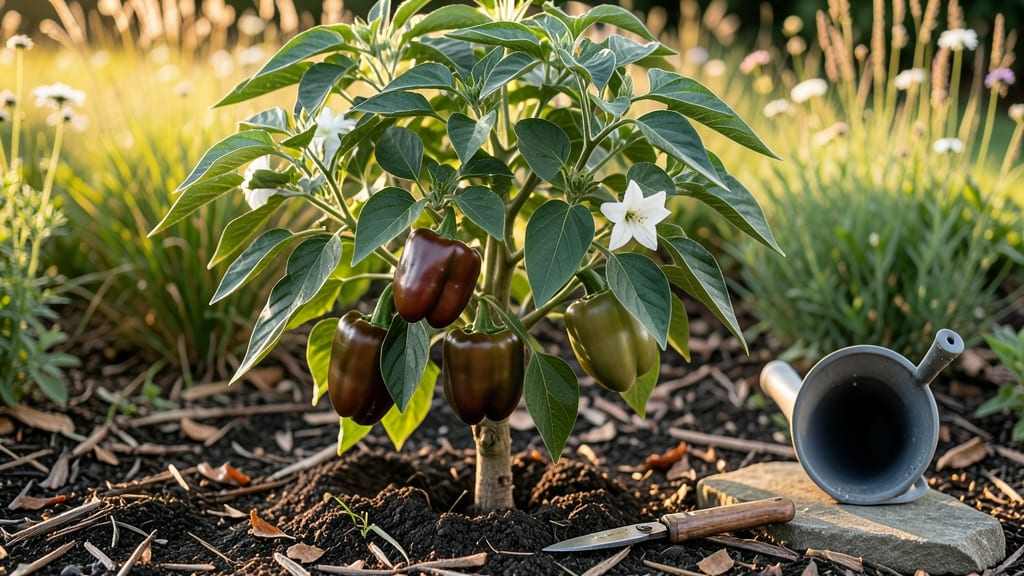
My chocolate bell pepper plant nearly stole the show last summer—deep mahogany skins hiding sweet, thick flesh perfect for roasting. 🌱 The secret wasn't luck, but pole training that turned sprawling vines into vertical sugar factories, producing harvests in just 55 days.
These aren't your average peppers; they're the kind that make neighbors ask, "What is that?" and then beg for seeds.
You'll need rich, well-draining soil with a pH between 6.0 and 6.8, and a spot where they get 6-8 hours of sun daily—morning light helps prevent sunscald on those gorgeous dark skins. Start seeds indoors 8-10 weeks before last frost, or buy sturdy transplants.
The pole system isn't complicated: just 5-foot stakes and some twine, and you'll save space while peppers grow upward instead of outward.
Water consistently—1-1.5 inches per week—keeping soil moist but never soggy, and feed with a balanced fertilizer (10-10-10) every 3-4 weeks once flowers appear. The payoff? Heavier yields, fewer cracked peppers, and plants that keep producing until frost.
Even my black-thumb cousin grew 20 peppers last year using this method.
Harvest when firm but still slightly soft, and watch as the vines keep sending up new blooms. Store peppers in the fridge for up to 2 weeks, or roast them fresh for that smoky-sweet taste that makes people think you're a professional chef.
Whether you're a space-saving city gardener or a backyard enthusiast, these peppers deliver big flavor with minimal fuss—just don't blame me if you plant 10 after trying them once.
📚 In This Guide
- What you need
- Instructions
- Tips and common mistakes
- Wrapping up and next steps
What you need
- ● Seeds: 3–5 chocolate bell pepper seeds (look for heirloom varieties like 'Chocolate Beauty' or 'Cacao').
- ● Containers: 3–5 biodegradable pots (4–6 inches deep) or a seed-starting tray with cell inserts.
- ● Potting Mix: 1 bag (1–2 cubic feet) of seed-starting mix or lightweight potting soil (sterile and peat-based).
- ● Grow Lights or Sunny Spot: A full-spectrum LED grow light (12–16 hours/day) or a south-facing window with 6+ hours of sunlight.
- ● Fertilizer: A balanced, water-soluble fertilizer (5-10-5 or 10-10-10 NPK ratio) for seedlings.
- ● Poles or Trellis: 1–2 5–6 ft tall bamboo stakes or a cage trellis for pole training.
- ● Twine or Soft Ties: 1–2 rolls of plant ties or jute string for securing vines.
- ● Watering Can: A spray nozzle attachment for gentle watering.
- ● A seedling heat mat (to keep soil warm, 70–80°F).
- ● A humidity dome or plastic wrap to retain moisture.
- ● A soil thermometer (to monitor germination conditions).
- ● Pruning shears for trimming excess foliage.
- ● A pH testing kit (ideal soil pH: 6.0–6.8).
- ● Access to warmth (indoor germination needs 70–85°F).
- ● Patience for 55 days to harvest (or longer if growing from seed).
- ● A sunny outdoor space (after last frost, move plants to 6+ hours of sunlight).
Step-by-step instructions for growing chocolate bell peppers vertically
Here’s how to coax those rich, sweet peppers up a trellis in record time.
🌱 Step 1: Start Seeds Indoors at the Right Time
Plant seeds 8-10 weeks before your last frost date—Chocolate Bell Peppers thrive when transplanted as sturdy seedlings. Use biodegradable pots (or small cell trays) filled with sterile seed-starting mix to avoid damping-off. Press 1-2 seeds per pot just ¼ inch deep, then lightly cover with soil and mist until damp.
Keep the mix warm (75-85°F) with a seedling heat mat—this speeds germination to 5-10 days. Once sprouts appear, remove the heat mat but maintain bright light (14-16 hours/day). Without enough light, seedlings stretch leggy and never recover. You’ll know they’re strong when their first true leaves are bold green and compact.
🪴 Step 2: Harden Off and Transplant to Trellis Setup
Two weeks before transplanting, harden off seedlings by placing them outside in partial shade for 1-2 hours daily, gradually increasing exposure. This toughens stems so they don’t snap when you attach them to the trellis later. Choose a 5-6 foot tall trellis (or sturdy stakes) and install it before transplanting—peppers hate root disturbance.
Transplant seedlings after all frost risk has passed and soil warms to 60°F. Bury them deeper than the pot—up to the first set of leaves—to encourage strong root growth. Space plants 18 inches apart along the trellis, securing each stem with soft plant ties (never wire—it cuts stems). Water deeply at transplanting to settle roots, then let the soil dry slightly before watering again.
☀️ Step 3: Train and Support as Plants Grow
As vines reach 12 inches tall, gently weave them up the trellis in a zigzag pattern—this prevents tangling and maximizes sunlight exposure. Chocolate Bell Peppers are indeterminate, so they’ll keep growing until frost. Prune suckers (the small shoots in leaf axils) to direct energy to fruit production, but leave 3-4 main stems for airflow.
Fertilize every 3-4 weeks with a balanced organic fertilizer (10-10-10) once flowers appear. You’ll know it’s working when peppers form smooth, glossy skin and grow 1-2 inches per week. Mulch with straw or grass clippings to retain moisture—peppers wilt faster than you’d expect in hot weather.
✂️ Step 4: Harvest and Extend the Season
Pick peppers when they’re 3-4 inches long and firm—this encourages more fruit. Use pruning shears to cut stems ½ inch above the next leaf to avoid disease entry. Chocolate Bells ripen from green to deep brown, but you can harvest at any stage for sweetness. Store unripe peppers in the fridge for 1-2 weeks or freeze whole for later use.
To extend harvests, cover plants with frost cloth when nights dip below 50°F. With proper care, you’ll get peppers for 2-3 months—far longer than most gardeners expect. Save seeds from your best peppers for next year by fermenting them in water for 3-5 days before drying.
Tips & tricks for perfect chocolate bell pepper plants
Here's what nobody tells you about growing these sweet, trellis-friendly peppers like a pro.
Lighting Secret: That 14-16 hours of light isn't just about duration—it's about intensity. Place seed trays within 6 inches of grow lights or a south-facing window. I use LED grow bulbs because they emit less heat than incandescent, preventing leggy seedlings. If your seedlings stretch toward the light, you're too far away—they'll never recover their compact shape.
Transplanting Hack: The deeper-than-pot transplanting trick works magic for Chocolate Bell Peppers. When burying up to the first leaves, make a small trench around the stem to encourage roots to spread outward. This creates a stronger base for vertical growth. I've seen plants with roots spreading 12 inches wide this way—far more stable than shallow transplants.
Training Technique: That zigzag pattern on the trellis isn't just for looks—it's a circulation system. The crisscross creates airflow between stems, preventing fungal diseases that thrive in dense foliage. When weaving, leave 3-4 inches between each loop to maintain this airflow while still supporting the weight of developing peppers.
Fertilizer Timing: Wait until flowers appear before fertilizing—that's when your plants need the boost. I use a liquid seaweed fertilizer at half strength every 3-4 weeks because it's gentler than synthetic options. The key is consistency: missing a feeding won't kill them, but irregular applications lead to uneven growth and poor fruit set.
Pro Tips for Chocolate Bell Pepper Plant
- Here's what nobody tells you about growing these sweet, trellis-friendly peppers like a pro.
- Lighting Secret: That 14-16 hours of light isn't just about duration—it's about intensity.
- Transplanting Hack: The deeper-than-pot transplanting trick works magic for Chocolate Bell Peppers.
Frequently asked questions
Got questions about growing chocolate bell pepper plants? You’re not alone! Here are answers to the most common queries to help you cultivate sweet, pole-worthy peppers with confidence.
How long does it take for chocolate bell peppers to mature?
With proper care, chocolate bell pepper plants typically mature in 55–70 days from transplanting, depending on your climate. Pole-trained varieties may take slightly longer to reach full size but produce fruit faster due to vertical support. Start seeds indoors 8–10 weeks before the last frost for an early harvest!
What’s the best temperature range for growing chocolate bell peppers?
Chocolate bell peppers thrive in warmth (70–85°F during the day) and need at least 6–8 hours of sunlight daily. Avoid planting until soil temps hit 60°F+—cold soil can stunt growth. If your spring is chilly, use row covers or wait until late May/June for optimal results.
Why are my chocolate bell peppers turning bitter?
Bitterness usually stems from over-ripening, stress, or poor pollination. Harvest peppers when they’re fully colored (deep brown/red) but still firm. Ensure plants get consistent water (1–1.5 inches/week) and balanced fertilizer (10-10-10). If peppers stay small, hand-pollinate with a paintbrush on cloudy days.
Can I grow chocolate bell peppers in containers?
Choose a 5-gallon container minimum with drainage holes. Use a lightweight potting mix and stake or trellis the plant early to save space. Pole-trained varieties work perfectly in containers—just ensure the pot gets full sun (6+ hours) and water deeply when the top inch of soil dries.
What can I substitute if I can’t find chocolate bell pepper seeds?
Try these sweet, dark-hued alternatives:
- Black Beauty bell peppers (dark purple when ripe, similar flavor)
- Jalapeño ‘Black’ variety (spicy but deep color)
- Purple bell peppers (milder, rich taste)
Wrapping up and next steps
Growing a chocolate bell pepper plant is a rewarding journey that brings sweet, rich flavors to your table in just 55 days! With the right soil, sunlight, and a little patience, you’ll enjoy a bountiful harvest of vibrant, pole-trained peppers that are perfect for cooking or snacking.
Whether you’re a seasoned gardener or a beginner, this fast-growing plant proves that delicious results are always within reach.
Ready to take the next step? Start your seeds indoors now—or grab a young plant from your local nursery—and watch your garden transform into a sweet, spicy paradise! 🌱✨