
Pests
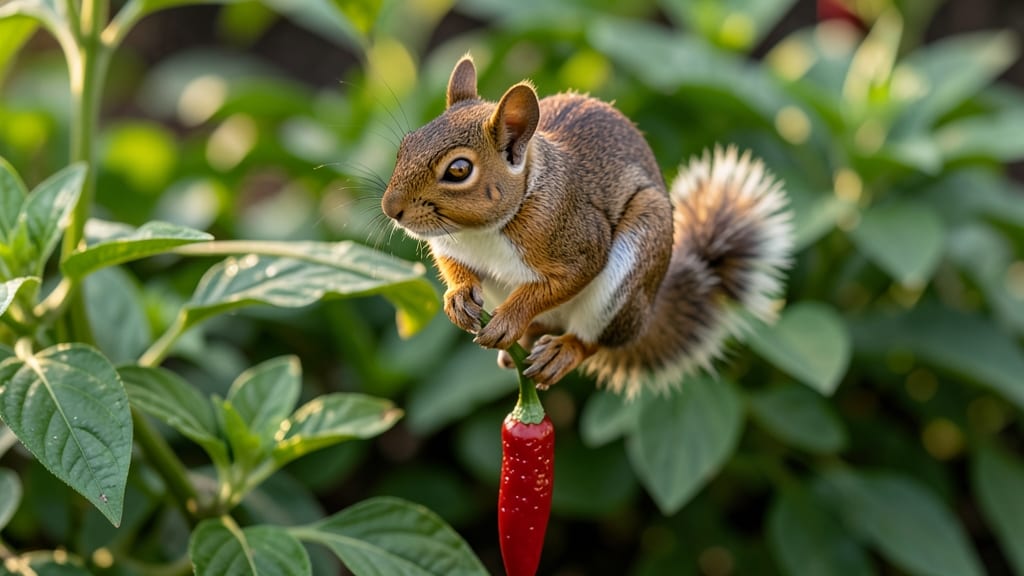
Cayenne pepper does repel squirrels by triggering their natural aversion to capsaicin, the compound that makes peppers spicy, but effectiveness depends on species and application strength. Light sprinklings around gardens or diluted sprays work best, though repeated applications may be needed.
Squirrels have highly sensitive noses and mouths, making them particularly vulnerable to capsaicin's irritating effects. 🌶️ The compound doesn't just create discomfort—it triggers a reflexive avoidance response, similar to how humans recoil from spicy foods.
However, gray squirrels often adapt faster than red squirrels, which may take longer to learn the association between cayenne and unpleasant sensations. For best results, combine cayenne with other deterrents like predator urine or strong citrus scents, as squirrels are less likely to habituate to a multi-sensory approach.
When applying cayenne-based deterrents, consistency is key. Reapply every 3-5 days during active squirrel seasons (spring through fall), especially after rain, as water dilutes the active compounds.
I've found that mixing cayenne powder with water and a bit of dish soap creates a longer-lasting spray that sticks to garden surfaces better than dry applications.
💡 In This Article
- How Cayenne Pepper Works Against Squirrels
- DIY Cayenne Pepper Sprays and Garden Applications
How cayenne pepper works against squirrels
Cayenne pepper's squirrel-repelling power comes from capsaicin, the compound that makes peppers hot for humans. For squirrels, capsaicin acts like a chemical irritant, binding to their TRPV1 receptors—the same receptors that detect heat in mammals.
These receptors, found in their nasal passages and mouths, send pain signals to the brain when exposed to capsaicin, creating an immediate aversion. 🔥 Unlike humans who can build tolerance, squirrels experience this irritation as an unpleasant sensory experience that triggers avoidance behavior.
The effectiveness varies by species due to differences in receptor sensitivity. Gray squirrels, for example, have a stronger aversion response than red squirrels because their TRPV1 receptors are more reactive to capsaicin.
A study from the Journal of Chemical Ecology found that gray squirrels avoided areas treated with 0.5% capsaicin solution within 24 hours, while red squirrels took up to 48 hours to learn the association.
The key is using enough cayenne to create a noticeable but not overwhelming sensation—too much can actually make squirrels less cautious over time.
Squirrels detect capsaicin primarily through their vomeronasal organ, a specialized sensory system that picks up chemical cues in the environment. When they sniff or taste cayenne-treated areas, this organ sends signals to their brainstem, triggering a reflexive withdrawal response.
This is why application methods matter: sprinkling cayenne near burrows or food sources forces squirrels to encounter it repeatedly, reinforcing the negative association. The irritation isn't harmful but creates enough discomfort that squirrels will seek alternative foraging spots.
Behavioral adaptation plays a critical role in long-term effectiveness. Some squirrels may eventually habituate to cayenne if it's the only deterrent used, especially if food sources become scarce. This is why combining cayenne with other repellents—like predator urine or strong citrus scents—creates a multi-sensory deterrent that's harder to ignore.
The combination disrupts their natural foraging patterns more effectively than a single method, as squirrels can't easily associate all the unpleasant sensations with one specific treatment.
Temperature also affects how well cayenne works. In cooler weather (50°F or below), squirrels are less active and may ignore cayenne-treated areas until they become desperate for food.
During warmer months when they're most active, the repellent's effectiveness peaks because their heightened activity increases exposure to the treated surfaces. This seasonal variation means you'll need to adjust application frequency based on squirrel behavior patterns in your region.
What most people don't realize is that cayenne's repellent effect isn't just about the spiciness—it's about the unpredictability of the experience. Squirrels are highly intelligent and will quickly learn to avoid consistent threats.
By rotating between cayenne treatments and complementary deterrents (like motion-activated sprinklers), you create an unpredictable environment that keeps them guessing. This multi-layered approach mimics natural predator behaviors, making the deterrent system more effective in the long run.