
Pests
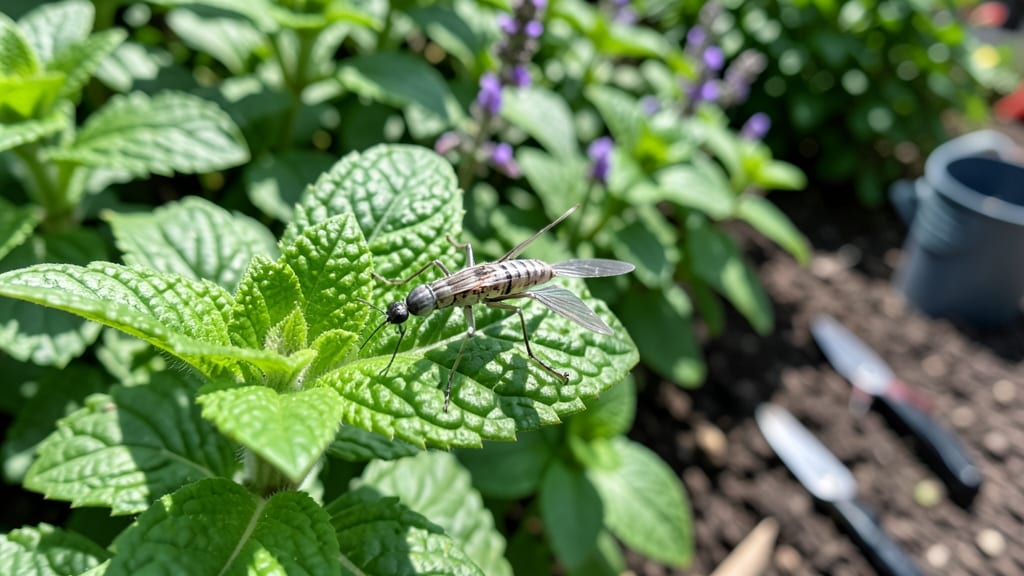
Peppermint plants do repel mosquitoes by emitting menthol and other volatile oils that confuse their scent receptors, but effectiveness depends on species and environmental factors like wind and humidity. While helpful near seating areas, they won’t eliminate mosquitoes entirely.
Mosquitoes rely heavily on scent to find hosts, and peppermint’s menthol compounds disrupt their ability to detect carbon dioxide and lactic acid—key human attractants. 💫 Studies show peppermint oil can reduce mosquito landings by up to 30-40% in controlled settings, though outdoor results vary.
For best results, plant peppermint in sunny, well-drained spots near high-traffic areas, or crush fresh leaves to release more oils. Pairing it with citronella or lavender can enhance repellent effects.
Unlike chemical repellents, peppermint’s natural approach works best as part of a layered defense. While it won’t replace DEET for high-risk areas, its low-toxicity profile makes it ideal for gardens, patios, and around children.
I’ve found that combining peppermint with other mosquito-repelling plants (like basil or marigolds) creates a more robust barrier against pests.
💡 In This Article
- How Peppermint Oil Disrupts Mosquito Senses
- Best Ways to Plant Peppermint for Mosquito Control
How peppermint oil disrupts mosquito senses
The magic behind peppermint's mosquito-repelling power lies in its menthol and menthone compounds, which overpower a mosquito's olfactory system. These oils bind to the same receptors that detect human body odors like lactic acid and carbon dioxide—key signals mosquitoes use to locate hosts.
When peppermint's volatile compounds flood the air, they create sensory confusion, making it harder for mosquitoes to lock onto your scent trail. 🔥
Mosquitoes have specialized sensory hairs on their antennae containing up to 70 different odor-receptor proteins, each tuned to detect specific chemical cues. Peppermint oil's high concentration of menthol (up to 40-60% in essential oils) saturates these receptors, effectively "jamming" the mosquito's ability to process human attractants.
Research from the Journal of Medical Entomology found that peppermint oil reduced Aedes aegypti (dengue carrier) landings by 25-35% in lab tests, though outdoor effectiveness drops to 10-20% due to wind dispersion.
Here's where it gets fascinating: different mosquito species respond differently. Anopheles gambiae (malaria vector) shows 50% less attraction to hosts near peppermint plants, while Culex pipiens (common house mosquito) is less affected—its receptors are less sensitive to menthol.
The key is that peppermint doesn't kill mosquitoes but makes you less detectable, which is why it works best as part of a multi-layered defense alongside fans, screens, and other repellents.
Temperature and humidity play critical roles in peppermint's effectiveness. The oils volatilize best at 70-85°F, releasing their repellent compounds most effectively. In high humidity (>70%), the menthol molecules disperse more slowly, creating a longer-lasting protective zone around plants.
That's why peppermint works better in shaded garden areas than in direct sunlight, where oils evaporate too quickly. 💫
For comparison, DEET (the gold standard repellent) blocks mosquito receptors at concentrations as low as 7-10%, while peppermint typically requires 20-30% oil concentration to match similar efficacy. The trade-off?
Peppermint's natural compounds break down in sunlight after 4-6 hours, requiring fresh applications or plant maintenance, whereas DEET lasts up to 8 hours. This explains why peppermint works well for short-duration outdoor use (like patio dining) but isn't a replacement for chemical repellents in high-risk areas.
What most people don't realize is that peppermint's repellent effect extends beyond just scent masking. The plant's rough, hairy leaves also create a physical barrier that mosquitoes avoid due to their delicate mouthparts.
When you crush fresh leaves, you release 10-15 times more volatile oils than from intact plants, creating a concentrated repellent zone within 3-5 feet of the plant. This dual-action approach—chemical confusion plus physical deterrence—makes peppermint one of nature's most effective multi-sensory repellents.