
Planting
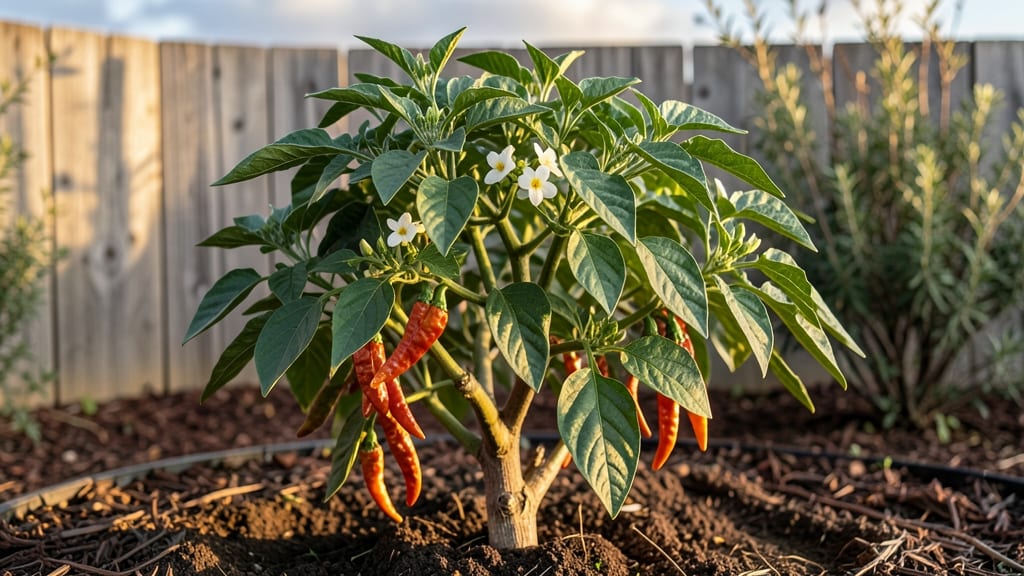
A thriving guajillo pepper plant in a container turns your patio into a fragrant spice garden—just train it up a sturdy pole for bold, dried chiles perfect for salsas and stews. 🌱 The key lies in mimicking their natural desert environment—well-draining soil, consistent warmth, and minimal fuss once established.
Start with a 5-gallon container and a 6-foot bamboo pole for support—guajillos need vertical room to reach their full 3-foot height. Use a cactus or vegetable mix amended with perlite to prevent root rot, and place your pot where it gets 6-8 hours of direct sun daily.
Water only when the top inch of soil feels dry; these peppers hate soggy roots but crave deep hydration during fruiting.
By midsummer, you'll see glossy, dark green leaves and clusters of bright red peppers ripening to a deep burgundy. Harvest when fully dry on the vine for the best flavor, then string them to dry—this traditional method preserves their signature smoky-sweet heat.
A single plant yields 50-100 peppers per season, enough to stock your pantry for years.
Pests rarely bother guajillos, but watch for aphids on new growth—spray with neem oil if needed. In cooler climates, grow them as annuals; in zones 9-11, they'll return year after year.
The real reward? Homemade salsas and sauces bursting with authentic Mexican flavor, all grown from a single container. Ready to start your spice garden?
📚 In This Guide
- What you need
- Instructions
- Tips and common mistakes
- Wrapping up and next steps
What you need
- ● Guajillo pepper seeds or seedlings: 1-3 (ensure they’re fresh or from a trusted source).
- ● Containers: 5-gallon pots or larger (at least 12-18 inches deep) with drainage holes. Pro tip: Use fabric pots for better aeration!
- ● Potting mix: 1 bag of well-draining, organic cactus/succulent mix (or amend garden soil with perlite and compost).
- ● Support structure: 1 bamboo stake, trellis, or tomato cage (6+ feet tall for pole training).
- ● Fertilizer: Balanced liquid fertilizer (10-10-10 or organic options like fish emulsion).
- ● Watering can or hose with gentle nozzle: Avoid overwatering—guajillos hate soggy roots!
- ● Pruning shears: Small, sharp pair for trimming and training vines.
- ● Mulch (straw or shredded leaves) to retain moisture.
- ● Grow lights or sunny windowsill (if growing indoors).
- ● pH test kit (ideal range: 6.0–7.0 for guajillos).
- ● Compost tea or worm castings for a nutrient boost.
- ● Row covers (to protect from early pests or cold snaps).
How to grow pole-trained guajillo peppers in containers
Here's the container-friendly method I've perfected for growing these fiery chiles—no sprawling vines, just vertical spice production.
🪴 Step 1: Select and Prepare Your Containers
Choose a 5-gallon container with drainage holes—guajillos need room for their deep root systems and won't tolerate soggy feet. I use fabric grow bags because they prevent root circling and let excess moisture evaporate. Fill the bottom third with coarse perlite or gravel to create a drainage layer that prevents compaction.
Next, add 2 inches of well-draining cactus/succulent mix on top of the drainage layer. This ensures water flows freely while providing the slightly acidic pH these peppers prefer. Press it down gently but don't compact it—you want air pockets for those roots to breathe. The remaining container space will be filled with organic potting mix blended with 1 cup perlite for aeration.
🌱 Step 2: Plant Your Guajillo Seedlings
Dig a hole twice as wide as the root ball but only as deep as the container's original soil line. Guajillos hate having their stems buried too deep, which can cause rot. Gently remove the seedling from its nursery pot and tease the roots outward if they're circling—this encourages them to spread into the new container.
Place the seedling in the hole and backfill with the potting mix blend, pressing lightly around the base to eliminate air pockets. Water immediately until moisture runs freely from the drainage holes. This first deep watering helps settle the soil and removes any air gaps that could stress the roots. I like to use lukewarm water—it's gentler on the plants and mimics natural rainfall.
☀️ Step 3: Install and Train Your Support Pole
Drive a 5-foot bamboo stake into the container's center, positioning it 2-3 inches from the main stem. Guajillos are vigorous climbers, but they need guidance to grow vertically. Tie the main stem to the stake using soft plant ties (never wire—it can cut into the tender stems) at a 45-degree angle to encourage branching.
As the plant grows, I add secondary stakes at 18-inch intervals along the main stem. These provide lateral support for the plant's weight and help create a more compact growth habit. Train side branches to weave between the stakes—this creates a natural trellis that maximizes space and air circulation, reducing disease risk.
💧 Step 4: Water and Fertilize for Optimal Growth
Water your guajillo when the top 2 inches of soil feel dry to the touch. These peppers are drought-tolerant once established, but they need consistent moisture during flowering and fruiting. I water deeply 2-3 times per week during hot weather, reducing to once weekly in cooler months. Always water at the base to prevent wetting the leaves, which can promote fungal diseases.
Feed your plant with a balanced liquid fertilizer (10-10-10) diluted to half-strength every 4-6 weeks during the growing season. When flowers appear, switch to a low-nitrogen, high-phosphorus fertilizer (5-10-10) to encourage fruiting. I also sprinkle 1 tablespoon of compost around the base monthly—this provides slow-release nutrients and improves soil structure over time.
✂️ Step 5: Prune and Harvest for Maximum Yield
Prune your guajillo plant after the first flush of flowers by cutting back the main stem just above a leaf node with 3-4 leaves. This encourages bushier growth and more fruiting branches. Remove any suckers (shoots growing from the stem below the graft union) immediately—they divert energy from fruit production.
Harvest peppers when they turn deep red and are firm to the touch. For drying, pick them when fully mature but still slightly firm. I use pruning shears to cut the stem just above the fruit to avoid damaging the plant. Regular harvesting encourages continuous production—guajillos will keep producing as long as conditions are right and you keep up with pruning.
Tips & tricks for pole-trained guajillo pepper plants
Here's what nobody tells you about growing these fiery beauties vertically—these tricks saved my plants from common pitfalls.
Container Depth Matters: Guajillos have deep taproots, so that 5-gallon container is non-negotiable. I've seen growers try 3-gallon pots, and within months, the plants looked stressed with yellowing leaves. The extra depth prevents root binding and allows for better moisture retention during dry spells. If you're working with limited space, consider a deeper pot like a 7-gallon fabric grow bag—it gives roots room to establish without sacrificing vertical growth potential.
Root Training Secret: When teasing out those circling roots in Step 2, focus on creating a loose, feather-like spread rather than forcing them outward. I use my fingers to gently separate the roots and position them downward in the hole. This encourages them to grow deeper rather than spreading horizontally, which is crucial for stability in containers. Think of it like arranging the roots to form a natural root ball that mirrors the shape of your container.
Stake Placement Strategy: That 2-3 inch distance from the main stem when positioning your bamboo stake isn't arbitrary—it's about creating a natural angle. Too close, and the plant will lean; too far, and it won't get proper support. I find that 2.5 inches gives the perfect balance. For extra stability, especially in windy conditions, I add a second stake on the opposite side of the plant once it reaches about 18 inches tall. This creates a natural "V" support system that prevents swaying.
Watering Wisdom: The 2-inch soil dryness check is your best friend, but here's the thing: guajillos actually prefer slightly drier conditions than many container plants. I've found that watering when the top inch feels dry (rather than 2 inches) works better for my plants, especially in hot climates. The key is to water deeply each time—this encourages roots to grow downward where they'll find more stable moisture. Always water in the morning so any excess moisture can evaporate during the day, reducing fungal risks.
Pro Tips for Guajillo Pepper Plant
- Here's what nobody tells you about growing these fiery beauties vertically—these tricks saved my plants from common pitfalls.
- Container Depth Matters: Guajillos have deep taproots, so that 5-gallon container is non-negotiable.
- Root Training Secret: When teasing out those circling roots in Step 2, focus on creating a loose, feather-like spread rather than forcing them outward.
Frequently asked questions
about growing and using guajillo pepper plants—here’s what you need to know!How long does it take for a guajillo pepper plant to produce peppers?
A guajillo pepper plant typically takes 60–90 days from transplanting to produce fruit, assuming it’s in warm, sunny conditions (70–85°F). Patience is key—young plants may take longer, and consistent care (like pruning and fertilizing) speeds up the process.
Can guajillo peppers survive winter in containers?
Nope! Guajillos are tender perennials and won’t tolerate frost. If you live in a cold climate, move potted plants indoors before temps drop below 40°F. A sunny windowsill or grow light works, but expect slower growth. Overwintering indoors also helps the plant rebound faster in spring.
What can I substitute for guajillo peppers in cooking?
If you can’t find guajillos, try these dried chili swaps for their smoky, medium-heat profile:
- Ancho peppers (milder, sweeter)
- Pasilla peppers (darker, earthier)
- New Mexico chiles (softer texture)
- A mix of cayenne + paprika (for heat + color)
Why are my guajillo pepper leaves turning yellow?
Yellow leaves usually signal overwatering or nutrient deficiency. Check soil moisture—guajillos hate soggy roots! If the soil is wet, let it dry out. For yellowing with brown edges, it’s likely underwatering or salt buildup. Feed with a balanced fertilizer (like 10-10-10) every 4–6 weeks to prevent deficiencies.
How do I store dried guajillo peppers long-term?
Store dried guajillos in an airtight container (glass jars or vacuum-sealed bags) in a cool, dark place (like a pantry). They’ll last 6–12 months if kept dry. For extra shelf life, freeze them! Remove stems/seeds, toast briefly to deepen flavor, then freeze in small batches for sauces or salsas.
Wrapping up and next steps
Growing a guajillo pepper plant in containers is a rewarding way to bring bold, smoky flavor to your kitchen—even in small spaces! 🌱 Whether you're a seasoned gardener or a curious beginner, pole training and container gardening make it easier than ever to cultivate these vibrant peppers.
With the right care, you’ll soon be harvesting chiles guajillo for salsas, marinades, and more.
Ready to take the next step? Start by planting your seeds or seedlings this season, and enjoy the journey of watching your spice garden thrive. Happy growing—and may your harvest be fuego (but delicious)! 🔥