
Size
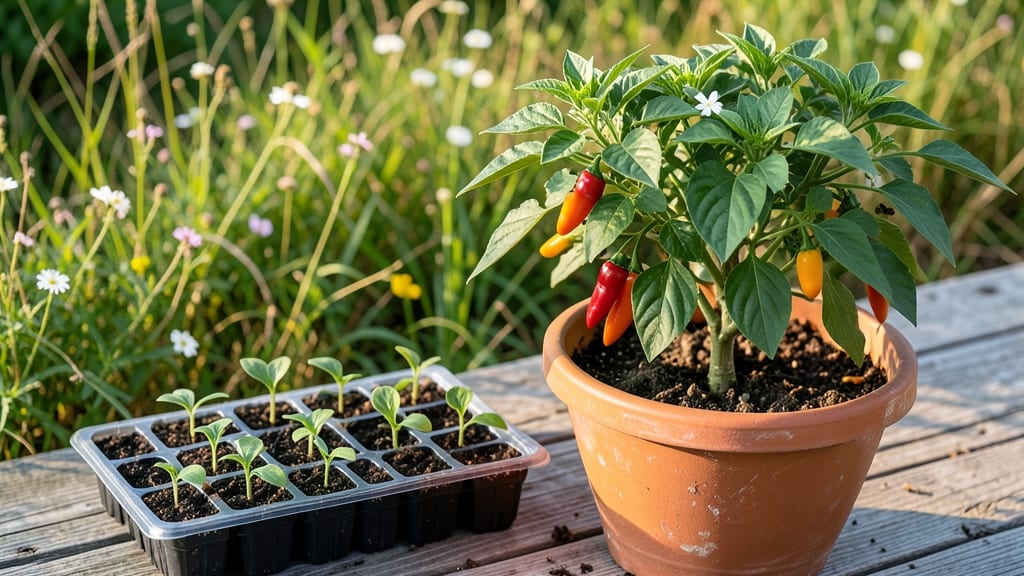
Growing hot pepper seeds indoors gives you a three-week head start on the garden season—especially when you use this simple hack that cuts germination time in half. 🌱 I’ve grown everything from ghost peppers to banana peppers this way, and the secret isn’t fancy equipment but timing, warmth, and a little patience.
Most beginners struggle with slow starts or leggy seedlings, but this method delivers strong, compact plants ready for transplanting by May.
The trick begins with soil temperature—pepper seeds need warmth to sprout, and a basic seedling heat mat (or even a sunny windowsill with a clear plastic dome) does the trick. You’ll need a shallow tray, quality seed-starting mix, and a spray bottle for gentle watering.
Germination happens in 7-14 days, but the real magic is in keeping those first leaves sturdy enough to handle real sunlight later.
By the time you’re ready to move them outside, your peppers will be stocky and vibrant, not the weak stems you get from slow starts. The payoff? Earlier harvests, bigger yields, and varieties you’d never find at the nursery—like the Carolina Reaper or the sweet but fiery ‘Apache’.
Plus, you’ll avoid the heartbreak of bolted plants or pests that love weak seedlings.
This works for any pepper variety, from mild to extreme heat, and adapts to small spaces or limited light. Whether you’re a first-timer or a seasoned grower, the key is consistency—warmth, light, and just enough water. Let’s get those seeds sprouting!
📚 In This Guide
- What you need
- Instructions
- Tips and common mistakes
- Wrapping up and next steps
What you need
- ● Hot pepper seeds: 5–10 seeds (choose varieties like Carolina Reaper, Habanero, or Ghost Pepper for extra heat!).
- ● Seed-starting trays or small pots: 2–4" deep (biodegradable pots work great!).
- ● High-quality seed-starting mix: Lightweight, sterile, and well-draining (avoid garden soil!).
- ● Grow lights or a sunny windowsill: 12–16 hours of light daily (LED grow lights are ideal).
- ● Spray bottle: For gentle watering (avoid drowning seeds!).
- ● Plastic wrap or humidity dome: To retain moisture while seeds germinate.
- ○ Heat mat (optional but helpful): 70–85°F range speeds up germination.
- ● Fertilizer: Diluted fish emulsion or balanced starter fertilizer (5-5-5 ratio).
- ● pH test kit: Keep soil pH between 6.0–7.0 for optimal growth.
- ● Support stakes or cages: For taller varieties like Jalapeños or Serranos.
- ● Thermometer/hygrometer: Monitor temperature and humidity (60–70% humidity is ideal).
How to start hot pepper seeds indoors for a jump-start harvest
Here's the exact method I use to get fiery peppers thriving indoors weeks before outdoor planting.
🌱 Step 1: Prep Your Seed-Starting Supplies
Gather 4 biodegradable seed pots (2-3 inches deep) and fill them with sterile seed-starting mix. I like to add a handful of perlite to each pot—this prevents the compacted soil that drowns pepper seedlings. Moisten the mix until it feels like a wrung-out sponge: damp but not dripping.
Tap each pot gently on the counter to settle the soil without compacting it. You want air pockets gone but roots able to push through easily. Pepper seeds need loose, well-draining soil to prevent rot. I always label my pots with the pepper variety and date—trust me, you'll forget which is habanero and which is jalapeño after a few weeks.
🌱 Step 2: Plant Seeds at the Right Depth
Press 1-2 seeds per pot into the soil about ¼ inch deep. Planting too deep makes seeds work harder to reach light, delaying germination. Cover lightly with a sprinkle of additional mix—just enough to hide the seeds but not bury them.
Mist the surface with a spray bottle until evenly moist. A heavy watering can will dislodge seeds or bury them too deep. I like to use a fine-mist setting to avoid disturbing the seeds. Place the pots in a warm spot (75-85°F)—a seedling heat mat speeds things up dramatically.
💧 Step 3: Create the Perfect Germination Environment
Cover the pots with clear plastic wrap or a humidity dome to trap warmth and moisture. Peppers germinate fastest in these conditions—expect sprouts in 7-14 days. Check daily but resist watering; the dome keeps humidity high enough that the soil stays damp without extra water.
Once 50% of seeds have sprouted, remove the dome immediately. Trapped humidity around new seedlings invites damping-off disease, which collapses stems overnight. You'll see the first true leaves (not the initial cotyledons) appear after 2-3 weeks—this is your signal to adjust care.
☀️ Step 4: Provide Bright, Consistent Light
The instant seedlings emerge, move them under grow lights (14-16 hours daily). A south-facing window rarely provides enough intensity, so I use a full-spectrum LED bulb positioned 2-4 inches above the plants. Raise it as they grow to maintain that gap.
Without enough light, seedlings stretch leggy and weak. You'll know your setup is right when seedlings have thick stems, deep green leaves, and compact spacing between leaves. If stems bend toward the light, your fixture is too far away—adjust immediately.
🌿 Step 5: Harden Off and Transplant Outdoors
Two weeks before your last frost date, start hardening off seedlings by placing them outside in a sheltered spot for 1-2 hours the first day. Gradually increase outdoor time by 1 hour daily over 10-14 days, slowly introducing more sun and wind.
Skip this step, and you'll burn leaves or break stems when transplanting. Once seedlings tolerate a full day outside without wilting, they're ready for the garden. Transplant on an overcast afternoon to reduce transplant shock and water deeply at the base.
Tips & tricks for perfect indoor pepper seedlings
Let me share the little details that make all the difference when growing fiery peppers from seed indoors.
Soil Science: The sterile seed-starting mix you use is the foundation, but don't skip the perlite! That handful per pot creates tiny air pockets that prevent the dreaded "pepper seedling rot." I've learned this the hard way—compacted soil equals drowned roots. After adding perlite, give that mix a gentle tap on the counter to settle it without compacting, and you'll have the perfect loose texture for those delicate roots to explore.
Germination Game-Changer: That 75-85°F warm spot isn't just a suggestion—it's the magic window for pepper seeds to wake up. I've found that a seedling heat mat under my pots cuts germination time by nearly half. But here's the thing: once you see those first sprouts (usually between 7-14 days), remove that humidity dome immediately after 50% sprout. I've seen damping-off disease wipe out entire batches when people leave that dome on too long—it's like creating a sauna for fungus.
Lighting Secret: Those 14-16 hours of grow light aren't just about duration—the positioning matters too. I keep my full-spectrum LED bulb just 2-4 inches above the seedlings and raise it as they grow. The telltale sign you've got it right? Thick stems and leaves that aren't spaced too far apart. If your seedlings start stretching toward the light like they're reaching for a high-five, your fixture is too far away—adjust immediately or you'll end up with weak, leggy plants that flop over.
Harden Off Smart: The gradual outdoor acclimation is crucial, but I've got a pro move: start the hardening process on an overcast day. Cloud cover means less intense sunlight that could burn those tender seedlings. And here's what nobody tells you—when you're increasing outdoor time by 1 hour daily, watch for wilting during the day but full recovery by evening. That's your plant saying "I'm ready!" rather than "I'm struggling."
Pro Tips for Hot Pepper Seeds To Grow
- Let me share the little details that make all the difference when growing fiery peppers from seed indoors.
- Soil Science: The sterile seed-starting mix you use is the foundation, but don't skip the perlite!
- Germination Game-Changer: That 75-85°F warm spot isn't just a suggestion—it's the magic window for pepper seeds to wake up.
Frequently asked questions
Got questions about growing hot pepper seeds? You’re not alone—here are some of the most common ones to help you get started with confidence!
How long does it take for hot pepper seeds to germinate?
Hot pepper seeds typically germinate in 7–21 days, depending on temperature (ideal: 70–85°F) and moisture. Keep soil consistently damp (not soggy) and place seeds in a warm spot. Patience is key—some varieties take longer than others! Pro tip: Use a heat mat if your home runs cool.
Can I grow hot peppers indoors year-round?
Yes! With the right setup—12+ hours of grow lights, proper ventilation, and a sunny window—you can grow hot peppers indoors anytime. Just monitor for pests (like spider mites) and adjust light as seasons change. Dwarf or bush varieties (e.g., Jalapeño or Thai Chili) thrive best in containers.
What if my hot pepper seeds don’t sprout?
Don’t toss them yet! Try these fixes:
- Soak seeds in warm water for 24 hours before replanting.
- Check seed viability—test a few by crushing them (if they smell musty, they’re old).
- Use fresh, sterile potting mix and ensure pots have drainage holes.
- Try a bottom heat method (place pots on a heating pad).
Do I need to thin my pepper seedlings?
Yes! Thin seedlings to 12–18 inches apart once they’re 2–3 inches tall. Overcrowding weakens plants and increases disease risk. Use scissors to snip (not pull) to avoid disturbing roots. Bonus: Transplant thinned seedlings to smaller pots for extra greens!
Which hot peppers are easiest for beginners?
Start with these low-maintenance, fast-growing varieties:
- Jalapeño – Reliable, mild heat, and prolific.
- Thai Chili (Bird’s Eye) – Compact and spicy!
- Banana Pepper – Sweet with a kick, great for pickling.
- Cayenne – Drought-tolerant and hot.
Wrapping up and next steps
Growing hot pepper seeds indoors is a rewarding way to kickstart your spicy harvest early! With the right containers, soil, warmth, and patience, you’ll soon be enjoying homegrown peppers—whether for sizzling dishes or sharing with fellow spice lovers. 🌱
Ready to take the next step? Start by planting your seeds today and watch your green thumb grow! For extra success, explore companion planting or experiment with different varieties. Happy growing—and may your peppers be fiery and plentiful! 🔥