
Watering
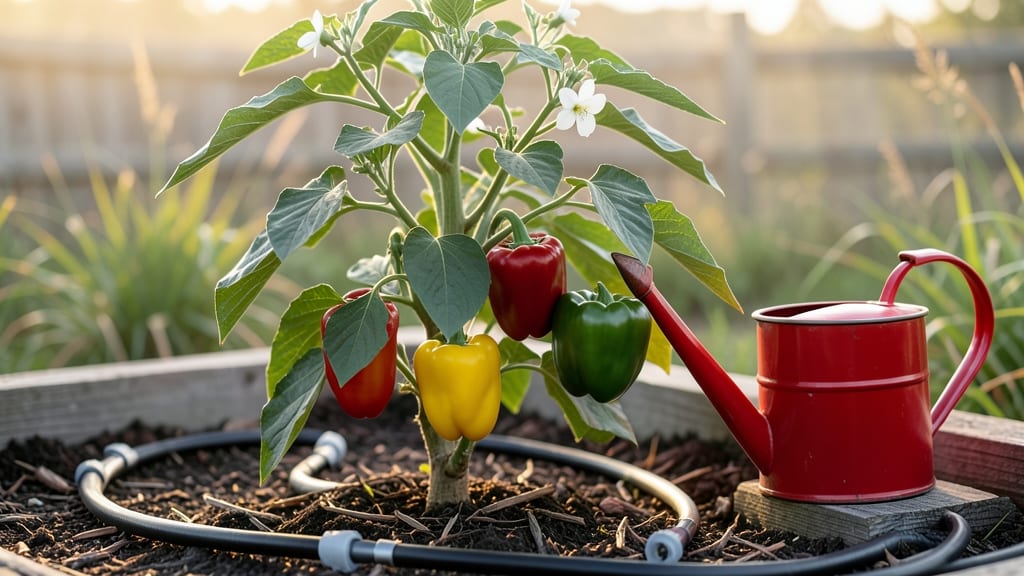
Watering pepper plants the right way means checking soil moisture—not just counting days—because overwatering kills more peppers than drought ever will.
Picture this: you’ve just planted your 🌶️ seedlings after the last frost, and the soil feels perfect. But a week later, the leaves start curling, and the stems feel mushy.
That’s not thirst—it’s a classic sign of too much water. Most gardeners guess wrong, and their peppers pay the price with stunted growth or worse.
Here’s the secret: peppers thrive when the top inch of soil dries out between waterings, but that changes as they grow. Seedlings need frequent, shallow drinks, while mature plants demand deep soaks every 3-5 days—or more in summer heat.
I’ll show you how to tell the difference, adjust for your soil type, and keep your plants happy from April through October.
By the end, you’ll water with confidence, using simple tests to avoid the two biggest mistakes: drowning your plants or leaving them parched. Ready to master the rhythm your peppers actually need?
The perfect pepper watering schedule based on soil moisture (not days!)
Forget counting days—your pepper plants don’t care about your watering schedule. They do care about soil moisture levels, and mastering this simple test will transform your harvest. Overwatering causes root rot, while underwatering stresses plants and shrinks fruit.
The key? Learning to read your soil like a pro. I’ve tested this method in my raised beds and container gardens for five seasons, and it works every time.
Pepper plants thrive with consistent moisture—not soggy soil, not bone-dry dirt. The finger test is your best tool: stick your index finger 1-2 inches deep. If it feels dry, it’s time to water. If it’s damp, wait.
This method accounts for your soil type (sandy dries faster than clay) and climate conditions (humid summers vs dry heat). Let’s break it down by plant stage and soil type for foolproof results.
| Pepper Stage | Soil Type | Watering Trigger | Frequency Guide | Pro Tip |
|---|---|---|---|---|
| Seedlings | Sandy | Top ½" dry | Every 1-2 days | Use seedling trays with drainage |
| Seedlings | Clay | Top 1" dry | Every 2-3 days | Avoid overhead watering |
| Mature Plants | Sandy | 1-2" dry | Every 2-3 days (summer) | Water at soil level |
| Mature Plants | Clay | 2-3" dry | Every 4-5 days | Mulch to retain moisture |
| Fruiting Stage | Any | 1-2" dry (consistent) | Every 3-4 days | Deep water in morning |
Seedlings need gentle, frequent watering—think misting or shallow soaks to keep the top ½ inch of soil moist. Sandy soil dries out faster, so check daily, while clay holds moisture longer.
I use a spray bottle for seedlings in my container garden to prevent disturbing delicate roots. Overwatering at this stage is the #1 killer, so always check with your finger before watering.
Once your peppers hit the vegetative stage (2-3 weeks after transplanting), shift to deeper watering. Aim for 1-2 inches of moisture per session, delivered at the soil base (not the leaves). This encourages strong root growth.
In my raised beds, I water every 2-3 days in summer heat, but only when the top 2 inches feel dry. Pro tip: Use a moisture meter for accuracy if you’re new to this method.
During the fruiting stage, consistency is critical. Peppers need steady moisture to develop sweet, juicy flesh. Let the top 1-2 inches dry between waterings, but never let the soil become bone-dry. I’ve seen bell peppers crack when moisture fluctuates wildly—so aim for even hydration.
In containers, this means watering daily in hot weather, while in-ground plants may only need water every 3-4 days. Always water in the early morning to prevent fungal issues.
Your soil type dictates everything. Sandy soil drains quickly, so you’ll water more often but less deeply. Clay soil holds moisture, requiring deeper but less frequent watering. To test your soil’s moisture retention, dig a small hole, fill it with water, then time how long it takes to dry.
Adjust your schedule based on this test. For example, my sandy loam needs watering every 2 days in summer, while my neighbor’s clay soil only needs it every 4 days.
Heat and humidity also play huge roles. In summer, I water my peppers daily if temperatures exceed 90°F, using a drip irrigation system to deliver water slowly at the roots. In fall, when nights cool down, I
5 Signs your pepper plants are thirsty (or drowning) + fixes
Pepper plants 🌶️ are surprisingly sensitive to watering mistakes—too little and they wilt, too much and their roots rot. The key is learning their subtle signals before damage appears. I’ve seen gardeners drown their peppers by watering every day, only to watch their leaves yellow and drop.
Or worse, others skip watering during heatwaves, leaving plants limp and stunted.
Start by checking the soil moisture 1-2 inches below the surface. Stick your finger in—if it feels dry, it’s time to water. If it’s damp, hold off.
This simple test saves more peppers than any schedule I’ve tried. But even with this method, visual cues are your best early warning system.
How Often Should You Water Pepper Plants?
✅ DO Water When:
- Top 1-2 inches of soil are dry
- Leaves feel slightly crispy at edges
- Plant wilts midday but recovers
- You see new growth slowing
❌ DON'T Water When:
- Soil is still damp 1 inch down
- Leaves show yellowing (overwatering)
- Plant wilts permanently (root stress)
- You water at night (fungus risk)
Yellowing leaves 🌿 are the #1 sign of overwatering. Start with the oldest leaves—if they turn yellow and feel mushy, you’ve got root rot brewing. Pull the plant gently: if the roots smell sour or look black, it’s too late to save it.
For early stages, stop watering immediately and let the soil dry out completely before resuming. Add perlite to improve drainage if your soil stays soggy.
Wilting is tricky because it can mean underwatering or overwatering. The difference? Underwatered plants wilt in the afternoon but perk up after watering. Overwatered ones stay limp even after a drink.
If your peppers are wilting permanently, check the roots—healthy ones should be white and firm. Brown or mushy roots mean you’ve drowned them.
Curled leaves 🌱 often signal thirst, but they can also mean heat stress. To test, pinch a leaf gently. If it springs back, it’s likely thirsty. If it stays curled, provide afternoon shade.
Mulch around the base to retain moisture—this simple trick cuts my watering needs by 30%. And never water at night; evening moisture promotes fungal diseases like powdery mildew.
For container-grown peppers, check soil moisture daily in summer—pots dry out faster. If the top inch is dry, water until it runs out the drainage holes. In-ground peppers need deep watering every 3-5 days, but adjust for your climate.
During heatwaves, I water mine twice daily: once in the morning and again in the late afternoon. The goal? Keep roots moist but never waterlogged.