
Plants
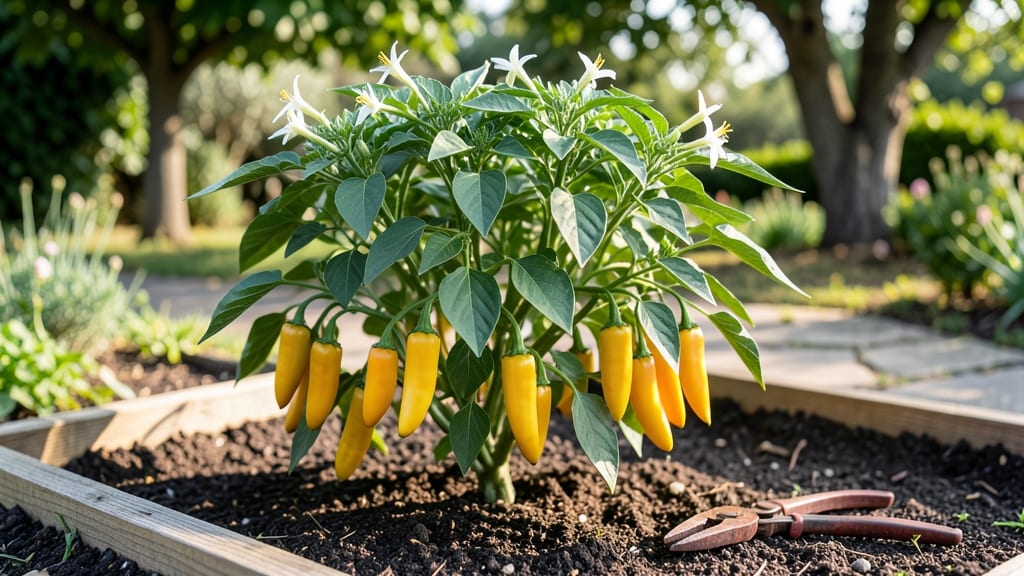
Sweet banana pepper plants grow between 1 and 3 feet tall, making them perfect for small gardens, containers, or even kitchen windowsills.
If you’ve ever squeezed a pepper plant into a tight spot only to watch it sprawl into a tangled mess, you know how frustrating it can be. But with the right spacing and support, these 🌶️ compact growers stay neat while producing a bumper crop of sweet, banana-shaped peppers.
Whether you’re growing them in a raised bed or a hanging basket, their height is one of the easiest ways to plan your garden layout.
Most varieties stay under 2 feet without support, but some can stretch toward 3 feet if left unchecked. The key is understanding whether your chosen variety is a bush type (staying shorter) or a vine type (needing a little help).
I’ll break down the exact heights by variety, plus when and how to use trellises or pruning to keep them in check.
You’ll also learn how to space them for airflow, when to add support, and simple pruning tricks to encourage more peppers instead of more height. By the end, you’ll know exactly how to grow them at the perfect size for your space.


Sweet banana pepper plant height by variety: exact growth ranges
Sweet banana peppers are a gardener’s favorite because they’re productive, flavorful, and surprisingly adaptable to small spaces. However, their mature height varies dramatically by variety, from compact 1-foot bush types to sprawling 3-foot vines.
Knowing these differences helps you choose the right variety for your garden layout, container size, or trellis setup. Some varieties naturally stay low, while others need support to reach their full potential.
Most sweet banana peppers fall into two growth categories: bush types (compact and self-supporting) and vine types (taller and needing staking). Bush varieties are ideal for small gardens or containers, while vine types thrive when trained vertically.
Below, I’ve broken down the exact height ranges of the most popular varieties, including their growth habits and support needs.
Understanding these differences isn’t just about aesthetics—it directly impacts yield, airflow, and disease prevention. Taller varieties benefit from vertical training to improve air circulation, while bush types can be crowded closer together for higher pepper production per square foot.
Let’s dive into the specifics so you can plan your garden like a pro.
| Variety | Growth Habit | Mature Height | Support Needed | Best For |
|---|---|---|---|---|
| Sweet Banana | Bush | 18–24 inches | None (compact) | Containers, small gardens |
| Apache | Vine | 24–36 inches | Trellis or stake | Vertical gardens, trellises |
| Aristotle | Bush | 12–18 inches | None (dwarf) | Pots, windowsills |
| Lemon Drop | Vine | 24–30 inches | Cage or stake | Balconies, raised beds |
| Golden Banana | Bush | 20–24 inches | Optional (light support) | Small gardens, borders |
The 'Sweet Banana' variety is one of the most popular for home gardens because it stays compact at 18–24 inches, making it perfect for containers or small plots.
Its bushy growth habit means you won’t need to worry about staking, but you can still train it lightly to encourage bushier foliage and more peppers. This variety is also disease-resistant, which is a bonus for gardeners in humid climates.
On the other hand, the 'Apache' variety is a vine type that can reach 3 feet tall if left unchecked. Without support, it may sprawl, reducing airflow and increasing the risk of fungal diseases like powdery mildew.
For this reason, I recommend using a trellis or sturdy stake to train it vertically. When supported, it produces longer, straighter peppers and yields more fruit overall.
If you’re working with limited space, the 'Aristotle' variety is a game-changer. This dwarf variety tops out at just 12–18 inches, making it ideal for windowsill gardens or small pots. It’s also early-maturing, so you can enjoy peppers in as few as 60 days.
Because it’s so compact, you can plant multiple plants closely together to maximize your harvest in tight spaces.
For gardeners who love vertical gardening, the 'Lemon Drop' variety is a standout. It grows to 24–30 inches tall and thrives when trained on a cage or trellis. The vertical growth not only saves space but also makes harvesting easier—no more bending over!
Plus, the bright yellow peppers add a pop of color to your garden while staying sweet and crunchy.
When choosing a variety, consider your garden layout and support options. Bush types like 'Sweet Banana' or 'Golden Banana' are low-maintenance and great for beginner gardeners. Meanwhile, vine types like 'Apache' or 'Lemon Drop' reward you with higher yields if you invest in a trellis or cage.
Either way, all sweet banana peppers are easy to grow and produce peppers that are perfect for snacking or cooking.
Pro tip: If you’re growing multiple varieties, space bush types 12–18 inches apart and vine types 18–24 inches apart to ensure proper airflow. This simple step can double your yield by reducing disease risk and encouraging bushier growth. Happy planting! 🌱
Do sweet banana peppers need support? Trellis vs. bush training
Sweet banana peppers typically reach 2-3 feet tall at maturity, making them compact enough for most gardens—but their growth habit can vary. While they don’t require support, adding a trellis or stake can transform their structure from sprawling to upright, improving airflow and yield.
The key is matching your garden space and growth goals to the right support method.
If you’re growing in containers or small spaces, vertical training becomes essential. A simple bamboo stake or tomato cage (6-12 inches tall) can keep plants from toppling over, especially when laden with peppers.
For larger gardens, a DIY trellis made from wooden dowels or chicken wire lets you grow multiple plants vertically, saving space and reducing disease risk.
Here’s how to decide whether to support your sweet banana peppers—and which method works best for your setup:
Sweet Banana Pepper Support: Pros and Cons
Vertical Training (Trellis/Cage)
- ✅ Better airflow – Reduces fungal diseases like powdery mildew
- ✅ Saves space – Ideal for containers or small gardens
- ✅ Easier harvesting – Peppers hang down, reducing bending
- ✅ Higher yields – More sunlight reaches lower leaves
Best for: Urban gardens, balconies, or crowded beds
Bush Training (No Support)
- ✅ Low maintenance – No setup required
- ✅ Natural spread – Good for ground covers in larger beds
- ✅ Faster early growth – Energy goes to roots and lower peppers
- ❌ Disease risk – Wet foliage traps moisture, promoting mold
Best for: Spacious in-ground beds with good airflow
For container gardening, I recommend a 5-gallon fabric pot with built-in stakes—this gives roots room to spread while keeping the plant upright.
If growing in the ground, place supports at planting time to avoid disturbing roots later. Tomato cages (3-4 feet tall) work perfectly, or try a DIY teepee trellis with bamboo poles for a rustic look.
Pruning plays a big role in support needs. If you pinch back the main stem early, the plant will bush out naturally, reducing the need for tall supports. However, if you let it grow tall, a sturdy stake or trellis becomes a must to prevent snapping under pepper weight.
Aim to prune side shoots to 3-4 leaves to encourage a balanced shape.
One common mistake is waiting until the plant is too tall to support it. Start with a low trellis (1-2 feet) and add height as the plant grows.
This gradual approach prevents stress and gives you time to adjust. In hot climates, vertical growth also helps peppers stay cooler and less prone to sunscald.
Remember, sweet banana peppers are self-supporting to a degree, but adding structure turns a good harvest into a great one. Whether you choose a trellis for height or let them bush out naturally, the right support system ensures your peppers stay healthy, productive, and easy to reach. 🌱