
Planting
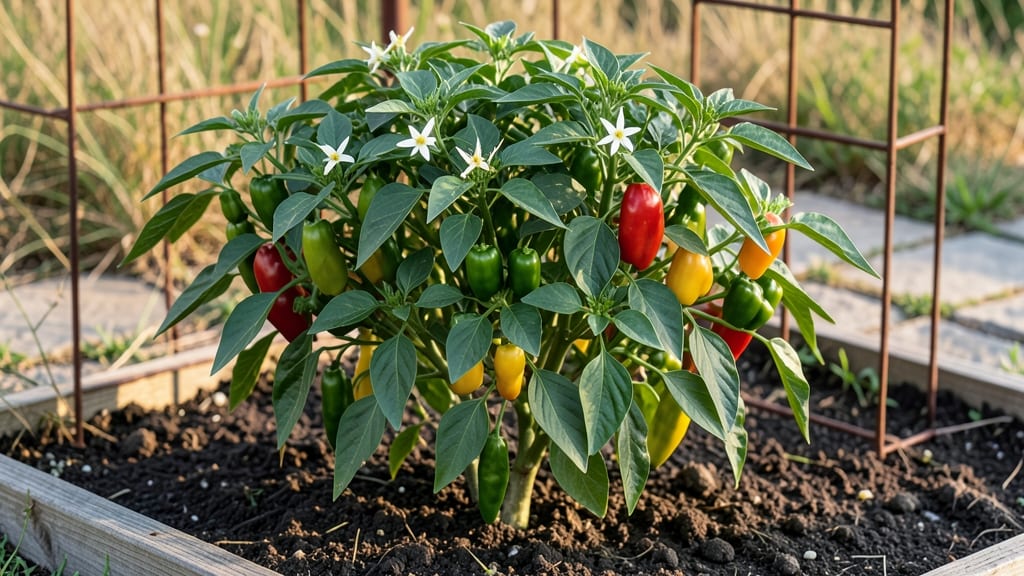
Growing Marconi pepper plants from seed to harvest in just 55 days feels like magic—especially when the fruit stays sweet and the vines climb like jungle vines. 🌱 I’ve grown these towering beauties for three seasons, and they’ve never disappointed: no bitterness, no fuss, just foot-long peppers that taste like summer in a pod.
The secret starts with pole training—these plants don’t sprawl, they reach, so a sturdy 6-foot trellis turns a small space into a vertical spice factory. Plant seeds indoors 8-10 weeks before last frost, then transplant when soil hits 60°F.
They crave full sun (6+ hours daily) and well-draining soil—think rich compost mixed with perlite to keep roots happy. By day 55, you’ll be harvesting glossy, 12-inch peppers that blanch beautifully for sauces or eat fresh with a crisp, sweet bite.
The key? Consistent watering (1 inch per week) and pruning suckers to focus energy upward. Even beginners nail this—it’s foolproof once you know the rhythm. Works in containers too (5-gallon pots work), making them perfect for balconies or small yards.
Let’s get those seeds started—your kitchen’s about to get a lot spicier (in the best way).
📚 In This Guide
- What you need
- Instructions
- Tips and common mistakes
- Wrapping up and next steps
What you need
- ● Marconi pepper seeds – 3–5 seeds (or 1–2 starter plants from a nursery). Choose organic, non-GMO seeds for best flavor.
- ● Biodegradable seed-starting pots – 4–6 small pots (2–3 inches in diameter) or a seed tray with cell inserts.
- ● Potting mix – 1–2 gallons of well-draining, sterile mix (e.g., 60% peat moss, 30% perlite, 10% compost). Avoid garden soil—it’s too dense!
- ● Grow lights or sunny windowsill – A full-spectrum LED grow light (12–16 hours/day) or a south-facing window with 6+ hours of direct sunlight.
- ● Fertilizer – Balanced liquid fertilizer (e.g., 10-10-10 or fish emulsion) or slow-release granules (like Osmocote).
- ● Pole or trellis – A 6–8 foot bamboo stake, wooden post, or A-frame trellis (diameter: 1–2 inches). Secure with soft plant ties.
- ● Watering can or spray bottle – With a fine rose nozzle to avoid disturbing seedlings.
- ● Pruning shears – For trimming suckers and shaping the plant.
- ● pH testing kit – To keep soil pH 6.0–6.8 (peppers love slightly acidic soil!).
- ○ Heat mat (optional) – For germinating seeds faster (70–85°F is ideal).
- ● Mulch (straw or shredded leaves) – To retain moisture and suppress weeds.
- ● Plant support clips – For securing vines to the pole without damaging stems.
Step-by-Step instructions for growing sweet Marconi peppers vertically
Here’s how to cultivate four sweet Marconi pepper plants on a single pole—no bitterness, no sprawl, just fast, flavorful harvests in under two months.
🌱 Step 1: Select and Prepare Your Pole System
Choose a 5-6 foot tall wooden or metal trellis with 1-inch diameter support poles spaced 18 inches apart. Marconi peppers grow 3-4 feet tall when trained vertically, so height matters. I use bamboo stakes tied with twine for a rustic look—cheap, sturdy, and easy to adjust as plants grow.
Drive the poles 6 inches deep into moist soil for stability. If using a pre-made trellis, anchor it with U-shaped ground stakes to prevent toppling in wind. The key is vertical alignment—check with a level before securing. Uneven poles will force plants to lean, causing weak stems and poor fruit set.
☀️ Step 2: Plant Seeds or Transplants at the Base
Sow 4-5 seeds per pot (they germinate slowly) or plant 4 established seedlings at the base of each pole, 12 inches apart. Marconi peppers thrive in full sun (6+ hours daily) and well-draining soil with pH 6.0-6.8. Amend your garden bed with 2 inches of compost and a handful of balanced fertilizer (10-10-10) before planting.
Dig holes twice as wide as the root ball but only as deep as the container. Press soil firmly around roots to eliminate air pockets—gentle taps with your hand work best. Water deeply after planting to settle the soil and encourage root spread. Avoid wetting leaves to prevent fungal diseases like early blight.
🌿 Step 3: Train Vines Upward with Twine or Soft Tie
As plants reach 12-18 inches tall, tie the main stem to the pole with soft plant tie strips (never wire—it cuts into tender stems). I loop the tie around the stem once every 6-8 inches as it grows. The goal is to guide, not restrict—think of it like a gentle hug, not a straitjacket.
Prune side shoots (suckers) that form in the leaf axils to direct energy upward. Remove every other sucker to maintain airflow and prevent disease. You’ll see stronger central stems and heavier fruit loads when you prioritize vertical growth. If a vine slips free, retie immediately—waiting even a day weakens the stem permanently.
💧 Step 4: Water and Fertilize for Sweetness
Water deeply 2-3 times per week, aiming for 1-1.5 inches of moisture per session. Let the top 2 inches of soil dry between waterings—Marconis hate soggy roots but need consistent hydration. I use a soaker hose at the base to avoid wetting foliage, which reduces disease risk. Mulch with 2 inches of straw to retain moisture and suppress weeds.
Feed every 3-4 weeks with a low-nitrogen fertilizer (5-10-10) to boost sweetness. Too much nitrogen = leafy growth, fewer peppers. Stop fertilizing 4-6 weeks before harvest—peppers sweeten when the plant focuses on fruit, not foliage. You’ll notice thicker stems and glossier leaves when nutrients are balanced.
✂️ Step 5: Harvest and Prune for Continuous Production
Pick peppers when they’re 6-8 inches long and still firm—this encourages more flowers and fruit. Use clean pruners to avoid damaging stems. Marconi peppers ripen from green to red, but you can harvest at any stage for consistent yields. I harvest every 3-4 days in peak season to prevent overcrowding.
After harvest, trim back any leggy growth that’s past the trellis height. This redirects energy to new fruit rather than unnecessary stem extension. In late summer, reduce water slightly to 1 inch per week to concentrate flavors. You’ll taste the difference—sweeter, thicker peppers when stressed just enough.
Tips & tricks for pole-trained Marconi peppers
These game-changing strategies will help you maximize flavor and yields while avoiding the most common pitfalls of vertical pepper gardening.
Pole System Stability: The 6-inch depth for your poles isn't just about looks—it's about creating a foundation that won't wobble when your plants reach their 3-4 foot height. I've seen trellises topple when planted only 3 inches deep, especially during windy conditions. For extra insurance, add a third support pole in a triangular formation behind your main 5-6 foot trellis. This creates a windbreak effect while maintaining structural integrity. The bamboo stakes I mentioned work beautifully, but if you're in a high-wind area, upgrade to treated wooden posts—they're more expensive but last for years.
Seedling Survival Strategy: When planting those 4-5 seeds per pot in Step 2, don't be tempted to thin too aggressively. Marconi pepper seeds have a notoriously low germination rate, so give them space to establish. I've had success with a 3-inch spacing between seedlings in the pot, then thinning to 12 inches apart after they've developed their first true leaves. This ensures you'll have at least one strong plant per position. For transplants, gently squeeze the root ball to encourage root spread before planting—this helps them establish faster in their new home.
Pruning Precision: That "every other sucker" rule in Step 3 is crucial, but timing matters just as much. I wait until suckers are about 2 inches long before removing them—any smaller and you risk damaging the main stem. Use clean, sharp pruners and make cuts at a 45-degree angle just above a leaf node. This prevents water from pooling on the cut and causing rot. I've found that pruning in the morning gives plants the whole day to recover before evening moisture sets in. Also, save those pruned suckers! Place them in water to root—they'll grow into new plants for next season.
Harvesting Hack: The 6-8 inch length recommendation in Step 5 is perfect, but here's what nobody tells you: the sweetness peak actually occurs at 7-8 inches. If you're growing for maximum sweetness, wait until your peppers reach that upper range before harvesting. For continuous production, I harvest every 3-4 days but always leave at least one pepper per plant at the 7-8 inch stage to maintain the plant's focus on fruit production. Use a small basket to collect your harvest—it prevents bruising and makes transporting peppers to the kitchen effortless.
Pro Tips for Marconi Pepper Plant
- These game-changing strategies will help you maximize flavor and yields while avoiding the most common pitfalls of vertical pepper gardening.
- Pole System Stability: The 6-inch depth for your poles isn't just about looks—it's about creating a foundation that won't wobble when your plants reach their 3-4 foot height.
- Seedling Survival Strategy: When planting those 4-5 seeds per pot in Step 2, don't be tempted to thin too aggressively.
Frequently asked questions
How long does it take for Marconi peppers to mature?
Marconi peppers are fast growers! With the right conditions (warmth, full sun, and consistent moisture), you can expect to harvest mildly sweet, slightly spicy peppers in about 55–70 days from transplanting. Pole training speeds this up by maximizing space and airflow. Pro tip: Prune suckers regularly to focus energy on fruit production!
Can Marconi peppers survive cold weather?
Marconi peppers are tender annuals and thrive in USDA Zones 9–11. If you’re in cooler climates, start seeds indoors 8–10 weeks before the last frost, then transplant after soil temps hit 60°F+. Use black plastic mulch or row covers to extend the season. Warning: Frost will kill the plant—plan ahead!
What’s the best way to train Marconi peppers on a pole?
Use a 5–6 ft tall trellis or bamboo stake and tie the main stem gently with soft ties (like old T-shirts or twine) every 1–2 feet. Remove side shoots (suckers) to direct energy upward. Pro tip: Let 2–3 primary branches develop for better yield!
Are Marconi peppers hot or mild?
Marconi peppers are mildly sweet with a hint of heat (0–5,000 Scoville units). They’re less spicy than jalapeños but pack a bold, complex flavor—perfect for fresh eating, roasting, or stuffing. Fun fact: Their heat increases as they ripen!
Why are my Marconi peppers turning bitter?
Bitterness usually stems from overcrowding, stress, or uneven watering. Ensure your plants get 6+ hours of sun, consistent moisture (not soggy soil), and proper spacing (18–24 inches apart). Too much nitrogen can also trigger bitterness—balance with phosphorus/potassium. Fix it: Prune for airflow and adjust watering!
Can I grow Marconi peppers in containers?
Yes! Use a 5-gallon+ pot with drainage holes and well-draining soil. Place in full sun and fertilize every 2–3 weeks. Dwarf varieties may work in smaller pots, but standard Marconis need room to climb. Bonus: Containers warm up faster in spring!
What are the best recipes for Marconi peppers?
Marconis shine in roasted pepper spreads, stuffed peppers, or fresh salsas. Try roasting them with olive oil, garlic, and herbs for a smoky kick. Their mild heat pairs well with cheese, tomatoes, or grilled meats. Pro tip: Freeze extras for winter soups!
Wrapping up and next steps
Growing a Marconi pepper plant is a rewarding journey that delivers sweet, flavorful peppers in just 55 days—no bitterness, no fuss! Whether you’re a seasoned gardener or a curious beginner, this pole-trained method maximizes space and harvests while keeping pests and stress at bay. 🌱
Now that you’ve got the know-how, roll up your sleeves and plant those seeds! Start small, track your progress, and soon you’ll be savoring homegrown peppers in your favorite dishes. Happy growing—and enjoy that spicy (but not bitter!) success! 🎉
- Next step: Mark your calendar for planting day and gather your supplies—your future harvest is waiting!