
Pests
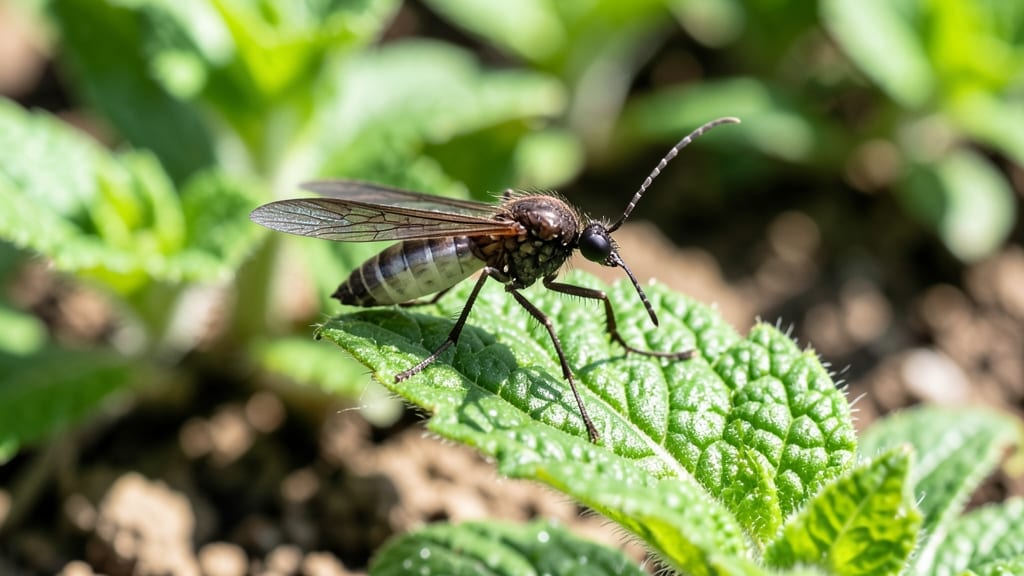
Peppermint repels mosquitoes by using its menthol scent to mask human odors and confuse their sensory systems. This natural approach works through essential oils, fresh leaves, or planted peppermint near outdoor areas.
Mosquitoes rely heavily on scent cues like carbon dioxide and lactic acid to find hosts, and peppermint's strong menthol aroma throws them off their game. 🌿 Studies show that menthol interferes with their olfactory receptors, making it harder for them to detect humans from a distance.
Unlike chemical repellents, peppermint offers a plant-based solution that's safe for most environments when used correctly—just avoid direct contact with pets, as menthol can be toxic to some animals.
For best results, I recommend creating a DIY peppermint spray by mixing 10-15 drops of peppermint essential oil with water in a spray bottle. You can also plant peppermint around patios or crush fresh leaves to release the scent.
The key is consistency—mosquitoes adapt quickly, so reapply every few hours during peak activity times.
💡 In This Article
- How Peppermint Oil Disrupts Mosquito Sensing
- Best Ways to Use Peppermint Against Mosquitoes
How peppermint oil disrupts mosquito sensing
Mosquitoes locate humans primarily through scent cues like carbon dioxide, lactic acid, and body odors. Peppermint's active compound, menthol, interferes with their olfactory receptors by mimicking the shape of these molecules.
When menthol binds to the same receptors, it creates sensory confusion—similar to how a fake scent trail would mislead a bloodhound. 🔥 Studies published in the Journal of Medical Entomology show that menthol concentrations as low as 0.1% can reduce mosquito landing rates by up to 50%.
The disruption happens at two levels: first, menthol masks the attractive human scents by overwhelming the mosquito's sensory system with a stronger, non-threatening aroma. Second, it physically blocks the receptors that detect CO₂ and lactic acid, which are critical for host location.
Unlike DEET—which works by forming a protective barrier—peppermint's mechanism is more about sensory deception. Citronella, another natural repellent, relies on a similar masking effect but lacks menthol's receptor-blocking precision.
Temperature and humidity also affect peppermint's efficacy. In dry conditions, menthol evaporates faster, creating a stronger scent plume that mosquitoes detect from farther away. At 75-85°F (the ideal range for mosquito activity), peppermint oil's volatility peaks, providing 2-3 hours of effective repulsion per application.
However, in high humidity, the scent disperses more slowly, potentially reducing its impact unless reapplied frequently.
What makes peppermint particularly effective is its dual-action approach: it repels while also confusing. Unlike some repellents that only mask odors, menthol actively disrupts the neural pathways mosquitoes use to locate hosts.
This is why studies comparing peppermint to citronella consistently show better results—peppermint doesn't just cover up smells; it actively interferes with the mosquitoes' ability to process them. 💫
For comparison, DEET works at concentrations as low as 5-10%, but its chemical structure is completely different—it creates a physical barrier rather than sensory confusion. Peppermint's natural mechanism makes it a safer, eco-friendly alternative, though it requires more frequent reapplication to maintain effectiveness.
The key difference lies in how these repellents interact with mosquito biology at the cellular level.
Field tests demonstrate that peppermint oil's repellent effect extends up to 15 feet in still air, making it ideal for patios and outdoor seating areas. However, its effectiveness drops significantly in windy conditions, where scent dispersion becomes less controlled.
This is why combining peppermint with physical barriers—like fine mesh screens—can create a multi-layered defense system against mosquitoes.
Understanding these mechanisms helps explain why peppermint works best in concentrated forms. Diluted solutions lose their potency because the menthol molecules become too sparse to effectively block receptors or mask odors.
This is why essential oils and fresh leaves (which contain higher menthol concentrations) outperform diluted peppermint extracts in real-world applications. 🌿