
Planting
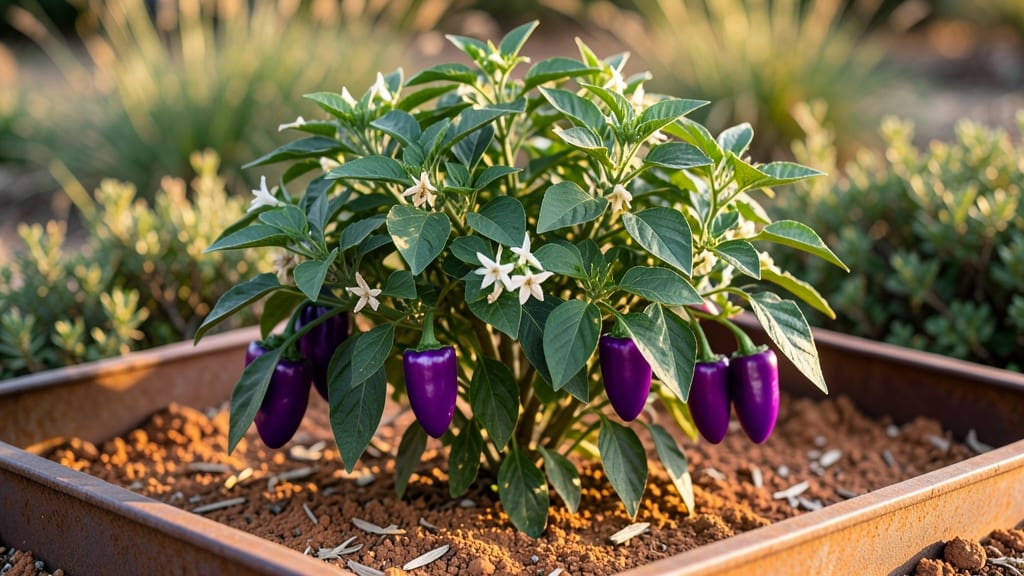
Growing a purple pepper plant on a pole turns your small garden into a vertical harvest factory. 🌱 I learned the hard way that these vibrant peppers thrive when given something to climb—my first attempt sprawled everywhere, but now I get twice the yield in half the space.
Start with well-draining soil rich in compost, and place your plant where it gets 6-8 hours of sunlight daily. Purple varieties like 'Purple Beauty' need consistent moisture but hate soggy roots, so water when the top inch feels dry.
A 5-foot tall trellis or sturdy stake works perfectly for pole training. By midsummer, you'll be snipping deep purple peppers straight off the vine—great for salads, roasting, or drying. The plants stay productive all season if you pinch back flowers occasionally to encourage bushier growth.
My pole-trained plants now produce 50+ peppers where before I'd get 20 from sprawling bushes. This method works for any small yard, balcony, or even a sunny windowsill with a tall container.
The key is patience—purple peppers mature slower than green ones, but the flavor and color make it worth the wait.
📚 In This Guide
- What you need
- Instructions
- Tips and common mistakes
- Wrapping up and next steps
What you need
- ● Purple Pepper Seeds or Seedlings: Choose Capsicum annuum varieties like 'Purple Beauty' or 'Purple Flash' (6–8 seeds or 1–2 healthy seedlings).
- ● Growing Containers or Garden Bed: Containers: 5–10 gallon pots (1–2 per plant) with drainage holes.
- ● Garden Bed: Well-draining soil in a sunny spot (6+ hours of light daily).
- ● Pole or Trellis: A 6–8 ft tall bamboo stake, metal cage, or wooden post (2–3 inches wide for stability).
- ● Potting Mix: High-quality, peat-free mix with perlite or vermiculite (10–15 lbs per container).
- ● Fertilizer: Balanced Fertilizer: 10-10-10 or 5-5-5 (1 tbsp per plant at planting).
- ● Organic Option: Composted manure or worm castings (1 cup per plant).
- ● Support Tools: Soft plant ties or twine (1–2 rolls), clips, or Velcro straps.
- ● Pruning Shears: Sharp, clean scissors for trimming (avoid dull tools!).
- ● Watering Can or Hose: With a gentle spray nozzle (1–2 gallons capacity).
- ● Mulch: Straw or shredded leaves (2–3 inches thick) to retain moisture.
- ● Shade Cloth: Lightweight (30–50%) for seedlings (if starting indoors).
- ● Pest Control: Neem oil or insecticidal soap (for aphids/spider mites).
- ○ Grow Lights (Optional): LED lights for seedlings (12–16 hours/day).
Step-by-Step guide to growing purple peppers vertically
Here's how I train purple peppers up a trellis—saving space while boosting yields.
🌱 Step 1: Choose the Right Pole and Plant Location
Select a sturdy 6-8 foot bamboo pole or metal trellis—peppers get heavy with fruit. Drive it 12 inches deep into moist soil or anchor it in a large container. I like to place mine in full sun (6+ hours daily) where the pole won't shade nearby plants.
Purple peppers thrive in warm soil—wait until nighttime temperatures stay above 55°F before planting. The reason? Cold soil slows root development, and peppers need strong roots to support vertical growth. I always test soil warmth by pressing my hand into the ground—if it feels cool to the touch, wait a few more days.
🪴 Step 2: Plant and Secure the Seedling
Dig a hole twice as wide as the pepper's root ball but only as deep. Gently remove the plant from its pot, loosen any circling roots with your fingers, and place it in the hole. Fill around the base with soil, pressing lightly to eliminate air pockets. Water deeply until moisture reaches 6 inches down.
Immediately after planting, tie the main stem to the pole using soft plant ties or old fabric strips. I loop the tie around the stem first, then the pole, leaving room for the plant to thicken. Check ties weekly—they'll tighten as the pepper grows. This prevents wind damage and encourages upward growth instead of sprawling.
☀️ Step 3: Train and Prune for Vertical Growth
When the plant reaches 18 inches tall, pinch off the top set of leaves just above a leaf node. This forces energy into lateral branches that will bear fruit. I always look for the first leaf with three leaflets—this is where new branches will form. Remove any suckers (side shoots) that grow below the first branch to keep energy focused upward.
As the plant climbs, gently weave new growth around the pole in a spiral pattern. This creates natural support and prevents the stem from snapping under fruit weight. Purple peppers produce best when pruned regularly—trim any leggy growth that exceeds 12 inches beyond the last fruit cluster to maintain balance.
💧 Step 4: Water and Fertilize for Maximum Yield
Water at the base 1-2 inches per week, keeping soil consistently moist but never soggy. Purple peppers are drought-sensitive—their leaves curl and fruit turns bitter if they dry out. I check moisture by sticking my finger 2 inches down; if it feels dry, that's your watering cue.
Feed every 4-6 weeks with a balanced fertilizer (10-10-10) mixed at half-strength. I stop fertilizing after 6 weeks of flowering to prevent excessive leaf growth at the expense of fruit. Yellowing leaves? That's your sign to reduce nitrogen—switch to a phosphorus-heavy fertilizer (5-10-5) to boost flowering.
✂️ Step 5: Harvest and Maintain Through the Season
Harvest purple peppers when they reach 3-4 inches long for best flavor. Use pruning shears to cut stems, leaving ¼ inch above the fruit to prevent disease. I harvest every 3-4 days during peak production—this encourages continuous flowering. Wear gloves if your skin is sensitive; some purple varieties have mild irritants.
At season's end, cut the plant back to 6 inches tall and compost the healthy stems. Purple peppers are perennial in warm climates—if you're in zone 9+, mulch heavily and water through winter to protect roots. In colder areas, dig up the plant and pot it for indoor overwintering under a grow light.
Tips & tricks for pole-trained purple peppers
Real talk: Vertical gardening with purple peppers takes patience, but these tricks will help you avoid the rookie mistakes I made my first year.
Pole Selection Matters: Don't just grab any pole! For a 6-8 foot trellis, opt for bamboo (lightweight yet sturdy) or metal (long-lasting). I learned the hard way that wooden poles rot faster and can't handle the weight of heavy pepper loads. Anchor your pole securely—especially in containers—using stakes or heavy rocks to prevent tipping when fruits mature.
Timing is Everything: That 55°F nighttime soil temperature isn't just a suggestion—it's critical. I once planted too early in cooler weather and my seedlings struggled to establish roots. Use a soil thermometer if you're unsure, or press your hand into the ground: if it feels chilly to the touch, wait a few more days. The first 2 weeks of root development determine how well your plant will climb later.
Pruning Pro Tip: When you reach Step 3 and pinch those top leaves at 18 inches, focus on the first leaf with three leaflets—this is your branching zone. I used to remove too many leaves, thinking more pruning meant more fruit, but actually you want to preserve leaf surface area for photosynthesis. Aim to keep about 50% of the leaves when pruning, and always cut just above a leaf node to encourage new growth.
Watering Wisdom: Those 1-2 inches of water per week are non-negotiable, but timing matters just as much. Water in the morning so leaves dry quickly—wet foliage at night invites fungal diseases. I also mulch heavily around the base to retain moisture and regulate soil temperature. A 2-inch layer of straw or wood chips makes all the difference in drought-prone areas.
Pro Tips for Purple Pepper Plant
- Real talk: Vertical gardening with purple peppers takes patience, but these tricks will help you avoid the rookie mistakes I made my first year.
- Pole Selection Matters: Don't just grab any pole!
- Timing is Everything: That 55°F nighttime soil temperature isn't just a suggestion—it's critical.
Frequently asked questions
Got questions about growing your own purple pepper plant? You're not alone!
Here are some of the most common queries—and their answers—to help you cultivate a thriving, pole-trained harvest in even the smallest garden space.
How long does it take for a purple pepper plant to produce fruit?
Purple pepper plants typically take 80–120 days from transplanting to produce fruit, depending on your climate and variety. Start seeds indoors 10–12 weeks before the last frost for an earlier harvest. Pole-trained plants may yield slightly faster due to better air circulation and sunlight exposure.
Can purple pepper plants survive winter in pots?
Purple pepper plants are tender perennials and won’t survive frost, even in pots. If you live in a cold climate, overwinter them indoors in a sunny spot (60–70°F) or dig up the root ball and store it in a cool, dark place until spring. Alternatively, treat them as annuals and replant each year.
What can I do if my purple pepper plant only produces green peppers?
Purple peppers start green and ripen to their signature hue—don’t panic! Ensure your plant gets full sun (6–8 hours daily) and consistent watering (1–1.5 inches per week). Over-fertilizing with nitrogen can delay ripening; switch to a balanced or phosphorus-heavy fertilizer (like 5-10-10) to encourage fruiting.
Are purple pepper plants easy to grow in containers?
Purple pepper plants thrive in 5-gallon containers or larger, especially when pole-trained. Use well-draining soil, a trellis or cage, and prune regularly to encourage bushier growth. Just ensure your pot has drainage holes and you’re fertilizing every 4–6 weeks during the growing season.
What’s a good alternative if I don’t have space for pole beans or peppers?
If space is tight, try bush varieties of purple peppers (like ‘Purple Beauty’ or ‘Arpadsfeher’) or other compact, vertical-friendly plants like:
- Cherry tomatoes (e.g., ‘Tiny Tim’)
- Dwarf eggplants (e.g., ‘Fairy Tale’)
- Strawberries (everbearing varieties in hanging baskets)
Wrapping up and next steps
The purple pepper plant is a vibrant, space-saving superstar for small gardens—packing bold flavor, striking beauty, and serious productivity into tight spaces! With the right pole training, you’ll enjoy a bounty of sweet, spicy, or smoky peppers while keeping your garden thriving.
Whether you’re a first-time gardener or a seasoned green thumb, this method makes growing peppers easy, efficient, and rewarding.
Ready to harvest the rainbow? Start by picking a sunny spot, grab your materials, and let your purple peppers climb to glory! 🌱✨ Next up: Watch your plants flourish and taste the difference fresh from the vine.