
Watering
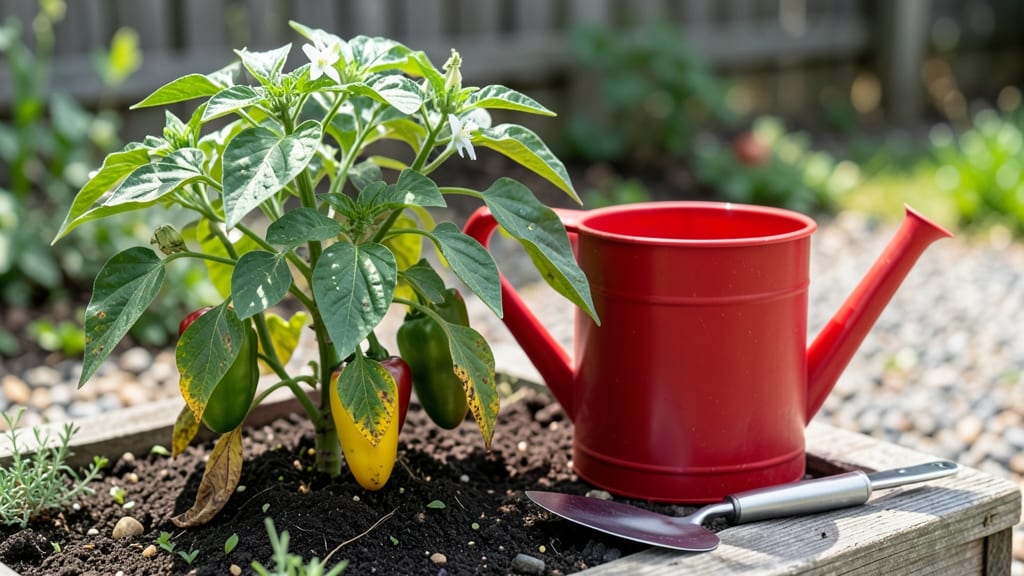
Your pepper plants might be drowning in love—literally. 🌱 Overwatering turns vibrant green leaves into sad yellow patches and turns crisp stems into mushy messes, and I’ve seen it ruin entire harvests when I ignored the warning signs.
The first clue is often yellowing leaves that start at the bottom, paired with mushy stems that feel soft when squeezed. Roots turn brown and smell foul, not earthy, and the soil stays soggy even days after watering. This isn’t wilting—it’s suffocation, and your plants are begging for air.
Fix it fast by letting the top 2-3 inches of soil dry out before watering again, and check your pots for drainage holes. If the roots look rotten, trim the damaged parts and repot in fresh, well-draining mix. Within a week, you’ll see fresh green growth as the roots recover.
The good news? Peppers bounce back faster than you’d think. Just adjust your watering, and you’ll be back to harvesting sweet, crisp peppers in no time—no drama, just results.
Common Causes of Overwatering
Overwatering pepper plants may seem like a harmless mistake, but it can quickly turn into a deadly issue for your garden. Understanding why this happens is the first step to preventing it. Let’s break down the most common culprits behind soggy soil and stressed peppers.
Pepper plants thrive in well-draining soil, but when drainage is lacking, excess water pools around roots instead of flowing away. This creates an anaerobic (oxygen-deprived) environment, which suffocates roots and invites harmful microbes. Common causes include:
- Compacted soil: Heavy clay or tightly packed soil prevents water from draining efficiently. Test your soil by digging a small hole—if water sits for more than 30 minutes, drainage is likely poor.
- Improper containers: Pots without drainage holes trap water, while garden beds without raised mounds or gravel layers fail to redirect excess moisture.
- Hardpan layers: A dense, impermeable layer of soil (often from years of tilling or natural mineral deposits) blocks water flow deeper underground.
Pro Tip: 💡 Amend heavy soil with perlite, vermiculite, or coarse sand (20-30% by volume) to improve aeration. For containers, use a mix designed for peppers with at least 50% organic matter.
Even with good drainage, watering too frequently or in large volumes can drown pepper plants. Common mistakes include:
- Ignoring soil moisture: Watering on a rigid schedule (e.g., every day) without checking soil dampness leads to oversaturation. Peppers need consistent moisture, not constant flooding.
- Heavy watering after drought: After a dry spell, some gardeners overcompensate by soaking the soil aggressively, overwhelming the roots’ ability to absorb water.
- Poor timing: Watering late in the day leaves foliage damp overnight, increasing the risk of fungal diseases like Phytophthora, which thrive in wet conditions.
Actionable Fix: 🌡️ Use the finger test—stick your index finger 1-2 inches into the soil. If it’s moist, wait. If dry, water deeply but only until the top 3-4 inches are saturated.
Not all overwatering is user-error—environmental conditions can also contribute to soggy soil and stressed plants:
- High humidity: In tropical or rainy climates, water evaporates slower, keeping soil damp longer. Peppers in these areas may need less frequent but deeper watering.
- Low sunlight exposure: Shady spots slow evaporation, trapping moisture. Peppers need 6-8 hours of sunlight daily; partial shade can disrupt their natural drying cycle.
- Heavy rainfall: If your region gets frequent downpours, mulch heavily (with straw or wood chips) to absorb excess water and protect roots.
Quick Tip: ✨ Monitor weather forecasts and adjust watering before storms. If rain is predicted, skip scheduled watering to avoid doubling moisture levels.
Even the hardiest pepper varieties can suffer if planted incorrectly. Common oversights include:
- Planting too deep: Burying stems below soil level (e.g., from over-amending pots) can cause roots to rot as they struggle to access oxygen.
- Overcrowding: Too many plants competing for space leads to poor air circulation and wet foliage, creating ideal conditions for disease.
- Wrong soil mix: Using garden soil straight from the yard (without organic amendments) can compact and retain too much water.
Solution: 👨🍳 Plant peppers in raised beds or mounds to improve drainage. Space them 18-24 inches apart for optimal airflow.
How to Fix Overwatered Pepper Plants
Overwatering can turn your thriving pepper plants into a soggy mess, but don’t panic—most peppers bounce back with the right care! The key is to act fast, adjust your watering habits, and give your plants the space they need to recover.
Below, we’ll break down cause-specific fixes and prevention tips to save your peppers and keep them happy long-term.
---
Cause: Too much water disrupts nutrient uptake, leading to chlorosis (yellowing). Fix: - Stop watering immediately—let the top 1–2 inches of soil dry out completely before watering again. - Improve drainage by adding perlite, vermiculite, or coarse sand to heavy clay soil. Aim for a mix that holds moisture but drains freely. - Fertilize lightly with a balanced, water-soluble fertilizer (like 10-10-10) to replenish lost nutrients. Dilute to half-strength to avoid shocking roots.
Prevention Tip: 💡 Water deeply but infrequently. Pepper plants prefer a dry-down period between waterings—stick your finger in the soil 2 inches deep before adding more H₂O.
---
Cause: Waterlogged soil suffocates roots, causing rot (often seen as black, mushy stems or foul odors). Fix: - Remove the plant from the pot or ground and inspect the roots. Trim away any black, slimy, or soft roots with sterilized scissors (🔪). - Repot in fresh, dry soil with a mix amended for drainage (e.g., 60% potting soil + 30% perlite + 10% compost). - Hold off on watering for 3–5 days to let roots recover. After repotting, water lightly only when the top inch of soil feels dry.
Prevention Tip: ✨ Use containers with drainage holes and elevate pots to prevent water pooling. If gardening in-ground, raise beds or plant on slopes.
---
Cause: Overwatering stresses roots, cutting off water/oxygen flow, even if soil feels moist. Fix: - Test soil moisture—if it’s damp below the surface, withhold water. Wilting from overwatering often happens after the soil feels dry on top. - Prune damaged leaves to redirect energy to root recovery. Use clean pruners to avoid spreading disease. - Apply a root stimulator (like mycorrhizal fungi or hydroponic nutrients) to encourage healthy regrowth.
Prevention Tip: 🌡️ Monitor humidity. Overwatered plants in high humidity (e.g., greenhouses) rot faster. Use a fan for airflow or space plants 12+ inches apart.
--- - Upgrade your watering routine: - Morning watering (before 10 AM) reduces evaporation and fungal risks. - Drip irrigation or soaker hoses deliver water directly to roots, minimizing leaf wetness. - Soil test smart: - Use a moisture meter ($10–$20) to track soil conditions accurately. - Visual check: Press soil with your finger—if it springs back slowly, it’s too wet. - Adjust for weather: - Rainy days? Skip watering and cover pots if needed. - Hot/dry days? Water deeper but less frequently to encourage deep root growth.
--- | Symptom | Recovery Time | What to Expect | |-------------------|-------------------|---------------------------------------------| | Yellow leaves | 1–2 weeks | New growth should emerge green and firm. | | Mushy stems | 2–4 weeks | Roots regrow; avoid watering until soil dries.| | Wilting | 3–7 days | Leaves perk up as roots rehydrate. |
--- Final Pro Tip: 🎯 When in doubt, under-water! Pepper plants are drought-tolerant once established. It’s easier to revive an underwatered plant than one drowning in its own pot.
Frequently asked questions
How can I tell if my pepper plant is overwatered vs. underwatered?
Check the soil first—overwatered peppers have soggy, cool soil that stays damp for days, while underwatered soil feels dry 2-3 inches down. Overwatered plants show yellowing leaves (starting at the bottom) and mushy stems, while underwatered ones have crispy, brown leaf edges and wilting that happens afternoon/evening.
Can I save my pepper plant if the stems are already mushy?
Yes, but act fast! Remove the plant from its pot, trim any black or soft roots with sterilized scissors, and repot in fresh, dry soil with 50% perlite for drainage. Skip watering for 3-5 days to let roots recover. Most peppers bounce back in 2-4 weeks if the core root system is still healthy.
Why do my pepper leaves turn yellow even when I water less?
Yellowing can happen from nutrient loss when roots suffocate, not just excess water. Test your soil—if it's compacted clay, amend with compost or sand. Also check for fungal diseases (like Phytophthora) which thrive in wet conditions. Prune affected leaves and improve airflow by spacing plants 18-24 inches apart.
How often should I water pepper plants in pots vs. garden beds?
Potted peppers need watering when the top 1 inch of soil is dry (usually every 2-3 days), while garden beds can go 5-7 days between waterings. Always water deeply—aim for 1-2 inches of moisture per session. Morning watering prevents fungal growth, and mulching helps retain moisture without oversaturating.