
Picking
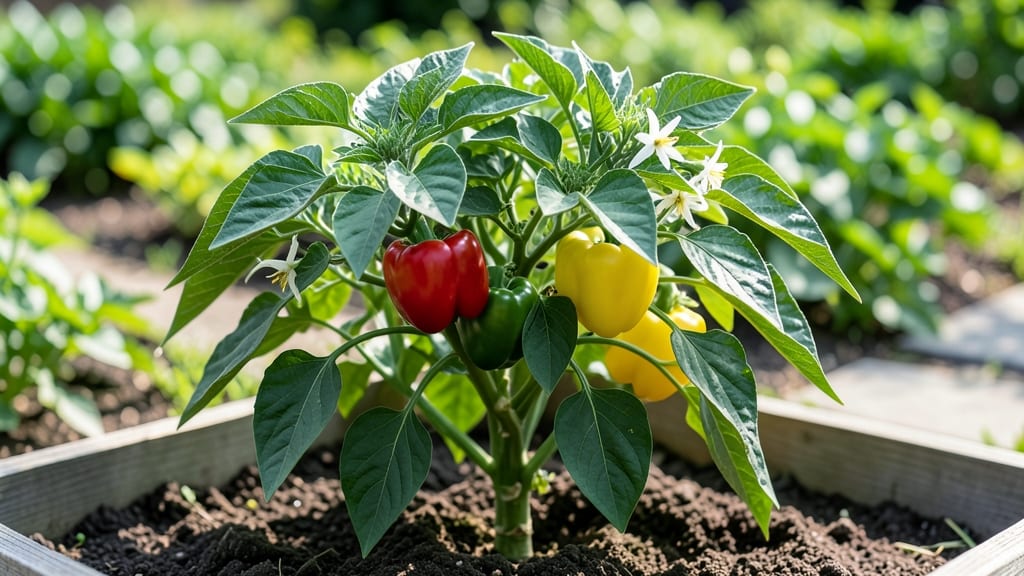
Square foot gardening turns bell peppers into a high-yield, space-efficient reality. 🌿 After my first attempt with overcrowded peppers that barely ripened, I swapped to a grid system—and now I grow twice the harvest in the same footprint.
The secret lies in precision spacing, soil prep, and smart companion choices that peppers love.
You’ll need a 4×4-foot raised bed, premium potting mix (no yard soil), and a 12-inch spacing grid for your pepper plants. Bell peppers thrive in full sun (6+ hours daily) and warm soil, so start seeds indoors 8–10 weeks before last frost or buy sturdy transplants.
The grid keeps plants from competing for nutrients, and companion plants like basil or marigolds deter pests naturally.
By midsummer, you’ll be harvesting smooth, glossy peppers straight from your grid—no bending over crowded rows. The key is consistent watering (1 inch per week) and occasional side-dressing with compost. Overcrowding? Simply thin seedlings to the grid lines. Pests? A neem oil spray keeps them at bay without chemicals.
This method works for any square-foot garden, from urban balconies to backyard plots. The grid system adapts to any pepper variety—jalapeños, banana peppers, or classic bell types. Once you master it, you’ll wonder why you ever planted peppers any other way.
📚 In This Guide
- What you need
- Instructions
- Tips and common mistakes
- Wrapping up and next steps
What you need
- ● Square Foot Garden Box: 4’ x 4’ wooden frame (or modular sections) with 1-inch grid lines for precision planting.
- ● High-Quality Soil Mix: 50% compost (sterile, organic)
- ● 25% peat moss or coconut coir (for moisture retention)
- ● 25% vermiculite or perlite (for aeration)
- ● Bell Pepper Seeds or Seedlings: 1 seedling per square foot (spaced 12–18 inches apart)
- ● 4–9 plants per 4’ x 4’ box (depending on variety)
- ● Organic Fertilizer: Balanced 10-10-10 or 5-10-10 (low nitrogen to avoid leafy growth over fruit).
- ● Watering Can or Drip Irrigation: With a fine rose nozzle to avoid disturbing soil.
- ● Mulch: Straw or shredded leaves (1–2 inches thick) to retain moisture.
- ● Plant Support: Small stakes or cages (for tall varieties like ‘Jalapeño M’).
- ● Row Cover or Netting: To protect from pests like aphids or hornworms.
- ● pH Test Kit: Ideal soil pH for bell peppers: 6.0–6.8.
- ● Compost Tea or Fish Emulsion: For a nutrient boost mid-season.
- ● Garden Gloves & Kneeling Pad: Because comfort matters!
Instructions for square foot gardening bell peppers
This method turns small spaces into high-yield pepper gardens—here's how I make it work every season.
🌱 Step 1: Prepare Your Square Foot Grid
Start with a 4-foot by 4-foot raised bed divided into a 16-square-foot grid using 1-inch grid lines. I use 1-inch thick landscape fabric stapled to the bed's inner edges for clean, reusable squares. Each square will hold 1 pepper plant—bell peppers need space to avoid competition.
Fill the entire bed with 6 inches of high-quality compost mixed with 3 inches of potting soil (this ensures excellent drainage while retaining moisture). Press the mix down gently so it's firm but not compacted. You'll know it's right when a finger pressed in leaves a slight indentation that holds its shape.
🌿 Step 2: Plant Transplants at the Right Spacing
Use 4-week-old pepper transplants (younger plants struggle in square foot gardens). Dig a hole in each square twice as deep as the root ball and place the plant so the top of the roots sits just below soil level. This prevents stem rot while encouraging strong root growth.
Fill the hole with soil and press gently around the base to remove air pockets. Space plants 12 inches apart—this gives bell peppers room to grow without overcrowding. Water immediately after planting to settle the soil and reduce transplant shock. You'll see new leaves emerge within 7-10 days if conditions are right.
☀️ Step 3: Provide Optimal Sun and Support
Bell peppers need 6-8 hours of direct sun daily—place your grid where it gets full morning sun and partial afternoon shade if your climate runs hot. I add 2-inch tall stakes at planting time to support each plant as it grows. This prevents bending and makes harvesting easier later.
Mulch each square with 1 inch of straw to retain moisture and suppress weeds. Check soil moisture daily—peppers need 1 inch of water per week, but more during fruit development. Water at the base in the morning to reduce disease risk and encourage deep root growth.
✂️ Step 4: Prune and Fertilize for Maximum Yield
When plants reach 12 inches tall, pinch off the first few flowers to encourage stronger stem growth. This redirecting energy leads to bigger, healthier plants with more productive branches. Remove any suckers (side shoots) that form in the leaf axils—they divert energy from fruit production.
Feed plants every 2 weeks with a balanced 10-10-10 fertilizer (follow package rates). You'll notice darker green leaves and faster fruit set within a week of fertilizing. Harvest peppers when they reach 3-4 inches long—this keeps plants producing rather than overloading with one giant fruit.
🌱 Step 5: Extend the Season With Proper Care
As temperatures drop below 50°F, cover plants with floating row covers during the day to retain warmth. Remove covers at night to prevent overheating. This simple trick extends the growing season by 2-3 weeks, giving you more time to enjoy fresh peppers.
When frost threatens, harvest any remaining peppers and store them in a cool, dark place for up to 2 weeks. The grid method makes cleanup easy—just remove plants, compost the bed, and you're ready for next year's planting.
Tips & tricks for square foot gardening bell peppers
Here's what I learned after perfecting this method for five seasons—small details that make all the difference.
Soil Texture Matters: That perfect balance of 6 inches compost and 3 inches potting soil in Step 1 creates ideal drainage while retaining moisture. I've found that adding 1/4 inch of perlite to the mix prevents compaction and improves aeration—especially important in heavy clay soils. The soil should crumble slightly when squeezed, not stick together like wet sand.
Transplant Timing Secret: The 4-week-old transplants in Step 2 should have at least 4-5 true leaves before planting. I always check for sturdy stems and vibrant green leaves—anything yellow or wilted means the plant needs more time hardening off. Planting too early leads to leggy, weak plants that struggle to produce fruit.
Sunlight Strategy: For that critical 6-8 hours of direct sun in Step 3, position your grid to capture morning sun first—this gives peppers a strong start before afternoon heat. If your climate gets scorching afternoons, I recommend using shade cloth (30% coverage) during peak hours. This prevents sunburn on leaves while still allowing plenty of light for photosynthesis.
Fertilizer Timing: That 2-week feeding schedule with 10-10-10 fertilizer in Step 4 works best when applied in the morning after watering. I've found that splitting the recommended dose into two lighter applications (morning and evening) prevents salt buildup in the soil. Always water thoroughly after fertilizing to help distribute nutrients evenly.
Pro Tips for Square Foot Gardening Bell Peppers
- Here's what I learned after perfecting this method for five seasons—small details that make all the difference.
- Soil Texture Matters: That perfect balance of 6 inches compost and 3 inches potting soil in Step 1 creates ideal drai...
- Transplant Timing Secret: The 4-week-old transplants in Step 2 should have at least 4-5 true leaves before planting. ...
Frequently asked questions
Got questions about growing bell peppers in square foot gardens?
You’re not alone! Here are answers to the most common queries to help you grow a thriving harvest with confidence.
How many bell pepper plants can I fit in a 1-square-foot grid?
For bell peppers, the rule of thumb is 1 plant per square foot when using the classic square foot gardening method. This spacing ensures proper airflow, reduces competition for nutrients, and makes maintenance easier. If you’re growing smaller varieties (like ‘Snackable’ or ‘Pico de Gallo’), you could squeeze in 2-4 plants per square foot, but yield may be smaller.
When is the best time to plant bell peppers in a square foot garden?
Bell peppers are warm-weather lovers—wait until after the last frost (typically late spring or early summer, depending on your zone) and soil temperatures are consistently above 60°F (15°C). Start seeds indoors 8-10 weeks before transplanting for a head start. If your growing season is short, opt for faster-maturing varieties like ‘California Wonder’ or ‘Jalapeño M.’
Why are my bell pepper leaves turning yellow, even though I’m following square foot spacing?
Yellowing leaves (chlorosis) often signal overwatering, nutrient deficiencies, or poor drainage. Check your soil moisture—bell peppers hate soggy roots. Test for nitrogen (N) or magnesium (Mg) deficiencies (common in alkaline soils) and amend with compost or Epsom salt if needed. Also, ensure your grid has adequate drainage holes to prevent root rot.
Can I grow bell peppers in a square foot garden if I only have a balcony or patio?
Use fabric grow bags or deep containers (at least 12” deep) for square foot gardening on balconies. Opt for compact varieties like ‘Pico de Gallo’ or ‘Shishito’, which thrive in smaller spaces. Place containers in full sun (6+ hours daily) and use a balanced fertilizer (like 10-10-10) every 4-6 weeks to boost productivity.
How do I maximize bell pepper yield in a square foot garden?
Follow these pro tips:
- Prune regularly to remove suckers (side shoots) and encourage fruit production.
- Hand-pollinate if flowers aren’t setting fruit—gently shake plants or use a small brush.
- Mulch with straw to retain moisture and suppress weeds.
- Harvest early and often—peppers taste best when picked young and firm!
With these tweaks, you’ll enjoy a bountiful harvest in just 1 square foot!
Wrapping up and next steps
Square foot gardening is your secret weapon for growing bountiful, delicious bell peppers—even in small spaces! By mastering grid precision, you’ll enjoy higher yields, easier maintenance, and fresher harvests with minimal waste. Whether you’re a beginner or a seasoned gardener, this method makes pepper-growing simple, efficient, and rewarding.
Ready to transform your garden? Start by sketching your layout and gathering your supplies—then dive in! Your first pepper harvest is just a few weeks (and a little elbow grease) away. 🌱🔥