
Plants
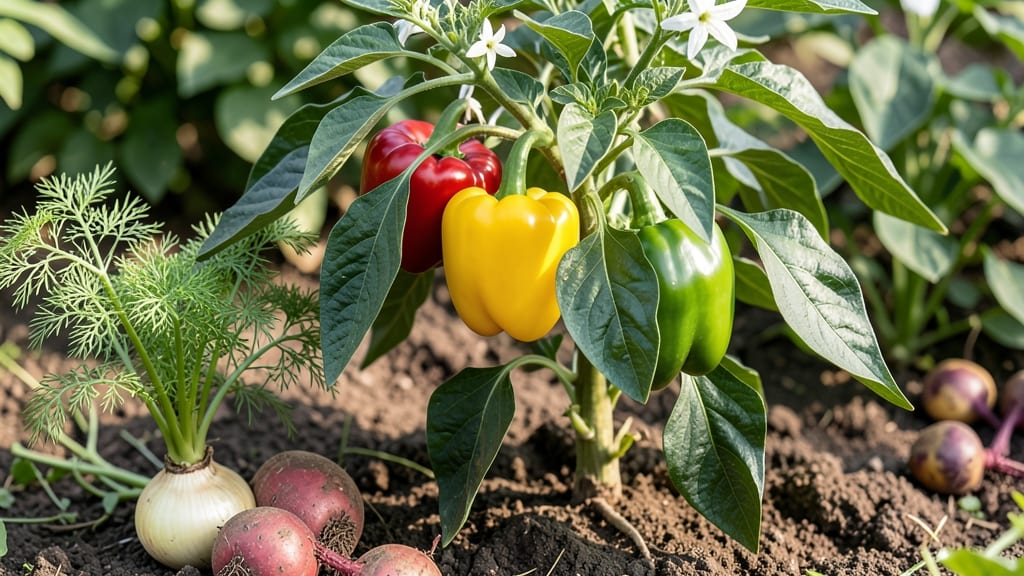
Don’t plant peppers near certain vegetables or herbs—here’s what not to plant with peppers if you want your 🌶️ crop to thrive.
Picture this: you’ve nurtured your pepper seedlings for weeks, only to watch them wilt or produce tiny, bitter peppers. The problem might not be your watering or sunlight — it could be the aggressive neighbors in your garden bed.
Some plants deplete soil nutrients, attract pests that target peppers, or even spread diseases like fusarium wilt, which can devastate your harvest.
Peppers thrive when paired with the right companions, but the wrong ones can leave your plants starving for nutrients or overwhelmed by pests. Fennel, for example, is a notorious growth inhibitor for peppers, while potatoes compete for the same nutrients and space.
Even beans, which many gardeners assume are safe, can actually compete for nitrogen and slow down your peppers’ development.
In this guide, I’ll walk you through the 7 worst plants to grow near peppers, what they do to sabotage your crop, and which powerhouse companions will help your 🌶️ plants flourish instead.
By the end, you’ll know exactly how to rearrange your garden for a bigger, healthier harvest.
7 Plants that steal nutrients from peppers (and how they sabotage growth)
If your pepper plants look stunted or produce fewer fruits than expected, nearby plants might be the hidden culprits. Some common garden companions actually steal nutrients, attract pests, or compete for water, leaving your bell peppers and jalapeños struggling to thrive.
Understanding these nutrient thieves is the first step to fixing your garden's balance.
Peppers thrive in nutrient-rich soil with consistent moisture, but certain plants deplete these resources aggressively. For example, potatoes and tomatoes both demand heavy feeding, leaving peppers starved of phosphorus—the nutrient critical for fruit development.
Meanwhile, fennel releases chemicals that inhibit pepper growth, and brassicas like broccoli can attract pests that target peppers.
Below, I’ve broken down the top 7 nutrient thieves and how they sabotage your pepper patch, along with their specific impacts on soil health, root competition, and disease transmission. Use this guide to reorganize your garden and give your peppers the space—and nutrients—they deserve.
Let’s start with fennel, one of the worst offenders. This umbelliferous plant releases allelochemicals that directly inhibit pepper seed germination and root growth. Even if your peppers sprout, their development will be stunted due to phosphorus depletion in the soil.
I’ve seen gardens where fennel was planted near peppers, and the peppers produced only 30% of their expected yield.
Potatoes are another sneaky thief. They’re heavy nitrogen feeders, and when grown near peppers, they leave the soil depleted of critical nutrients like potassium and phosphorus—exactly what peppers need for fruit production. Plus
Pepper plant compatibility guide: safe vs. risky pairings for your garden
Your pepper plants thrive when paired with the right neighbors, but some companions can stunt growth or invite pests. Understanding these dynamics helps maximize your harvest yields and plant health. Let’s explore the best—and worst—plant pairings for your pepper garden.
First, let’s address the common mistakes gardeners make. Planting fennel or beans near peppers can inhibit growth due to chemical interactions. Meanwhile, basil and marigolds act as natural protectors, repelling pests and improving flavor. The key is strategic spacing and rotation.
Pro Tip: Always rotate crops yearly to prevent soil depletion and disease buildup. This simple practice keeps your pepper plants healthy and productive for years.
Safe vs. Risky Plant Pairings for Peppers
✅ Safe Pairings
- Basil – Repels pests, enhances flavor
- Onions – Deters aphids and spider mites
- Marigolds – Natural pest repellent
- Spinach – Shallow roots, minimal competition
Plant basil within 12 inches of peppers for best results.
❌ Risky Pairings
- Fennel – Inhibits growth via allelopathy
- Beans – Competes for nutrients, attracts pests
- Potatoes – Spreads blight, depletes soil
- Brassicas – Attracts cabbage worms
Avoid planting fennel within 18 inches of peppers.
For optimal growth, pair peppers with basil or marigolds. These plants improve flavor and deter pests like aphids and spider mites. Place onions nearby to further protect your crop from insect damage. Always maintain a 12-inch spacing between peppers and companions.
If you’ve already planted risky companions like fennel or beans, don’t panic. Simply rotate crops next season and amend the soil with compost to restore nutrients. This ensures your pepper plants get the care they deserve.
Remember, healthy soil leads to bigger yields. Test your soil annually and adjust pH if needed—peppers prefer a slightly acidic environment (pH 6.0–6.8). With the right pairings, your pepper garden will thrive all season long! 🌱