
Plants
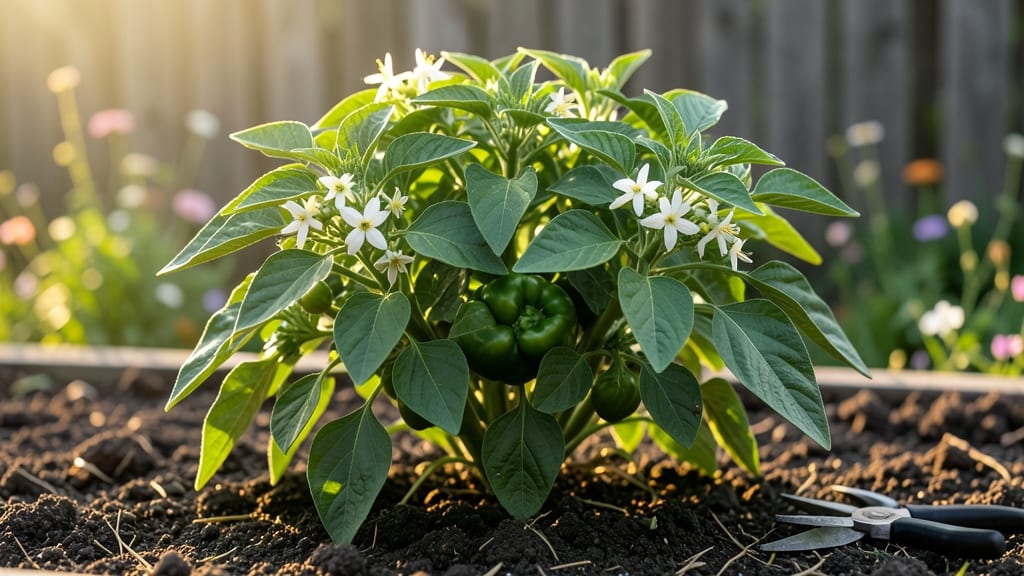
Pepper plants are not perennial in most climates, dying back after producing fruit in their first year. However, in warm, frost-free zones, they may survive multiple seasons with proper care and winter protection.
Pepper plants originate from tropical climates, so their natural lifespan is just one growing season in cooler regions. 🌱 When temperatures drop below 50°F, their tender stems and leaves freeze, killing the plant entirely. Even in mild zones, peppers often decline after fruiting due to energy depletion.
The good news? With techniques like heavy mulching or overwintering in containers, you can coax some varieties to return year after year in frost-free areas.
What makes this tricky is that peppers prioritize fruit production over survival. Once they've set peppers, their energy shifts entirely to ripening those pods, leaving little strength for winter resilience.
That's why gardeners in Zone 8+ often treat peppers as annuals unless they take special steps to protect them from cold snaps and provide consistent warmth.
💡 In This Article
- Why Pepper Plants Die After First Year in Cold Climates
- How to Extend Pepper Plant Lifespan in Mild Climates
Why pepper plants die after first year in cold climates
Pepper plants originate from tropical regions where temperatures hover between 70-90°F year-round. Their delicate cellular structure freezes when exposed to 32°F or below, causing ice crystals to form inside plant tissues. This cellular rupture is irreversible—once frost damages the stems or leaves, the entire plant dies within days.
Even brief cold snaps below 50°F can stunt growth and weaken the plant's ability to recover. 🌡️
The plant's energy allocation also plays a critical role. Peppers are determinate growers, meaning they focus all their resources on producing fruit during the growing season. Once they've set peppers, their metabolic priority shifts from survival to ripening pods, leaving no reserves for winter hardiness.
This biological trade-off explains why most gardeners treat peppers as annuals in cooler climates—nature designed them to complete their life cycle in one season.
Another key factor is the plant's shallow root system. Unlike perennials with deep taproots, peppers develop fibrous roots that spread just 12-18 inches below the surface. These roots provide minimal insulation against ground freezing, making peppers particularly vulnerable to temperature fluctuations.
In contrast, cold-hardy plants like asparagus develop extensive root networks that can survive winter underground.
Light exposure further complicates survival. Pepper plants require 6-8 hours of sunlight daily to thrive, but shorter winter days reduce their ability to photosynthesize and build energy reserves. Without sufficient light, even protected plants struggle to maintain vigor through winter months.
This seasonal light deprivation creates a double challenge for peppers trying to persist beyond their first year in marginal climates.
What makes this especially frustrating is that some pepper varieties can survive brief cold periods if properly protected. For example, Capsicum annuum varieties like 'Armenian' or 'Hungarian Wax' can tolerate 35-40°F for short durations, but prolonged exposure still proves fatal.
The key difference lies in their tropical heritage—peppers evolved in environments where winter simply doesn't exist, making annual die-off their natural lifecycle pattern.
Understanding this biological reality helps explain why gardeners in Zone 7 and below rarely see peppers return year after year. The plant's entire physiology is optimized for warm-season growth rather than cold tolerance.
Even with protection, the energy cost of surviving winter often outweighs the benefits, making peppers a classic one-and-done crop in most gardens. 🌱