
Picking
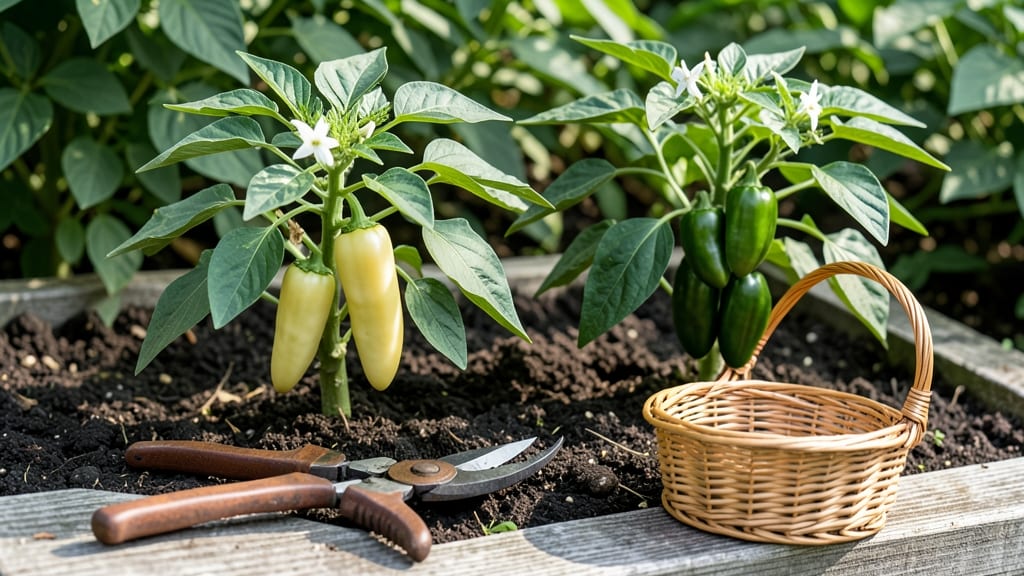
Banana peppers and jalapeños both start with the same fiery DNA but end up as completely different players in your garden. 🌶️ One delivers sweet, crisp crunch for pickling jars, while the other packs a mild kick for salsas and tacos—yet both thrive with the same basic care.
The real choice comes down to whether you want your peppers to shine in the kitchen as mild stars or bold supporting actors.
Jalapeños need full sun (6+ hours daily) and well-draining soil with a pH of 6.0–7.0, just like banana peppers—but they demand slightly more space (18–24 inches apart) to bulk up their signature heat.
Banana peppers, on the other hand, are the crowd-pleasers: they’re happy in 12–18 inches of spacing and produce longer, straighter pods that stay crisp even when fully grown. Both love warm soil (70°F+) to germinate, but jalapeños take longer to mature (70–80 days) compared to banana peppers’ 60–70 days.
Here’s the kicker: jalapeños need hand pollination (gentle shaking helps) to set fruit, while banana peppers often self-pollinate like champs. That means fewer empty flowers and more peppers on the vine for you.
For flavor, jalapeños deliver fresh, grassy heat that mellows when roasted, while banana peppers stay bright, tangy, and sweet—perfect for stuffing or slicing raw. Both handle pests similarly (watch for aphids and pepper maggots), but jalapeños reward patience with bigger yields per plant if you prune aggressively.
Pick jalapeños if you love bold, versatile heat and don’t mind waiting; choose banana peppers for quick, sweet rewards that beg to be preserved. Either way, your garden’s about to get a whole lot spicier—and a whole lot more delicious. Ready to grow?
The first option explained
When it comes to mild but flavorful peppers, banana peppers steal the spotlight with their unique charm! 🌶️😋 These elongated, yellow-to-orange peppers pack a gentle kick—typically ranging from 0 to 1,000 Scoville Heat Units (SHU)—making them a favorite for those who love heat without the fireworks.
Their sweet, slightly tangy flavor shines in dishes where you want a subtle peppery punch without overwhelming spice.
📊 Key Characteristics
- Appearance: Long, thin, and curved, resembling a banana (hence the name!). They ripen from green to yellow, orange, or red.
- Heat Level: Mild to almost no heat—ideal for beginners or heat-sensitive palates.
- Flavor Profile: Sweet, slightly tangy, with a crisp texture when fresh.
💪 Benefits
- Versatility: Perfect for pickling, stuffing, or slicing into salads, sandwiches, and dips.
- Low Heat, High Flavor: Adds depth to dishes without the burn of hotter peppers.
- Nutritional Perks: Rich in vitamins A and C, fiber, and antioxidants.
🍽️ Typical Use Cases
Banana peppers are the unsung heroes of classic American comfort food. Here’s where they shine:
- 🥪 Sandwiches & Subs: A staple in Reuben sandwiches or Philly cheesesteaks.
- 🍕 Pizza & Flatbreads: Sliced or whole, they add a sweet, tangy crunch.
- 🥗 Salads & Sides: Toss them into coleslaw, pasta salads, or roasted veggie bowls.
- 🍴 Pickled Peppers: Their mild heat makes them a crowd-pleaser in jars.
- 🧀 Stuffed Peppers: Pair with cheese, rice, or herbs for a flavorful bite.
Pro Tip: 💡 For extra sweetness, let them ripen fully to yellow or orange before using!
The second option explained
Option B: Jalapeños – The Bold, Versatile Heat-Seeker 🌶️🔥
If you're craving a serious kick with a bold, grassy punch, jalapeños are your go-to. These medium-hot peppers pack a punch with a Scoville heat level of 2,500–8,000 SHU—enough to wake up your taste buds without sending you into heat shock (unless you're into that).
Their flavor profile is a dynamic mix of earthy, slightly sweet, and tangy notes, with a crisp, fresh bite that makes them irresistible.
📊 Key Characteristics
- Heat Level: Moderate (2,500–8,000 SHU), but can vary by ripeness and growing conditions.
- Flavor: Bright, grassy, with a hint of citrusy tang and a subtle smokiness when roasted.
- Appearance: Typically green when unripe (though ripe jalapeños turn red or yellow), with a 3–5 inch elongated shape and a glossy skin.
- Texture: Firm and crunchy when fresh, becoming tender when cooked.
💪 Benefits of Jalapeños
Beyond their fiery allure, jalapeños bring the heat with some serious perks:
- Nutrient Powerhouse: Loaded with vitamin C, vitamin A, and potassium—great for immune support and skin health. 📊
- Digestive Boost: Contains capsaicin, which may aid digestion and metabolism.
- Antioxidant Rich: Helps combat inflammation and oxidative stress.
- Versatility: Fresh, pickled, roasted, or powdered—jalapeños adapt to any dish.
🍽️ Typical Use Cases
Jalapeños are the chameleons of the pepper world, shining in:
- Fresh Snacks: Sliced into salsas, guacamole, or tacos for a zesty crunch.
- Pickled Delights: Classic in jalapeño poppers, margaritas, or pickled jars for tangy heat.
- Cooked Dishes: Roasted for pizza toppings, nachos, or chili—their smoky depth adds layers.
- Powdered Spice: Dried and ground into taco seasoning, hot sauces, or BBQ rubs for instant flavor.
- Global Cuisine: From Mexican salsas to Thai curries, jalapeños bring heat to international dishes.
Pro Tip: 💡 For milder heat, remove the seeds and membranes before using. Want extra fire? Keep them whole or add the seeds back in!
Key differences
🌶️ Heat Level: Mild vs. Medium Spice
If you're sensitive to heat, this is the first major difference you’ll notice! Banana peppers pack a mild, sweet heat (typically 0–500 Scoville Heat Units, SHU), making them a great choice for beginners or dishes where you want subtle spice.
Think of them as the "gentle intro" to the chili world.
Jalapeños, on the other hand, bring medium heat (2,500–8,000 SHU), with a sharper, more pronounced kick.
They’re the classic "step up" for those who enjoy a little more bite without diving into extreme spice. Pro tip: 💡 Remove the seeds and membranes from jalapeños to dial down the heat—this trick works for both fresh and pickled peppers!
🍽️ Flavor Profile: Sweet vs. Tangy with Bite
Banana peppers are all about sweetness and brightness, with a hint of grassy undertones. Their flavor is versatile—perfect for stuffing, pickling, or slicing into salads where you want a mild, fruity kick. Imagine them as the "crowd-pleaser" of the pepper world.
Jalapeños offer a tangier, earthier flavor with a touch of smokiness when roasted. They’re the backbone of dishes like salsa, nachos, or grilled meats, where their complexity shines. Fun fact: 🌡️ Jalapeños taste sweeter when roasted, while banana peppers retain their crispness better when raw!
🌱 Growing Conditions: Easy vs. Slightly Picky
Banana peppers are low-maintenance champions—they thrive in USDA zones 9–11 but can be grown in containers or cooler climates with proper care. They love full sun (6–8 hours/day) and well-draining soil. Bonus: 🌱 They’re prolific producers, often yielding 10–20 peppers per plant!
Jalapeños are a bit more demanding but still manageable. They prefer zones 7–11 and struggle in frost-prone areas unless started indoors.
They need consistent warmth (ideal soil temp: 70°F+) and may require staking as they grow taller. Pro tip: ✨ For cooler climates, opt for early-maturing varieties like "Early Jalapeño" or grow them in greenhouses!
📏 Size and Shape: Compact vs. Slightly Longer
Banana peppers are small and plump, typically 2–4 inches long, with a smooth, glossy skin that ranges from yellow to red as they ripen. Their shape makes them ideal for stuffing or slicing into rings.
Jalapeños are a bit longer and tapered (usually 2–3.5 inches), with a slightly bumpy texture and a wider range of colors (green, yellow, red, or purple).
Their size works well for slicing, pickling, or whole roasting. Fun comparison: 🎯 A banana pepper is like a tiny, sweet firecracker, while a jalapeño is a medium-sized, flavor-packed bullet!
🛒 Availability and Cost: Year-Round vs. Seasonal
Banana peppers are easy to find year-round in grocery stores, often sold fresh, pickled, or in jars. They’re also budget-friendly, usually costing $1–$3 per pepper or $2–$5 per jar.
Jalapeños are peak in summer/fall but can be found fresh or pickled year-round. Fresh jalapeños tend to be slightly pricier ($1–$4 each) due to their popularity, while pickled jalapeños (like in jars) are cheaper and shelf-stable. Savvy tip: 💰 Buy jalapeños in bulk during their season for better deals!
When to choose which
Choosing between banana peppers and jalapeños often comes down to the vibe you’re going for—whether you want a sweet, tangy crunch or a bold, fiery kick. Here’s when each shines best:
🍽️ Pick Banana Peppers When...
- You want mild, sweet heat: Banana peppers are perfect for dishes where you crave flavor without the burn. Think stuffed peppers, pickles, or salsas where their crisp texture and mild tang take center stage.
- You’re cooking for kids or sensitive palates: Their low Scoville rating (0–500 SHU) makes them a crowd-pleaser for grilled cheese, pizza toppings, or homemade hot sauce with controlled heat.
- You’re pickling or fermenting: Their bright color and mild heat hold up beautifully in bread-and-butter pickles or kimchi, adding a subtle punch without overpowering.
- You’re growing for versatility: Banana peppers thrive in containers and produce prolifically, making them ideal for urban gardens or year-round harvests in warm climates.
🔥 Pick Jalapeños When...
- You need a moderate heat boost: With a Scoville rating of 2,500–8,000 SHU, jalapeños add noticeable but manageable spice to dishes like tacos, chili, or margaritas. They’re the secret weapon behind classic salsa roja and queso dip.
- You’re grilling or smoking: Their charred, smoky depth elevates BBQ sauces, jerky, or grilled meats. Stuff them with cheese for a spicy, melty bite!
- You’re making hot sauce or fermenting: Jalapeños shine in fermented hot sauces (like chipotle) or spicy pickles, where their heat and complexity develop over time.
- You’re experimenting with heat levels: Remove seeds and membranes for milder heat, or keep them for a fiery kick. They’re also great for freezing in oil or vinegar for later use.
Pro Tip: 💡 Mix and match! Use banana peppers for a sweet, crunchy contrast in dishes where jalapeños dominate the heat—like a spicy salsa with a hint of brightness. Or, roast both together for a smoky, layered flavor in dips or marinades.
The bottom line
So, which pepper reigns supreme in your kitchen or garden? 🌶️ Whether you're craving a mild, sweet crunch for salads or a fiery kick to spice up dishes, both banana peppers and jalapeños have their place.
Banana peppers shine in raw snacks, pickling, or dishes needing subtle heat, while jalapeños bring bold flavor to salsas, grilling, or spicy sauces.
Need a decision? Pick banana peppers for versatility and mildness, or go jalapeño for heat lovers. Grow both for a full-flavored harvest! 🌱
Pro tip: Try a mix—banana peppers in salsa or jalapeños pickled for balance! 🎯