
Diseases
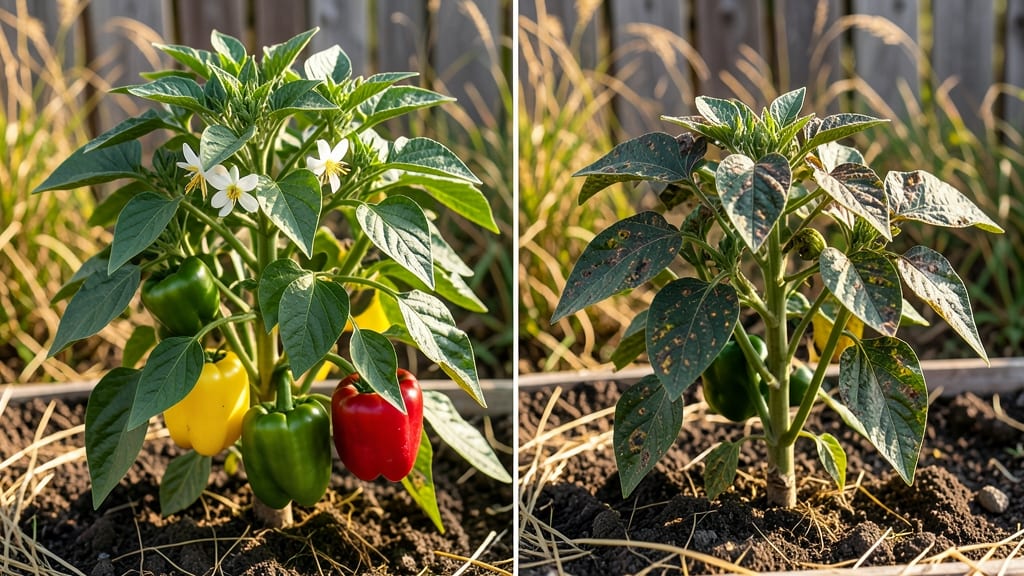
Your bell peppers are turning yellow and spotted—don’t panic, we’ve got a fast fix for common bell pepper plant diseases. 🌿 These fungal issues strike when humidity meets poor airflow, but with the right moves, you’ll save your plants before the season’s over.
I’ve battled bacterial spot, powdery mildew, and anthracnose myself, and here’s how I stop them in their tracks.
Start by pruning crowded foliage to improve airflow, then spray plants with a neem oil mixture (1 tablespoon per quart of water) every 7–10 days. For stubborn spots, copper fungicide works fast—just apply it at the first sign of trouble.
The key? Prevention—sanitize tools, rotate crops, and choose resistant varieties like ‘Aristotle’ or ‘Carmen’ to keep problems away.
Within 2–3 weeks, you’ll see new growth pushing through, and those spots will fade. Your peppers will bounce back stronger, producing bold, disease-free harvests all season. The trick is acting early—don’t wait until the leaves are half-eaten.
Works for greenhouses, containers, or in-ground beds—just adjust spacing to 18–24 inches apart for better airflow. Here’s how to keep your plants thriving without chemicals if you prefer organic methods.
Root Causes Behind Pepper Plant Ailments
Bell pepper plants, like all living organisms, are vulnerable to diseases when their natural defenses weaken or environmental conditions shift. Understanding why these issues arise is the first step to preventing them.
Below, we break down the key factors—from microscopic invaders to human habits—that turn your thriving garden into a battleground for fungal foes.
Fungi are the primary culprits behind most bell pepper plant diseases. These organisms thrive in moist, warm conditions and spread through spores—tiny, invisible seeds that hitch rides on wind, water, or even garden tools. Here’s how they exploit your plants:
- Overcrowded plants: Dense foliage traps humidity, creating the perfect fungal breeding ground. Phytophthora and Pythium (root rot causes) love this environment, while Alternaria (leaf spot) spreads rapidly when leaves brush against each other.
- Contaminated soil or tools: Fungal spores linger in old compost, infested mulch, or dirty pruners. Even a single infected plant can contaminate an entire bed if not isolated.
- Weakened plant defenses: Stress from poor nutrition, drought, or extreme temperatures makes peppers more susceptible. For example, Fusarium wilt targets plants already struggling with nitrogen deficiency.
💡 Pro Tip: Rotate crops annually and sterilize tools with a 1:10 bleach-water solution to disrupt fungal lifecycles.
Fungi don’t just appear—they’re invited by the weather. Bell peppers are particularly sensitive to these environmental triggers:
| Condition | Disease Risk | Why It Happens |
|---|---|---|
| High humidity (75%+) | Anthracnose, Downy Mildew | Spores germinate faster in damp air, and water droplets on leaves create bridges for fungal spread. |
| Poor drainage | Root Rot (Phytophthora) | Waterlogged soil cuts off oxygen, drowning roots and inviting anaerobic fungi that thrive in stagnant moisture. |
| Sudden temperature swings | Bacterial Spot, Powdery Mildew | Cold nights followed by hot days stress plants, weakening their cell walls and making them easier targets for pathogens. |
✨ Actionable Fix: Space plants for airflow, use raised beds for drainage, and opt for shade cloth during extreme heat to stabilize conditions.
Even the hardiest pepper plants can fall prey to diseases caused by well-meaning (but misinformed) gardening habits. Here’s what’s likely sabotaging your crop:
- Overhead watering: Splashing water onto leaves spreads fungal spores like a game of microbial telephone. Alternaria and Phytophthora rely on this method to colonize new plants.
- Excessive nitrogen fertilizer: While nitrogen fuels leafy growth, it also makes plants soft and prone to fungal infections. Powdery mildew adores lush, tender foliage.
- Ignoring debris: Old plant matter, fallen leaves, or diseased stems harbor spores over winter. Verticillium wilt can survive in soil for years, waiting to infect the next crop.
- Planting too early: Cold soil (<50°F) slows pepper growth, making seedlings vulnerable to damping-off (a fungal disease that cuts them off at the stem).
🎯 Prevention Checklist:
- Water at the base, never overhead.
- Balance fertilizers with potassium (boosts disease resistance).
- Remove and dispose of infected plants (don’t compost them!).
- Wait until soil warms to at least 60°F before transplanting.
How to Fix Fungal Foes Fast
Fungal diseases don’t stand a chance when you act quickly and strategically. Below are targeted solutions for each common bell pepper plant disease, paired with prevention tips to keep your garden thriving. Think of this as your emergency repair kit—just mix, spray, or adjust as needed!
Fix it: 🔥 Remove infected leaves – Snip off severely affected foliage (don’t compost!) and destroy it. 🍳 Homemade spray recipe – Mix 1 tbsp baking soda + 1 tsp dish soap + 1 gallon water in a spray bottle. Apply every 7–10 days at dawn or dusk for best results. 👨🍳 Commercial fungicide – Use neem oil (1 tsp per liter of water) or a copper-based spray (follow label instructions). Reapply after rain.
Prevent it: ✨ Space plants properly – Ensure 18–24 inches between peppers for airflow. 🌡️ Water at the base – Avoid overhead watering; use drip irrigation or soaker hoses. 🎯 Rotate crops – Avoid planting peppers in the same spot yearly.
Fix it: 🔪 Prune aggressively – Remove all infected leaves and stems, even if they’re just yellowing. Sterilize pruners with rubbing alcohol between cuts. 🥘 Copper fungicide treatment – Spray copper hydroxide (like Cheshunt Compound) every 5–7 days until new growth appears. ⏰ Adjust watering – Water only in the morning and ensure soil drains well. Raise beds if needed.
Prevent it: 💡 Plant resistant varieties – Try ‘Aristotle,’ ‘Carmen,’ or ‘Jupiter’ (breeder-resistant to blight). 🌱 Solarize soil – Cover beds with clear plastic for 4–6 weeks before planting to kill fungal spores. 📊 Crop rotation – Wait 3 years before replanting peppers, tomatoes, or eggplants in the same spot.
Fix it: 🧼 Sterilize tools & containers – Clean pots, trellises, and pruners with 10% bleach solution (1 part bleach to 9 parts water). 🍳 Fungicide blend – Mix 1 tbsp neem oil + 1 tsp baking soda + 1 quart water + a drop of soap. Spray weekly until symptoms fade. 👨🍳 Remove fruit lesions – Pick off dark sunken spots on peppers and destroy them (don’t compost).
Prevent it: 🌡️ Avoid overhead watering – Use drip lines or hand-water at the base. 🎯 Thin plants – Keep 12–18 inches between plants for airflow. 🔥 Solarize or fumigate – Before planting, treat soil with solarization or hydrogen peroxide (3% solution, 1 cup per gallon of water).
Fix it: 💧 Stop watering immediately – Let soil dry out completely before watering again. 🔪 Repot affected plants – Gently remove the plant, trim blackened roots, and replant in fresh, sterile potting mix with perlite or sand for drainage. 👨🍳 Hydrogen peroxide soak – Soak roots in 3% hydrogen peroxide (1 part to 10 parts water) for 10 minutes before replanting.
Prevent it: 🌱 Use raised beds – Elevate plants to prevent waterlogging. 📊 Test soil drainage – Amend clay soil with compost + coarse sand. ✨ Avoid over-potting – Use containers with drainage holes and never let plants sit in saucers of water.
🔥 Morning watering only – Wet foliage dries faster, reducing fungal growth. 🌡️ Monitor humidity – Use a hygrometer; aim for 40–60% humidity.
Add a fan if needed. 🎯 Rotate fungicides – If using chemicals, alternate between copper, neem, and sulfur-based sprays to prevent resistance. 🌱 Healthy starts – Feed peppers with compost tea every 2 weeks for stronger natural defenses.
Remember: The key to curing fungal diseases is speed + prevention. Once you spot the first signs, act within 24–48 hours for the best chance of saving your peppers! 🚀
Frequently asked questions
What are the first signs of fungal diseases on bell pepper plants?
Watch for small yellow or brown spots on leaves that expand over time, or a white powdery coating (powdery mildew). Dark, sunken lesions on peppers or stems indicate anthracnose. If leaves curl or develop dark streaks, it could be bacterial spot. Act fast—remove affected parts immediately and treat with neem oil or copper fungicide.
Can I save my bell peppers if they already have root rot?
You might! First, stop watering and let the soil dry completely. Repot the plant in fresh, sterile potting mix with perlite for drainage, and trim any blackened roots. Soak healthy roots in 3% hydrogen peroxide (1:10 ratio) for 10 minutes before replanting. Use containers with drainage holes and avoid overwatering.
Are there disease-resistant bell pepper varieties I should plant?
Yes! Varieties like ‘Aristotle,’ ‘Carmen,’ or ‘Jupiter’ are bred to resist common fungal diseases like blight and anthracnose. For organic gardens, try ‘Early California Wonder’ or ‘King of the North’, which handle humidity better. Always check seed packets for disease resistance labels before buying.
How often should I spray my peppers with fungicide?
For prevention, spray every 7–10 days at dawn or dusk using neem oil or copper fungicide. If treating an active infection, apply every 5–7 days until symptoms fade. Always reapply after rain, as water washes away protective coatings. Rotate between fungicides (like copper and neem) to prevent resistance.
Will my bell peppers still be safe to eat if they have fungal spots?
Only eat peppers with surface-level spots if they’re otherwise healthy and firm. Remove all diseased tissue first. Avoid eating peppers with deep lesions, mold, or signs of root rot—these can harbor harmful toxins. When in doubt, compost the affected fruit (don’t reuse compost in the garden) and focus on saving the plant for future harvests.