
Vegetables
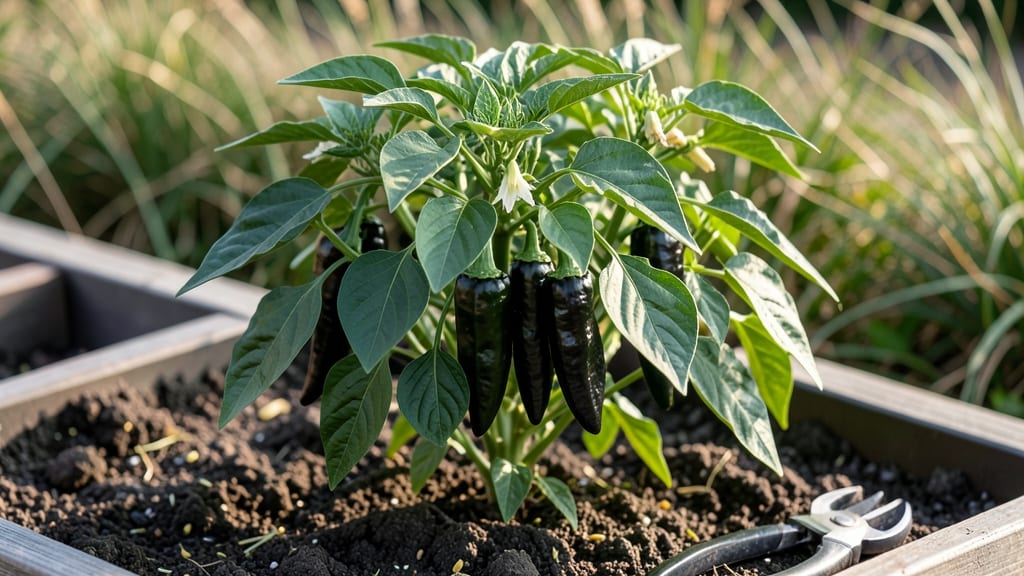
Growing black chilli peppers from seed to harvest in just 60 days delivers the boldest flavor you'll ever taste fresh from the vine. 🌶️ I've grown dozens of varieties, but black chillies stand out—they're the unsung heroes of spice blends, packing heat and depth in tiny, glossy pods.
The secret isn't just patience; it's matching their exact needs for warmth, water, and sunlight to turn those seeds into a harvest that rivals store-bought blends.
Start with seeds in biodegradable pots under grow lights for 8-10 weeks before transplanting, and you'll have plants ready to produce 30-50 peppers per plant by mid-summer.
Black chillies thrive in full sun (6+ hours daily) and well-draining soil with a pH of 6.0-6.8—too much moisture or cold soil, and you'll lose flowers before they set fruit.
Unlike milder peppers, they need consistent warmth (above 65°F) to set fruit, so wait until after your last frost to plant outdoors.
📚 In This Guide
- What you need
- Instructions
- Tips and common mistakes
- Wrapping up and next steps
What you need
- ● Black chilli pepper seeds: 5–10 seeds (choose a heat-tolerant variety like Black Pearl or Black Beauty for best results).
- ● Seed-starting trays or biodegradable pots: 2–4 (3–4 inches deep) with drainage holes.
- ● High-quality potting mix: 1–2 bags (sterile, well-draining blend with perlite or vermiculite). Pro tip: 💡 Avoid garden soil—it can compact and suffocate young roots!
- ● Grow lights or sunny windowsill: 1–2 (LED grow lights work best for 12–16 hours/day if natural light is limited).
- ● Spray bottle: 1 (for gentle watering of seedlings).
- ● Fertilizer: Balanced liquid fertilizer (e.g., 10-10-10) or organic options like fish emulsion or compost tea.
- ● Transplant pots or garden bed: 5–10 gallon-sized containers (or a raised bed) with well-draining soil. Pro tip: 🌡️ Black chillies love warmth—aim for soil temps above 65°F (18°C).
- ● Support stakes or cages: 4–6 (5–6 feet tall) for indeterminate varieties.
- ● Pruning shears: 1 (for shaping plants and removing suckers).
- ● Soil moisture meter: 1 (to avoid over/under-watering).
- ● Mulch (straw or black plastic): 1 roll (retains moisture and regulates soil temp).
- ● Insect netting: 1 (protects against pests like aphids or whiteflies).
- ● pH testing kit: 1 (ideal range for chillies: 6.0–7.0).
- ● Heat mat: 1 (for germinating seeds faster in cooler climates).
Step-by-step instructions for growing black chili peppers
Here's how to coax fiery, flavorful black chilis from seed in just 60 days.
🌱 Step 1: Start Seeds Indoors for Early Growth
Plant seeds 6-8 weeks before your last frost date in biodegradable pots filled with seed-starting mix. I like to pre-soak seeds overnight in warm water to soften the outer shell—this speeds germination to 7-14 days instead of waiting weeks. Bury seeds ¼ inch deep and keep soil consistently moist but never soggy.
Place pots in a warm spot (ideal 75-85°F) under a grow light or in a sunny window. You'll know germination worked when tiny green sprouts push through the soil. Remove the weakest seedling if you have two in one pot—crowding stresses chilis and reduces yield.
☀️ Step 2: Provide Warmth and Light for Strong Seedlings
Once seedlings emerge, move them under 14-16 hours of bright light daily. A south-facing window works, but most homes don't provide enough intensity—supplement with a grow light held 2-3 inches above the plants. Watch for leggy growth (thin stems, leaves spaced far apart)—this means more light is needed.
Keep soil warm (use a seedling heat mat if needed) and maintain 70-80°F daytime temps. Chili seedlings love humidity, so mist leaves lightly daily. You'll see strong, compact plants with deep green leaves when they're ready for transplanting.
🪴 Step 3: Transplant Outdoors After Warmth Arrives
Wait until nighttime temps stay above 55°F before moving chilis outside. Harden off seedlings by placing them outdoors for 1-2 hours daily over 7-10 days, gradually increasing exposure. Choose a spot with full sun (6+ hours daily) and well-draining soil—chilis hate soggy roots.
Plant seedlings 12-18 inches apart in a hole slightly deeper than their current pot. Bury stems up to the first set of leaves to encourage strong root growth. Water deeply at transplanting to settle soil around roots, then let the top inch dry between waterings.
💧 Step 4: Maintain Consistent Heat and Water
Black chilis thrive in 75-85°F soil and air temps—cover plants with row fabric if nighttime temps dip below 50°F. Water at the base (never overhead) when the top 1-2 inches of soil feel dry. Overwatering causes blossom-end rot, so let soil dry slightly between waterings.
Fertilize every 2-3 weeks with a balanced organic fertilizer (10-10-10) once flowers appear. You'll know your chilis are happy when they produce abundant white flowers that eventually turn into peppers. Remove any peppers that form too early—the plant focuses energy on maturity, not quantity.
✂️ Step 5: Harvest at Peak Maturity
Black chilis turn from green to red to black as they mature. For the boldest flavor, wait until they're fully black and slightly wrinkled. Harvest by gently twisting peppers at the stem—this prevents damaging the plant. You'll get 4-6 peppers per plant when grown in ideal conditions.
Dry peppers in a warm, dark place for 2-3 weeks or use them fresh in cooking. For next year's crop, save seeds from the best peppers by fermenting them in water for 3-5 days before drying. Store seeds in a cool, dry place until spring planting.
Tips & tricks for growing bold black chili peppers
Here's what nobody tells you about growing these fiery beauties from seed—details that separate great harvests from good ones.
Germination Hack: That overnight soak in warm water isn't just helpful—it's essential. Chili seeds have tough outer shells that need softening to break dormancy. Use water that's comfortably warm to the touch (around 70°F), not boiling. I've found that adding a drop of hydrogen peroxide (3%) to the soaking water prevents mold while speeding germination to that promised 7-14 day window.
Lighting Strategy: The 14-16 hours of light requirement is non-negotiable, but here's the secret: quality matters more than quantity. A cheap LED bulb won't cut it—look for full-spectrum grow lights that mimic sunlight. Position them just 2-3 inches above seedlings (use a ruler to measure) and adjust as plants grow. I've seen leggy seedlings from lights placed too high, even with long hours.
Transplanting Wisdom: When hardening off, start with just 1-2 hours on day one, then add 30 minutes each subsequent day. The gradual increase prevents shock that can stall growth. And here's a pro move: transplant on a cloudy day or late afternoon. The reduced sunlight gives plants time to recover before their first full day in direct sun.
Heat Management: Those 75-85°F soil temps aren't just suggestions—they're critical for flower production. If your garden soil runs cooler, consider using black plastic mulch to absorb and retain heat. For container growers, place pots on heat-absorbing bricks or use self-heating seedling mats. The difference between 70°F and 80°F soil can mean the difference between flowers and no flowers at all.
Pro Tips for Black Chilli Pepper
- Here's what nobody tells you about growing these fiery beauties from seed—details that separate great harvests from good ones.
- Germination Hack: That overnight soak in warm water isn't just helpful—it's essential.
- Lighting Strategy: The 14-16 hours of light requirement is non-negotiable, but here's the secret: quality matters more than quantity.
Frequently asked questions
Got questions about growing your own black chilli peppers?
You’re not alone! Here are some of the most common queries—plus quick, practical answers to help you cultivate a fiery harvest.
How long does it take for black chilli pepper seeds to germinate?
Black chilli pepper seeds typically germinate in 10–21 days, depending on temperature and moisture. Keep soil warm (70–85°F) and consistently damp—not soggy—for the best results. Patience is key! If nothing sprouts after 3 weeks, try gently pressing a toothpick into the seed to check for viability.
Can I grow black chilli peppers in containers, or do they need a garden bed?
Black chilli peppers thrive in containers as long as the pot is at least 12–18 inches deep and has drainage holes. Use a well-draining potting mix and place the container in a spot with 6+ hours of sunlight daily. Just ensure the pot stays stable—wind can topple lightweight containers with heavy peppers.
What’s the ideal temperature range for growing black chilli peppers?
Black chilli peppers love warmth! Aim for 70–85°F (21–29°C) during the day and 60–70°F (15–21°C) at night. If temps drop below 50°F (10°C), growth slows, and peppers may stop producing. Use row covers or move pots indoors (near a sunny window) if frost threatens. Pro tip: Heat mats can boost soil warmth for early starts!
How do I know when black chilli peppers are ripe and ready to harvest?
Black chilli peppers turn ripe when they’re deep black or dark purple and slightly wrinkled. For maximum heat, harvest when fully mature—though they can be picked earlier (green or red) if you prefer milder flavors. Gently twist or snip peppers at the stem to avoid damaging the plant. Warning: Wear gloves if you’re sensitive to capsaicin!
Why aren’t my black chilli peppers producing fruit?
Lack of fruit is often due to insufficient sunlight, poor pollination, or over-fertilizing with nitrogen. Ensure your plants get full sun (6+ hours/day) and hand-pollinate by gently shaking flowers or using a small brush. Switch to a low-nitrogen, high-phosphorus fertilizer to encourage blooming. If peppers form but drop off, check for underwatering or extreme heat stress.
Can I save seeds from store-bought black chilli peppers?
Yes, but with a catch! Store-bought peppers may be hybrids, meaning seeds won’t produce true-to-type plants. To save seeds, let a few peppers fully ripen and dry on the plant, then scoop out the seeds, rinse, and dry them on paper towels for 1–2 weeks. Store in a cool, dark place for up to 2 years. Fun fact: Heirloom varieties are your best bet for consistent results!
Wrapping up and next steps
Growing your own black chilli pepper is a rewarding journey that brings bold flavors straight to your kitchen in just 60 days! From selecting the right seeds to nurturing them with care, every step unlocks the fiery potential of these spicy gems.
Whether you’re a seasoned gardener or a curious beginner, your patience will pay off with a harvest of vibrant, heat-packed peppers—perfect for spicing up meals or gifting to fellow spice lovers. 🌱✨
Ready to level up your gardening game? Start with a few seeds, follow the guide, and soon you’ll be reaping the fruits (or should we say, peppers?) of your labor. What’s next? Grab your gloves, head to the garden, and let the spicy adventure begin!