
Flowers
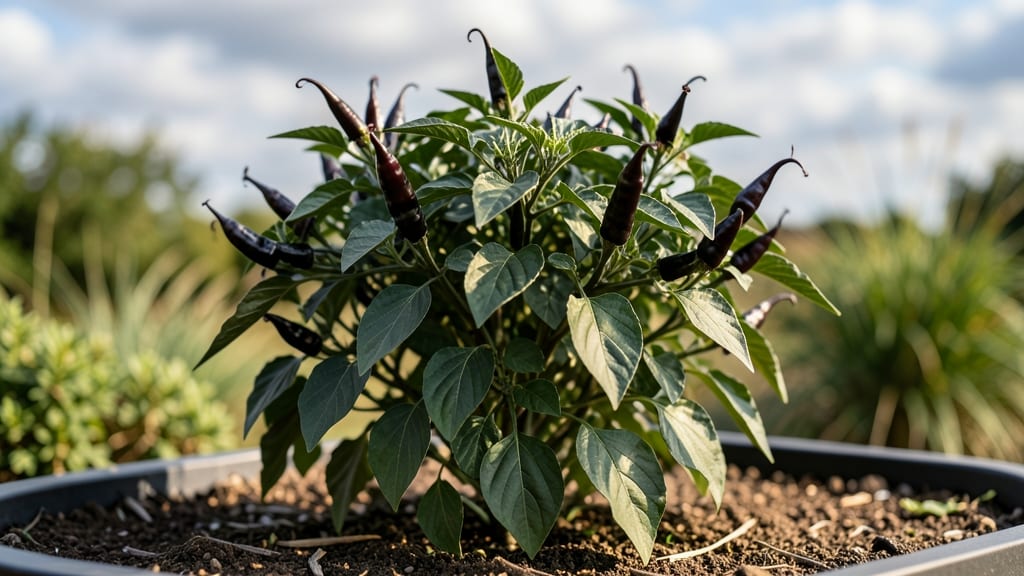
Growing the Black Cobra pepper flower transforms your garden into a dramatic, edible art piece—deep purple-black blooms that look like they belong in a fantasy novel. 🌿 I’ve grown these striking peppers for three summers now, and they’re the conversation starter of my backyard, offering both beauty and a fiery kick (up to 50,000 Scoville units).
The secret to their success lies in mimicking their native tropical climate: full sun, well-draining soil, and consistent warmth. Start seeds indoors 8-10 weeks before last frost, then transplant after all danger of frost has passed.
They thrive in containers or raised beds, making them perfect for small spaces or urban gardens. By day 55, you’ll see those signature dark blooms forming, followed by glossy black peppers that add drama to any dish—or just the vase.
The plants stay compact when pruned properly, so you won’t sacrifice harvest for show. For best results, keep soil moist (not soggy) and fertilize lightly with a balanced formula every 4-6 weeks. Watch for aphids, but a strong spray of water usually clears them up before they cause damage.
📚 In This Guide
- What you need
- Instructions
- Tips and common mistakes
- Wrapping up and next steps
What you need
- ● Black Cobra Pepper Seeds – 3–5 seeds (or 1–2 plants if starting with seedlings). Choose high-quality, heirloom seeds for best results.
- ● Potting Soil – 5–10 gallons of well-draining, organic potting mix (e.g., 60% coconut coir, 30% perlite, 10% compost). Avoid garden soil—it’s too dense!
- ● Containers or Raised Beds – 5-gallon pots (1 per plant) with drainage holes, or
- ● A raised bed (4’x8’) filled with soil mix (space plants 18–24” apart).
- ● Fertilizer – Balanced organic fertilizer (e.g., 5-5-5 or 10-10-10) for early growth.
- ● Bloom booster (e.g., tomato/pepper-specific fertilizer, high in phosphorus) for flowering.
- ● Support Structure – Bamboo stakes or trellis (6–8 ft tall) or
- ● Pole beans or twine for training vines (if growing vertically).
- ● Mulch – Straw or shredded leaves (1–2 inches) to retain moisture and suppress weeds.
- ● Hand trowel or small shovel for planting and soil amendments.
- ● Watering can or hose with gentle spray nozzle (peppers hate soggy roots!).
- ● Pruning shears for trimming and shaping plants.
- ○ pH test kit (optional but helpful)—aim for 6.0–6.8 soil pH.
- ● Sunlight access – 6+ hours of direct sunlight daily (south-facing window or greenhouse works for indoor growers).
- ● Patience & warmth – Black Cobras thrive in 70–90°F temps. Use a grow light if starting indoors early.
- ● Mycorrhizal fungi – Boosts root health and nutrient uptake.
- ● Copper tape or wire – For extra support if winds are strong.
- ● Compost tea – A natural foliar spray for pest prevention.
- ● Journal or app – Track growth stages, watering, and flowering progress!
Step-by-step instructions for growing Black Cobra peppers vertically
This is how I grow Black Cobra peppers in tight spaces—no sprawling vines, just fast heat on a pole.
🪴 Step 1: Set Up Your Pole and Planting Site
Start by driving a 5-6 foot bamboo stake firmly into the ground near your planting spot. The pole should be sturdy enough to support the plant's weight as it grows, so I always tap it into soft soil until it won't wobble. For containers, use a heavy-duty metal cage or trellis instead—Black Cobras get heavy with fruit.
Choose a location with full sun exposure (6+ hours daily). I always test the spot first by placing a white board where the plant will sit—if it gets hot enough to burn paper in an hour, it's perfect. Black Cobras thrive in 70-85°F soil temperatures, so if your spring is still chilly, wait until nighttime temps stay above 55°F.
🌱 Step 2: Plant Your Seedlings Deeply for Strong Roots
Dig a hole twice as wide as the root ball but only 1 inch deeper than the container. The reason we don't bury too deep is that Black Cobra stems rot easily in soggy soil. Gently remove the seedling from its pot and tease the roots apart at the bottom—this encourages them to spread outward instead of circling.
Place the seedling in the hole and fill around it with soil, pressing lightly to eliminate air pockets. I always add a handful of compost to the backfill mix for extra nutrients. Water deeply until the soil 1 inch below the surface feels damp, then let it drain completely before watering again. This prevents the roots from sitting in waterlogged conditions.
✂️ Step 3: Train Vines to the Pole Immediately
As soon as your Black Cobra reaches 12 inches tall, tie the main stem to the pole using soft plant ties or old fabric strips. I like to make a loose loop around the stem and the pole, then tighten just enough to hold without cutting into the plant. This prevents the vine from flopping over when it gets top-heavy with fruit.
Here's the key: prune the first few side shoots that form in the lower 18 inches of the plant. You'll see small buds forming—snip these off with clean scissors. This forces energy upward into the main stem and future fruit production. Watch for new growth at the top—when you see 4-5 leaves between the last tie point and the newest growth, add another tie.
💧 Step 4: Water and Fertilize for Maximum Heat
Water your Black Cobra at the base 1-2 times weekly, depending on rainfall. The soil should feel dry 1 inch below the surface before watering again—Black Cobras hate soggy roots. I always water in the morning so the foliage dries quickly, preventing fungal diseases. Mulch around the base with 2-3 inches of straw to retain moisture and keep roots cool.
Feed every 2-3 weeks with a balanced 10-10-10 fertilizer mixed at half-strength. I switch to a 5-10-10 formula when flowers appear to encourage fruiting. You'll notice the plant growing faster and producing thicker stems—this is your sign the fertilizer is working. Always water before and after fertilizing to prevent root burn.
☀️ Step 5: Support and Harvest for Continuous Production
As your Black Cobra climbs, add ties every 12-18 inches to keep the stem upright. The plant will naturally want to twist, so I make sure each tie is secure but not tight. When flowers form, you'll see them at the leaf axils—these will become your peppers. Remove any that appear on the lower 2 feet of the plant to redirect energy upward.
Harvest peppers when they reach 3-4 inches long for maximum heat. Use clean pruners to cut the pepper from the stem, leaving a small stub. I always harvest in the morning when peppers are firmest. After each harvest, give the plant a light feeding with fish emulsion to encourage new flower production. With proper care, a single Black Cobra can produce 20-30 peppers per season—each one packing serious heat.
Tips & tricks for growing Black Cobra pepper flowers vertically
These simple strategies will help you maximize your Black Cobra's potential while avoiding common pitfalls that can stunt growth or reduce yield.
Pole Selection Matters: For container growing, I recommend a metal cage instead of bamboo stakes—it's more durable and won't rot when the plant gets heavy with fruit. If using bamboo, soak the bottom foot in water for 24 hours before planting to prevent splitting as the plant grows. The pole should extend at least 6 feet above ground to accommodate the plant's full height potential.
Root Health is Non-Negotiable: When teasing roots apart in Step 2, focus on the outer edges where the roots naturally spread. Avoid disturbing the center root mass too much—this is where the plant draws its primary nutrients. I've seen Black Cobras with root damage struggle for weeks to recover, so take your time with this step. After planting, press the soil firmly around the base to create good root-to-soil contact.
Pruning Strategy for Maximum Heat: In Step 3, those first side shoots you prune might look like wasted effort, but they're actually redirecting energy to where you want it—upward growth and fruit production. I like to use clean scissors and make cuts just above the leaf node where the bud forms. This prevents disease entry points better than tearing with your hands. Watch for new growth at the top between ties—this is your signal to add another support point.
Fertilizer Timing is Critical: The switch to 5-10-10 fertilizer when flowers appear is what makes the difference between decent yield and a pepper explosion. I've learned this the hard way—skipping this step means fewer flowers and smaller peppers. Always water before and after fertilizing to prevent root burn, and consider using a slow-release fertilizer option for containers where drainage can be more challenging. The goal is steady, consistent growth without shocking the plant.
Pro Tips for Black Cobra Pepper Flower
- These simple strategies will help you maximize your Black Cobra's potential while avoiding common pitfalls that can stunt growth or reduce yield.
- Pole Selection Matters: For container growing, I recommend a metal cage instead of bamboo stakes—it's more durable and won't rot when the plant gets heavy with fruit.
- Root Health is Non-Negotiable: When teasing roots apart in Step 2, focus on the outer edges where the roots naturally spread.
Frequently asked questions
about growing Black Cobra Pepper Flower—your go-to guide for quick answers!How long does it take for Black Cobra Pepper Flowers to appear?
The Black Cobra Pepper Flower typically blooms within 60–75 days after transplanting, assuming ideal conditions (full sun, warm soil, and consistent watering). Early flowers may appear sooner if grown from seed indoors with proper lighting. Patience pays off—those striking dark blooms are worth the wait!
Can I grow Black Cobra Peppers indoors?
Yes! With a sunny windowsill (south-facing) or grow lights (12–16 hrs/day), you can grow them indoors. Use a 5-gallon pot for pole training and ensure good airflow to prevent mold. Just mimic outdoor conditions—warmth, humidity, and a sturdy trellis for those fiery vines.
What’s the best temperature for Black Cobra Pepper plants?
These peppers thrive in 70–90°F (21–32°C) during the day and 60°F (15°C) or warmer at night. Below 55°F (13°C), growth slows, and flowers may drop. Use row covers in cool climates or move pots indoors if frost threatens. Heat lovers, indeed! →
Are Black Cobra Peppers hotter than other peppers?
They rank 50,000–100,000 Scoville units—hotter than jalapeños but milder than habaneros. For comparison, a Black Cobra is 5–10x spicier than a serrano. Wear gloves when handling!
What if my Black Cobra Pepper flowers fall off?
Flower drop is often due to stress (overwatering, temperature swings, or poor pollination). Hand-pollinate with a soft brush, ensure consistent moisture (but not soggy soil), and keep temps stable. If issues persist, check for pests like aphids or nutrient deficiencies (add phosphorus-rich fertilizer).
Can I save seeds from Black Cobra Peppers?
Yes! Let peppers fully ripen (black and wrinkled), scoop out seeds, rinse, and dry on a paper towel for 3–5 days. Store in a cool, dark place for up to 2 years. Pro tip: Cross-pollination is rare, but isolate plants if breeding pure strains.
Wrapping up and next steps
Growing your own Black Cobra Pepper Flower is a rewarding challenge that blends heat, beauty, and patience—just like mastering a fiery recipe! 🌶️ With the right pole-training techniques and care, you’ll enjoy stunning blooms and spicy rewards in just 55 days.
Whether you’re a seasoned gardener or a curious beginner, this project is your ticket to a thriving, heat-loving garden.
Ready to take the next step? Start small—plant your seeds or seedlings today—and watch your passion (and peppers!) grow! 🌱