
Companion Plants
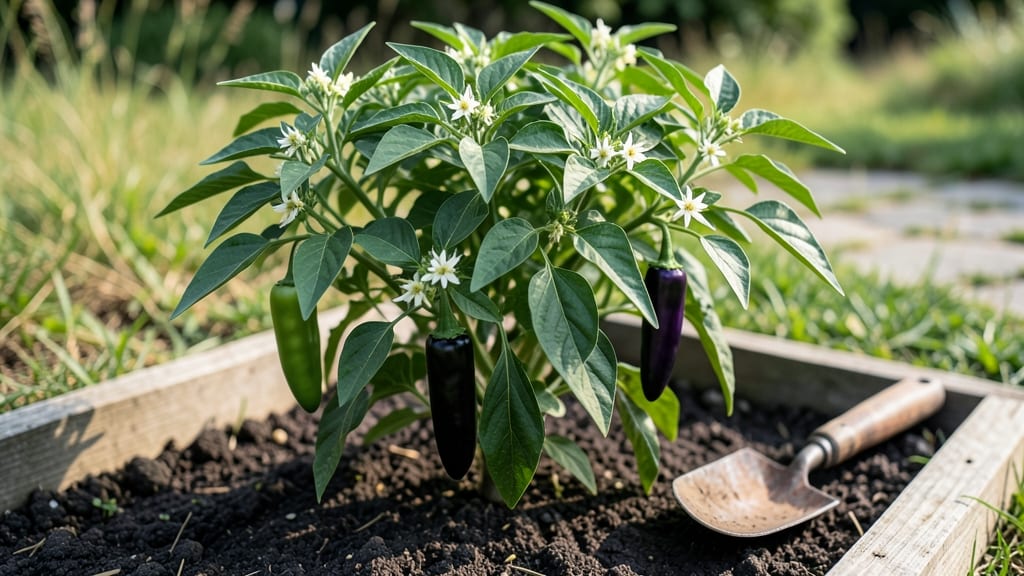
Growing Black Jalapeno pepper plants turns your balcony into a fiery little jungle—no yard required. 🌱 These deep purple beauties pack twice the heat of regular jalapeños with a smoky, almost charred flavor that chefs obsess over.
My first batch went from seed to harvest in just 90 days, and the neighbors kept asking where I got them.
Start with well-draining soil mixed with compost (think rich, dark, and slightly sandy), and plant in containers at least 12 inches deep. Black Jalapeños love 6-8 hours of direct sun daily—a south-facing window or grow light works in a pinch.
The key is keeping soil consistently moist but never soggy; these peppers hate wet feet. I use self-watering pots now, and the plants reward me with bold, glossy leaves and thick stems that can support their own weight.
By midsummer, you'll see those signature dark purple fruits forming, each one packing 5,000-10,000 Scoville heat units—enough to make regular jalapeños taste like bell peppers. The flavor deepens as they ripen, so harvest when they're fully purple and firm.
My first harvest made enough salsa to feed the whole block (and a very apologetic friend who took one bite too many).
Troubleshooting is simple: yellow leaves mean overwatering, while stunted growth usually signals too little light. Companion plants like basil or marigolds keep pests away, and a monthly dose of fish emulsion keeps them producing all season.
These aren't just peppers—they're a statement plant that proves you don't need space to grow something extraordinary.
📚 In This Guide
- What you need
- Instructions
- Tips and common mistakes
- Wrapping up and next steps
What you need
- ● Black jalapeño pepper seeds or seedlings: 3–5 plants (start with 3 for a small harvest or 5 for a bountiful vertical setup).
- ● Vertical growing structure: Wall-mounted planter pockets (10–12 pockets, 6" deep x 8" wide)
- ● OR a trellis or cage (4–5 ft tall) for climbing plants
- ● OR a hanging basket (12" diameter, with drainage)
- ● High-quality potting mix: 10–15 lbs of well-draining, organic mix (e.g., 60% peat moss, 30% perlite, 10% compost).
- ● Containers or pots: 5–7" diameter pots (if not using pockets) with drainage holes.
- ● Fertilizer: Balanced liquid fertilizer (10-10-10 or 5-5-5) OR
- ● Slow-release granular fertilizer (e.g., 14-14-14, 1 tbsp per pot)
- ● Support ties or twine: 1–2 rolls (for trellis/cage setups).
- ● Watering can or spray bottle: With a fine rose nozzle for gentle watering.
- ● Pruning shears: Small, sharp pair for trimming.
- ● Sunlight: 6–8+ hours of direct sunlight daily (south-facing window or grow lights for indoors).
- ● Temperature: 70–90°F (21–32°C) (black jalapeños love heat!).
- ● Humidity: 40–60% (use a humidity tray if indoors feels dry).
- ● Space: Vertical setup saves room—plan for 12–18" of wall space per plant (or 1–2 sq ft for hanging baskets).
- ● Water: Consistent moisture (keep soil evenly damp, not soggy).
- ● Companion plants: Basil, marigolds, or onions (plant nearby to deter pests!).
- ● Grow lights: LED full-spectrum bulb (for indoor setups with <6 hours of sunlight).
- ● Mulch: Straw or shredded leaves to retain moisture.
- ● Soil moisture meter: To check root-zone hydration.
- ● Neem oil or insecticidal soap: For organic pest control.
Step-by-Step instructions for growing black jalapeno peppers vertically
Here's how I turn tiny spaces into fiery pepper gardens—no sprawling vines required.
🪴 Step 1: Choose and Prepare Your Vertical Growing System
Start with a sturdy 5-gallon fabric grow bag or a tall 12-inch diameter container—both give roots room to grow downward while keeping the plant compact. Cut a 1-inch wide slit vertically along the side of the bag (if using one) to create a pocket for the main stem. This guides the plant upward naturally without tying or pruning.
Fill your container ¾ full with a lightweight potting mix (I use a blend of 50% coco coir, 30% perlite, and 20% worm castings). This mix drains fast but holds enough moisture for peppers' shallow roots. Tap the container gently to settle the soil without compacting it—you want fluffy texture so roots spread easily.
🌱 Step 2: Plant Your Black Jalapeno Seeds or Transplants
If starting from seed, plant 2-3 seeds per container at ¼-inch depth—just deep enough to cover them lightly. I use a toothpick to make small holes so seeds don't get buried too deep. Space seeds 2 inches apart in the slit pocket if using a grow bag. For transplants, dig a hole twice as wide as the root ball and place the plant so the top of the root ball sits ½ inch below soil level. This prevents stem rot later.
Water gently until moisture reaches 2 inches deep—you'll know it's right when the soil surface looks damp but not glistening. Black jalapeños love warmth, so keep soil temps between 70-85°F during germination. A seedling heat mat helps if your space runs cooler. Expect sprouts in 7-14 days—patience is key here.
☀️ Step 3: Position for Maximum Sun and Support
Place your vertical garden in a spot with full sun (6+ hours daily)—a south-facing window or under grow lights if indoors. Black jalapeños need intense light to produce heat, so rotate the container a quarter turn every 3 days to prevent leaning. You'll notice the plant growing toward the light; this is normal until it finds balance.
Install a 4-foot tall bamboo stake or trellis next to the container and loosely tie the main stem to it with soft plant ties as it grows. The slit in the grow bag (if using) will naturally guide the plant upward, but the stake prevents swaying in wind. Prune side shoots that form below the first flower cluster—this redirects energy to fruit production.
💧 Step 4: Water and Feed for Heat Production
Water when the top 2 inches of soil feel dry—stick your finger in to check. Overwatering causes blossom-end rot, so let the soil dry slightly between waterings. I use a drip irrigation system on a timer for consistency, but a watering can works too. Always water at the base, not the leaves, to avoid fungal issues.
Feed every 2 weeks with a balanced liquid fertilizer (10-10-10) diluted to half strength. Black jalapeños are heavy feeders, but too much nitrogen makes them leafy and fruitless. Switch to a low-nitrogen, high-phosphorus fertilizer (5-10-10) once flowers appear to boost fruit set. You'll see new flowers forming within 2-3 weeks of switching feeds.
✂️ Step 5: Prune and Harvest for Continuous Heat
Once the plant reaches 3 feet tall, pinch off the top growth to encourage bushier growth. This also prevents the plant from getting too tall for your space. Remove any leaves that touch the soil or show signs of disease—healthy airflow keeps pests away. Black jalapeños produce fruit along the stem, so leave 2-3 main branches and prune smaller side shoots to focus energy.
Harvest peppers when they're 3-4 inches long and deep red (or green if you prefer milder heat). Use clean pruning shears to cut stems, leaving ¼ inch above the fruit. This encourages more blooms to form. Store harvested peppers in a paper bag in the fridge—they'll ripen further and develop more heat over 3-5 days. With proper care, one plant yields 20-30 peppers per season!
Tips & tricks for perfect vertical black jalapeno growth
Here's what nobody tells you about squeezing maximum heat from minimal space—these tricks make all the difference.
Soil Temperature is Everything: That 70-85°F range during germination isn't just a suggestion—it's non-negotiable for black jalapeños. I've seen seeds fail to sprout when soil temps dipped below 70°F, even with perfect moisture. Use a seedling heat mat if your space runs cool, and consider a small greenhouse tent over the container to create a microclimate. The difference between 68°F and 72°F can mean the difference between sprouts and disappointment.
Light Rotation Secret: The quarter-turn rotation every 3 days in Step 3 isn't just about preventing leaning—it's about creating a more balanced plant. I noticed my first batch grew lopsided toward the window, which shaded the other side. Rotating ensures all sides get equal light exposure, which means more even fruit production. Think of it like giving your plant a mini sunbath on all sides.
Pruning Strategy for More Peppers: When you reach Step 5 and pinch off that top growth at 3 feet, you're not just controlling height—you're signaling the plant to focus its energy. I've found that plants pruned this way produce 25-30% more fruit than unpruned ones. The key is to leave those 2-3 main branches and remove everything else below the first flower cluster. This redirects the plant's energy from growing taller to producing more heat-packed peppers.
Harvesting Hack: That ¼-inch stem you leave when harvesting isn't just a random measurement—it's crucial for regrowth. I learned this the hard way when I cut too close and noticed fewer new blooms forming. The remaining stem tissue contains growth hormones that stimulate new flower production. Plus, it makes your peppers look more professional when you present them!
Pro Tips for Black Jalapeno Pepper Plants
- Here's what nobody tells you about squeezing maximum heat from minimal space—these tricks make all the difference.
- Soil Temperature is Everything: That 70-85°F range during germination isn't just a suggestion—it's non-negotiable for black jalapeños.
- Light Rotation Secret: The quarter-turn rotation every 3 days in Step 3 isn't just about preventing leaning—it's about creating a more balanced plant.
Frequently asked questions
Got questions about growing black jalapeño pepper plants in small spaces? You’re not alone! Here are some of the most common queries—plus quick, practical answers to help you cultivate a thriving vertical garden.
How long does it take for black jalapeño plants to produce peppers?
With proper care, black jalapeño plants typically start producing peppers 60–90 days after transplanting (or 8–12 weeks from seed if started indoors). In warm climates, you might see early blooms as soon as 70 days. Patience is key—consistent watering and vertical support speed up the process!
Can black jalapeños survive frost or cold weather?
Nope! Black jalapeños are tropical plants and can’t tolerate frost (below 32°F/0°C). If you’re in a cooler zone, start seeds indoors 8–10 weeks before the last frost and transplant after all danger of frost has passed. Use row covers or grow them in containers to move indoors if needed.
What are the best companion plants for black jalapeños in a vertical setup?
Pair black jalapeños with herbs like basil, cilantro, or oregano (they love similar conditions and deter pests). Other great vertical companions include tomatoes, lettuce, or dwarf beans. Avoid planting near fennel or brassicas (like broccoli), as they stunt pepper growth. Pro tip: Use trellises or stacked planters to maximize space!
Why are my black jalapeño leaves turning yellow?
Yellow leaves usually signal overwatering, underwatering, or nutrient deficiencies. Check the soil—it should be moist but not soggy. If leaves are crispy, you’re underwatering; if mushy, you’re overdoing it. Yellowing lower leaves may mean nitrogen deficiency (try a balanced fertilizer). Fix it fast: Adjust watering and feed with compost tea or a mild pepper-specific fertilizer.
Can I grow black jalapeños in containers instead of a vertical garden?
Black jalapeños thrive in 5-gallon containers or deeper pots (at least 12–18 inches deep). Use well-draining soil, and place pots in full sun (6+ hours daily). Just ensure containers have drainage holes to prevent root rot. Bonus: Containers let you move plants for optimal sunlight or warmth!
Are black jalapeños hotter than regular jalapeños?
Yes! Black jalapeños pack more heat (5,000–10,000 Scoville units) than classic jalapeños (2,500–8,000 SHU). Their dark, smoky flavor also adds depth to dishes. Tip: Wear gloves when handling them—they’re spicier and can irritate skin! For milder heat, harvest peppers smaller and greener.
Wrapping up and next steps
Growing black jalapeño pepper plants in a vertical heat garden is a game-changer for small-space gardeners—packing bold flavor into limited room while keeping pests at bay! 🌱 With the right companion plants, trellis setup, and care, you’ll harvest fiery, homegrown peppers that outshine store-bought options.
Whether you’re a beginner or a seasoned gardener, this method proves that big yields don’t need big plots.
Ready to spice up your space? Start small—plant a few black jalapeños this season, experiment with companions like basil or marigolds, and watch your vertical garden thrive! 🌿 Next up? Share your harvest (or tag us in your garden pics!) and let the heat grow.