
Vegetables
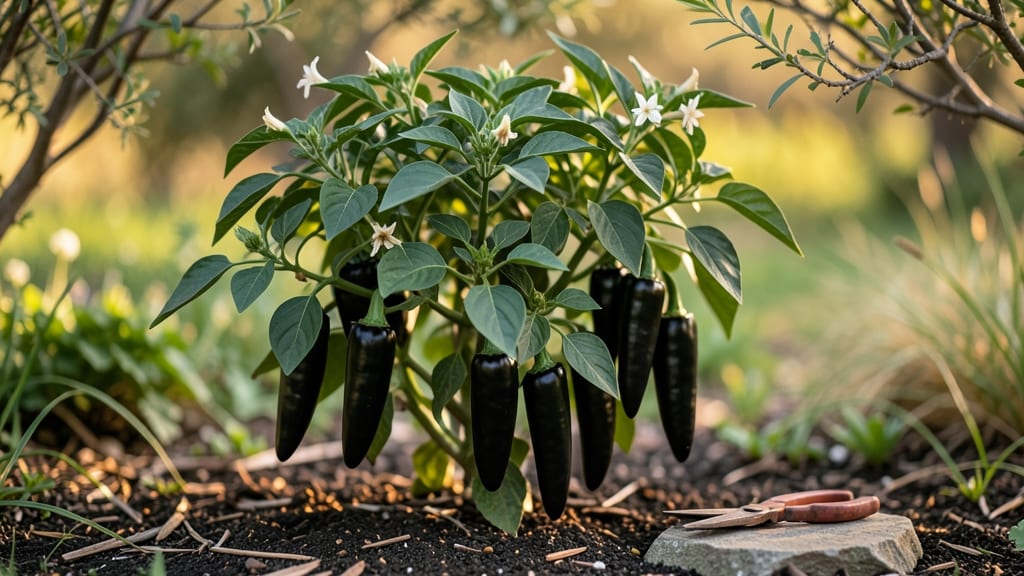
The Black Panther pepper's Scoville heat ranges from 1,500,000 to 2,200,000, placing it among the world's hottest peppers as a habanero hybrid with complex fruity, floral, and smoky undertones. Its heat develops slowly but leaves a sweet, almost citrusy finish.
This pepper's extreme heat comes from its high capsaicin concentration, which is about 100 times hotter than jalapeños. 🔥 Unlike many ultra-hot peppers that burn immediately, the Black Panther's heat builds gradually, making it surprisingly manageable in dishes when used correctly.
I've found that even small amounts can transform recipes—think of it as the habanero's more refined, aromatic cousin with a longer-lasting kick.
What makes it unique is its genetic lineage: a habanero cross that inherits both the fruity brightness of its parent and an extra layer of complexity. Many gardeners swear by its resilience, thriving in warm climates with minimal care, though handling it requires gloves and caution.
The flavor profile alone makes it worth growing, especially for those who love peppers that deliver both heat and depth.
💡 In This Article
- Scientific Breakdown: Black Panther Pepper’s Heat and Capsaicin Composition
- Growing and Handling Black Panther Peppers: Expert Tips for Gardeners
Scientific breakdown: Black Panther pepper’s heat and capsaicin composition
The Black Panther pepper's extreme heat originates from its capsaicin content, which averages between 0.02% and 0.03% by weight—a concentration that pushes it into the realm of elite hot peppers. For comparison, a jalapeño contains just 0.00025% capsaicin, making the Black Panther roughly 100 times hotter by mass.
This compound binds to TRPV1 receptors in your mouth, triggering a pain response that your brain interprets as heat. The Black Panther's genetic makeup as a habanero hybrid means it inherits both the high capsaicin levels of its parent and additional flavor complexity.
What sets it apart is how its heat develops. Unlike Carolina Reapers, which hit you with an immediate, overwhelming burn, the Black Panther's heat builds gradually due to a specific ratio of capsaicin to dihydrocapsaicin—its chemical cousins that influence heat perception.
This slower onset explains why many chefs prefer it for dishes where heat needs to integrate rather than dominate. The pepper's Scoville range varies because environmental factors like sunlight, temperature, and soil nutrients directly affect capsaicin production.
A pepper grown in 90°F+ climates with full sun may reach the upper end of the scale, while cooler conditions could push it toward 1.5 million SHU.
When cooking, this pepper's heat persists surprisingly well. Capsaicin is oil-soluble, meaning it dissolves in fats rather than water, so sautéing in oil or using it in fatty dishes like stews or sauces amplifies both flavor and spiciness.
The fruity, floral notes emerge more clearly when the pepper is used fresh rather than dried, as heat concentration increases during dehydration.
For reference, a Carolina Reaper's heat diminishes significantly when dried, but the Black Panther retains 80-90% of its Scoville rating even after processing—a testament to its robust capsaicin structure.
Comparing it to other ultra-hot peppers reveals fascinating insights. The 7 Pot Douglah (a Trinidadian pepper) clocks in around 2,000,000 SHU but lacks the Black Panther's aromatic depth. Meanwhile, the Carolina Reaper's 1,600,000-2,200,000 SHU range overlaps, but its heat is more aggressive and less layered.
The Black Panther's gradual heat build makes it uniquely versatile for dishes where you want spice without immediate shock, like chutneys or marinades where the flavor can develop alongside the heat.
Here's what most people overlook: the Black Panther's heat isn't just about capsaicin—it's also influenced by other compounds like homocapsaicin and nordihydrocapsaicin, which contribute to its lingering sweetness.
These compounds create a sensory experience where the burn transitions into a almost citrusy finish, a trait shared with habaneros but intensified. This duality is why it's often called the "habanero's sophisticated cousin"—it delivers extreme heat with unexpected elegance.
For practical application, understanding this science helps in dosage. A single 1/4-inch slice can deliver 50,000-70,000 SHU of heat, enough to spice up a pound of salsa without overwhelming it.
The key is to let the pepper's natural oils bloom for 10-15 minutes before cooking, which enhances both flavor and heat distribution. 🔥