
Pests and Diseases
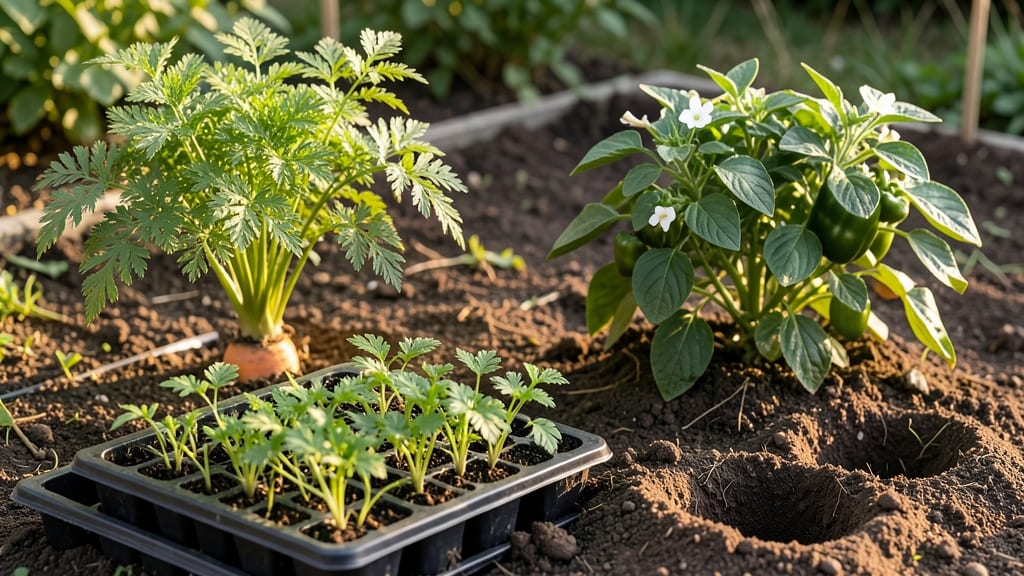
Yes, carrots and peppers can be planted together successfully, as they complement each other in companion planting: peppers deter pests like carrot flies, while carrots improve soil structure. However, avoid overcrowding and ensure proper spacing for optimal growth.
This pairing works because peppers naturally repel many common garden pests that target carrots, like aphids and carrot flies, through their strong scent. 🌱 Meanwhile, carrots help break up compacted soil with their fibrous roots, creating a healthier environment for peppers to thrive.
The key is spacing—peppers need 12–18 inches apart, while carrots should be 2–4 inches apart to prevent competition. I’ve found that planting peppers in a grid pattern around carrots maximizes pest protection while keeping the garden organized.
For best results, start with well-draining soil and plant both crops after the last frost when temperatures are consistently above 55°F. This timing ensures peppers establish their roots before the heat of summer, while carrots germinate more reliably in warm soil.
If space is limited, consider interplanting peppers with other carrot-friendly companions like onions or lettuce to maintain the benefits without overcrowding.
💡 In This Article
- Companion Planting Science: How Carrots and Peppers Benefit Each Other
- Best Practices for Planting Carrots and Peppers Together in Your Garden
Companion planting science: how carrots and peppers benefit each other
Peppers act as natural pest deterrents for carrots primarily through their strong scent, which confuses and repels insects like carrot flies and aphids. These pests are drawn to the aromatic oils in carrot foliage, but peppers emit volatile compounds like capsaicin and limonene that disrupt their navigation systems.
Studies in integrated pest management show that pepper plants can reduce carrot fly infestations by up to 40% when planted within 18 inches of carrots. The scent works like an invisible barrier, making it harder for pests to locate their preferred hosts.
Carrots, in turn, improve soil conditions for peppers through their deep, fibrous root systems that aerate compacted soil. As carrots grow, their roots create channels that enhance water drainage and oxygen flow to 12-18 inches below the surface—critical for pepper roots that prefer well-draining conditions.
This natural soil loosening also reduces the risk of root rot in peppers, a common issue in heavy clay soils. The symbiotic relationship extends to nutrient competition: carrots absorb potassium more efficiently, leaving more available for peppers during their fruiting stage.
What makes this pairing particularly effective is the temperature compatibility of both crops. Peppers thrive in warm soil (70-85°F) and benefit from the shade carrots provide during peak summer heat, reducing moisture loss.
Meanwhile, carrots germinate best in soil temperatures between 60-70°F, aligning perfectly with pepper seedling establishment. This thermal synergy means both plants support each other's growth cycles without competing for resources during critical development stages.
However, this beneficial relationship has specific conditions. The key factor is the height difference between the two plants: peppers grow 2-4 feet tall while carrots stay below 1 foot. This vertical separation prevents peppers from shading carrots excessively, which could inhibit their leafy growth.
When planting, position taller pepper varieties on the north side of carrots to maximize sunlight exposure for both crops while maintaining the pest-deterrent benefits.
One often overlooked benefit is the microclimate effect created by this pairing. Carrots release moisture through transpiration, creating a slightly more humid environment around pepper plants. This increased humidity helps prevent pepper blossom end rot—a calcium deficiency disorder—by maintaining consistent soil moisture levels.
The combination of improved soil structure, pest control, and microclimate regulation makes this one of the most scientifically supported companion planting pairings in organic gardening.
For maximum effectiveness, consider adding marigolds as a third companion. Their strong scent amplifies the pest-repelling effects while attracting beneficial insects like ladybugs that prey on carrot aphids.
This three-plant combination creates a natural pest management system that reduces the need for chemical interventions while optimizing space efficiency in the garden.