
Companion Plants
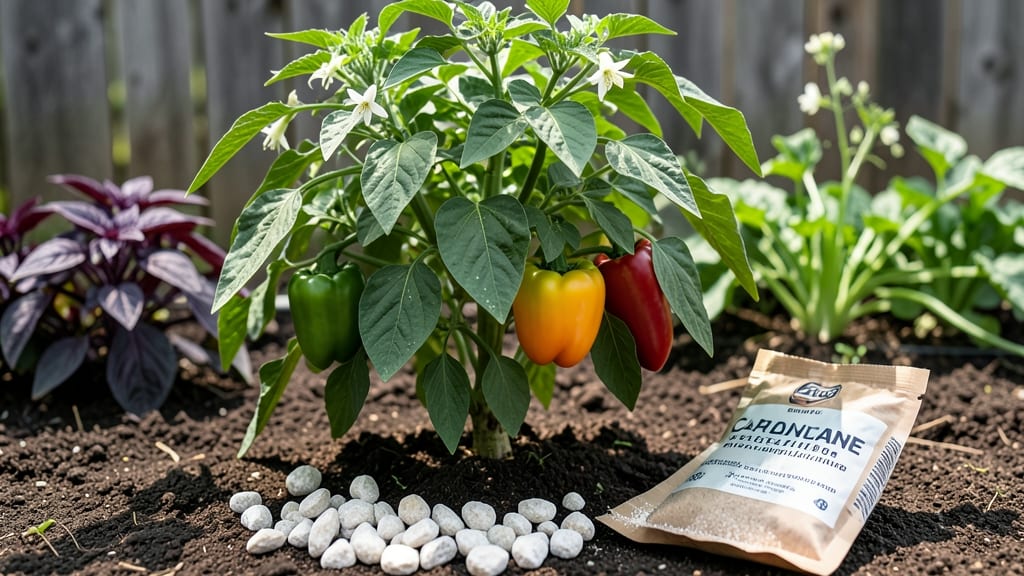
Pepper plants need calcium to develop strong cell walls and prevent blossom-end rot, though they require it in smaller amounts than nitrogen or potassium. A balanced fertilizer or crushed eggshells can address deficiencies effectively.
Calcium acts like a structural glue for your pepper plants, keeping their cells firm and preventing the dreaded blossom-end rot that turns fruit bottoms into ugly, mushy spots. 🌱 Without enough calcium, plants struggle to transport other nutrients—like potassium and magnesium—through their systems, leading to weak stems and poor fruit development.
I’ve seen firsthand how a simple crushed eggshell tea can work wonders when applied directly to the soil, especially during fruiting season when demand spikes.
What many gardeners overlook is that calcium deficiencies often show up as subtle warnings before the rot appears. Look for older leaves curling at the edges or new growth stunted—these are your plant’s way of signaling it needs a calcium boost.
A balanced fertilizer with a 10-10-10 or 5-5-5 ratio (NPK) usually does the trick, but for organic growers, crushed eggshells or gypsum mixed into the soil provide a slow-release solution. The key is consistency: apply every 4-6 weeks during the growing season.
💡 In This Article
- Calcium’s Role in Pepper Plant Growth and Disease Prevention
- Natural Calcium Sources and Fixes for Pepper Plant Deficiencies
Calcium’s role in pepper plant growth and disease prevention
Calcium isn’t just a minor player in pepper plant nutrition—it’s the architectural backbone that keeps cells rigid and functional. Inside plant cells, calcium binds to pectin in the cell walls, creating a structural lattice that maintains shape and prevents collapse.
Without sufficient calcium, cell walls become weak and prone to bursting, especially in fast-growing tissues like young leaves and developing fruit.
This is why blossom-end rot—a classic calcium deficiency symptom—appears as dark, sunken spots on pepper fruit bottoms. 🌱 The rot occurs because calcium can’t reach the fruit fast enough during rapid growth phases, often due to uneven watering or poor soil aeration.
The science gets even more interesting when you consider calcium’s role in nutrient transport. Calcium acts as a signaling molecule that regulates the opening and closing of stomata (those tiny pores on leaves).
When stomata malfunction due to calcium deficiency, plants struggle to balance water uptake and gas exchange, leading to wilting or scorched leaf edges. Studies show that calcium-deficient plants also have reduced root growth because calcium stabilizes root cell membranes, allowing them to absorb water and nutrients efficiently.
Without it, roots become spongy and prone to disease, creating a vicious cycle of poor nutrient uptake and weakened plant structure.
What most gardeners don’t realize is that calcium deficiencies often masquerade as other problems. For example, a plant with low calcium might show symptoms similar to overwatering—yellowing leaves or stunted growth—when the real issue is simply a lack of structural support. The key difference?
Calcium-related issues appear first in younger leaves and fruit, while overwatering typically affects older foliage.
This is because calcium is immobile in plants, meaning it can’t be redistributed from older to younger tissues like nitrogen or potassium can. 💡 When you see curling or distorted new growth, it’s often your plant’s SOS signal for calcium.
Calcium’s importance extends beyond just physical structure—it also plays a critical role in disease resistance. Healthy cell walls act as a barrier against fungal and bacterial infections, which is why calcium-deficient plants are more susceptible to blossom-end rot and other pathogens.
For instance, peppers with adequate calcium levels can better withstand temperature fluctuations and drought stress because their cells maintain rigidity even under environmental pressure.
This is why organic growers often swear by calcium-rich amendments like eggshells or bone meal—not just for the calcium, but for the overall plant resilience it provides.
Here’s the catch: while calcium is essential, it’s not the most abundant nutrient in pepper plants. Nitrogen and potassium get all the attention because they’re needed in larger quantities for leafy growth and energy production.
But calcium works behind the scenes, ensuring that all those nitrogen and potassium molecules are properly utilized.
Think of it like scaffolding on a construction site—without it, even the best materials won’t hold together properly. 🏗️ The ideal calcium-to-nitrogen ratio in pepper plants is roughly 1:4, meaning you’ll need about 20 parts nitrogen for every 5 parts calcium by weight.
This balance is why a balanced fertilizer (like 10-10-10) works so well—it provides all three major nutrients in proportions that support overall plant health.