
How To
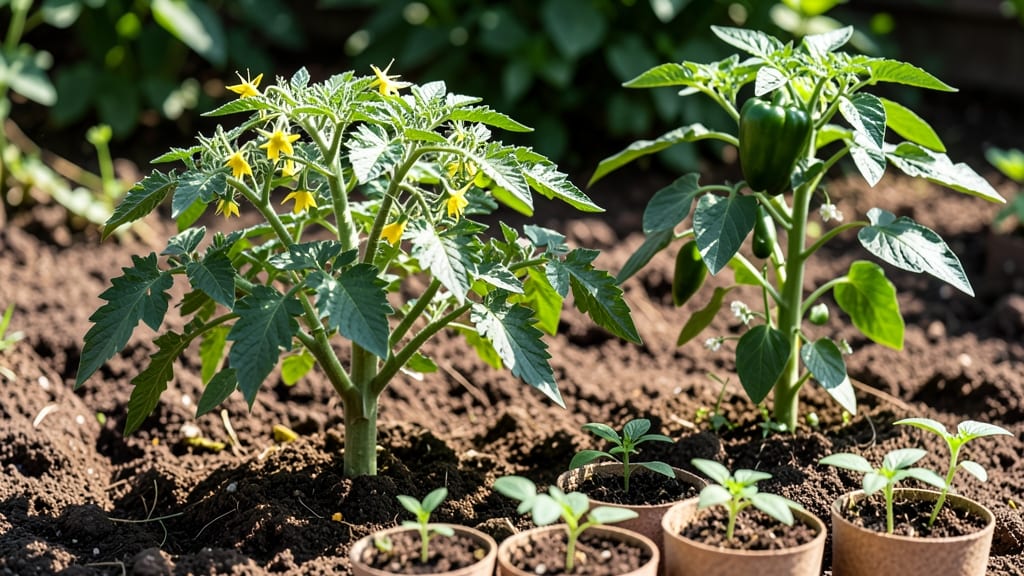
Peppers can be planted next to tomatoes since they share similar growing needs, but watch for overcrowding and early blight risks. Both plants love warm soil and full sun, so they pair well with proper spacing.
Peppers and tomatoes are classic garden buddies because they both crave warm soil temperatures (above 60°F) and thrive under 6-8 hours of direct sunlight daily. 🌱 Their companion planting benefits go beyond space-saving—they naturally repel some pests, like whiteflies, when grown together.
The key is spacing them 18-24 inches apart to prevent disease spread through shared foliage, especially for early blight, which can jump between plants.
While they're compatible, watch for aphid attraction—these pests love both plants—and consider interplanting with basil or marigolds to deter them. I've found that adding compost-rich mulch around the base helps maintain soil moisture while reducing fungal risks.
The real secret? Start with healthy seedlings and rotate crops next season to keep your garden thriving.
💡 In This Article
- Why Tomatoes and Peppers Make Good Garden Neighbors
- Potential Risks and How to Mitigate Them
Why tomatoes and peppers make good garden neighbors
The compatibility between tomatoes and peppers stems from their shared botanical family—both are members of the Solanaceae family—and their nearly identical growing requirements. These plants thrive in well-draining soil with a pH between 6.0-6.8, which allows their root systems to efficiently absorb nutrients like nitrogen, phosphorus, and potassium.
The ideal soil temperature for germination is 70-85°F, and both plants require consistent moisture without waterlogging, which can lead to root rot.
Sunlight needs are another key factor in their compatibility. Both tomatoes and peppers demand full sun exposure (6-8+ hours daily), making them perfect companions in garden beds or containers.
What's fascinating is how their canopies create a natural microclimate—peppers, with their bushier growth habit, provide shade for tomato roots during peak afternoon heat, reducing moisture loss.
This mutual benefit explains why gardeners often see healthier tomato fruits when planted near peppers, as the soil stays cooler and more stable. 🌿
Their shared pest vulnerabilities actually create a natural defense system. Both plants attract similar pests like aphids and whiteflies, but when grown together, their combined scent can confuse certain insects.
Studies show that the volatile organic compounds emitted by both plants create a complex aroma profile that deters some pests—though it doesn't eliminate them entirely. This is why adding basil or marigolds between them can amplify this effect, creating a multi-layered pest deterrent system.
Nutrient competition is minimal because their root structures differ. Tomatoes develop deep taproots while peppers have shallower, fibrous roots that spread wider. This allows them to access slightly different soil layers, reducing direct competition for water and nutrients.
The key is maintaining 18-24 inches of spacing between plants—any closer and you risk fungal spread through shared foliage, particularly for early blight.
What most gardeners don't realize is how their flowering cycles complement each other. Peppers typically bloom earlier than tomatoes, providing an early nectar source for pollinators that will later support tomato flowering.
This sequential blooming creates a continuous food supply for bees, which can increase tomato fruit set by up to 20% in some cases. The result? More abundant harvests with less effort from the gardener. 🐝
For optimal results, amend the soil with aged compost or worm castings before planting, as both crops are heavy feeders. A soil test revealing adequate potassium levels (critical for pepper sweetness and tomato fruit development) can prevent deficiencies that might otherwise stress both plants.
The synergy between these two vegetables makes them one of the most efficient companion planting pairings in the home garden.