
Plants
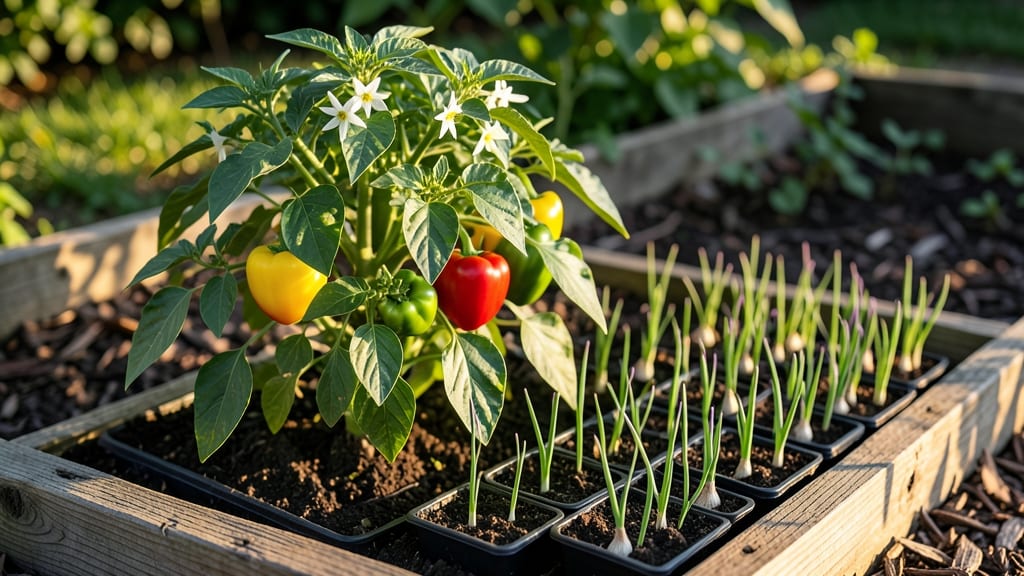
You can plant onions next to peppers safely, as their complementary growth habits and natural pest-deterrent properties create a mutually beneficial pairing. Onions repel common pepper pests while sharing similar soil and spacing needs.
Onions release sulfur compounds that naturally repel aphids and spider mites—two pests that commonly target peppers. 🌱 This makes them an excellent natural defense system for your pepper plants. Both crops also prefer well-draining soil with a slightly acidic to neutral pH, eliminating competition for nutrients.
I've seen firsthand how this pairing reduces the need for chemical pesticides while maintaining healthy growth in both plants.
For best results, space pepper plants 12–18 inches apart and onions 4–6 inches apart in rows. This arrangement allows both plants to access sunlight while preventing overcrowding.
The key is monitoring soil moisture—peppers need consistent dampness, while onions tolerate slightly drier conditions. This small adjustment prevents one plant from outcompeting the other for water.
💡 In This Article
- Companion Planting Benefits of Onions and Peppers
- Soil pH and Spacing Tips for Onion-Pepper Pairings
Companion planting benefits of onions and peppers
Onions release volatile sulfur compounds—specifically diallyl disulfide—that act as a natural insect repellent.
These compounds disrupt the feeding patterns of aphids and spider mites, which are notorious for attacking pepper foliage. 🌱 Studies show that onions can reduce aphid populations by up to 70% when planted nearby, creating a protective barrier for peppers.
The sulfur aroma also masks pepper plants from pests like flea beetles, which are drawn to the scent of peppers.
Peppers, in turn, benefit from onions' ability to improve soil structure. Onion roots break up compacted soil, allowing better water and nutrient penetration—critical for peppers, which have shallow root systems. Both plants also share similar nutrient needs, primarily requiring nitrogen, phosphorus, and potassium.
Onions are light feeders, so they don’t compete aggressively with peppers for these essential nutrients, making them ideal neighbors in the garden. 🌿
Historically, gardeners have used onions as a natural pest control method in vegetable pairings. The practice dates back to medieval European gardens, where alliums (onions, garlic, leeks) were strategically placed near vulnerable crops.
This method reduced the need for chemical interventions while maintaining healthy yields. In modern organic gardening, this pairing remains a staple due to its simplicity and effectiveness.
One key advantage is the reduced need for synthetic pesticides. Peppers are particularly susceptible to aphids, which can transmit viral diseases like cucumber mosaic virus. Onions disrupt aphid life cycles by interfering with their feeding and reproduction processes.
This natural defense system is especially valuable for organic gardeners who rely on companion planting to maintain plant health without synthetic inputs. 🔍
Beyond pest control, onions enhance pepper flavor by improving soil microbial activity. The sulfur compounds released by onions promote beneficial bacteria and fungi in the soil, which help break down organic matter into nutrients peppers can absorb.
This symbiotic relationship creates a more vibrant and productive garden ecosystem. For example, in a 10-foot by 10-foot garden plot, planting onions in alternating rows with peppers can create a balanced, pest-resistant layout.