
Companion Plants
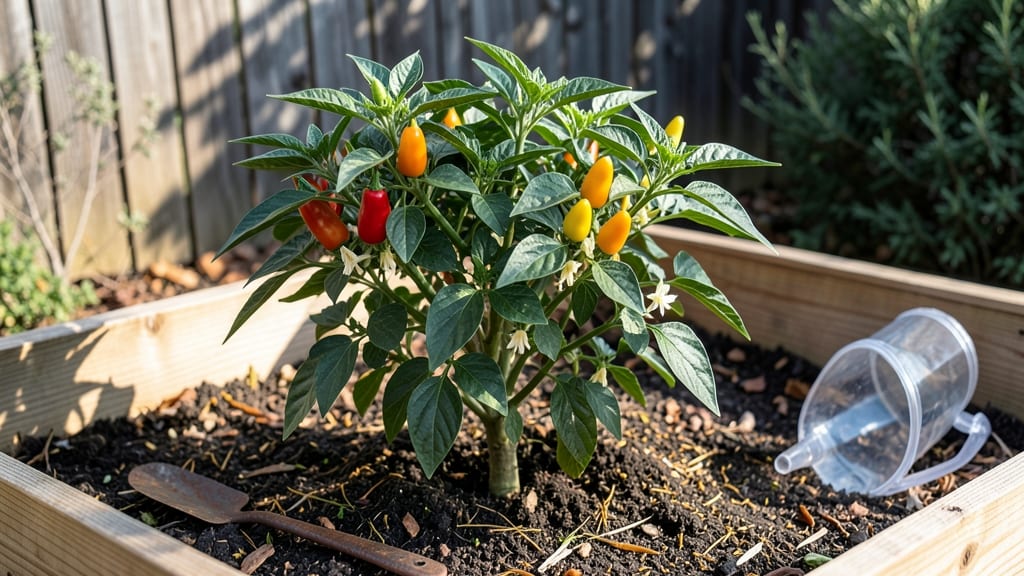
Growing chili pequin pepper plants in small spaces is my secret weapon for adding serious heat to any dish—without taking over the garden. 🌱 These tiny but mighty peppers pack a 50,000-60,000 SHU punch (that’s 10x hotter than jalapeños) in their 1-2 inch size, making them perfect for vertical gardens, windowsills, or even hanging baskets.
The key to success starts with well-draining soil and full sun (at least 6-8 hours daily), but don’t stress—these peppers thrive in containers as small as 5 gallons.
I’ve grown them in 5-gallon buckets on my balcony with no issues, as long as they get consistent moisture and a little extra fertilizer every few weeks.
By mid-summer, you’ll be harvesting bright green peppers that turn red when ripe, perfect for salsas, hot sauces, or even stuffing. The best part? One plant produces hundreds of peppers, so you’ll have enough to share (or challenge friends with their heat tolerance).
They’re also disease-resistant and rarely bothered by pests, making them a low-maintenance spice powerhouse. Whether you’re growing in pots or a vertical tower, these peppers prove that small spaces can still deliver big flavor—and a serious kick.
📚 In This Guide
- What you need
- Instructions
- Tips and common mistakes
- Wrapping up and next steps
What you need
- ● Chili pequin seeds or seedlings: 3–5 plants (for a balanced harvest). Choose Capsicum annuum varieties like ‘Bird’s Eye’ or ‘Chilaca’.
- ● Containers: 5–7 gallon pots (or vertical planters like wall pockets, fabric grow bags, or a tiered stand). Ensure they have drainage holes!
- ● High-quality potting mix: 10–15 lbs of well-draining, organic mix (add perlite or vermiculite for aeration).
- ● Balanced fertilizer: 5–10–10 or organic options like fish emulsion (follow label rates).
- ○ Slow-release fertilizer: Optional but helpful (e.g., Osmocote, 14–18 months).
- ● Mulch: Straw or shredded leaves (1–2 inches) to retain moisture.
- ● Hand trowel or small shovel: For planting and soil adjustments.
- ● Watering can or spray bottle: Chili pequins prefer consistent moisture (avoid soggy soil!).
- ● Pruning shears: To trim leggy growth and encourage bushiness.
- ○ Support structures (optional): Trellis or stakes: For vertical growth (if using a tiered system).
- ● Clips or twine: To secure plants to supports.
- ● pH test kit: Ideal pH for pequins: 6.0–6.8 (adjust with lime or sulfur if needed).
- ○ Grow lights (optional): LED or fluorescent lights for indoor setups (12–14 hours/day).
- ● Sunlight: 6–8+ hours of direct sunlight daily (south-facing window or grow lights for indoors).
- ○ Warmth: Pequins thrive in 70–85°F temperatures. Use a heat mat (optional) if starting seeds indoors.
- ● Patience: Germination takes 10–20 days; harvest time is 60–90 days from transplant.
Step-by-step instructions for growing chili pequin peppers vertically
Here's how to coax these fiery little gems to thrive in tight spaces—where every inch counts.
🌱 Step 1: Start Seeds Indoors with Precision Timing
Chili pequin seeds need warmth to germinate, so begin them indoors 8-10 weeks before your last frost date. Fill 2-inch-deep seed cells with sterile seed-starting mix (never garden soil—it’s too dense) and press one seed ¼ inch deep per cell. I like to use a toothpick to create the hole—it’s precise and avoids crushing the seed.
Cover the tray with plastic wrap to trap humidity, then place it on a seedling heat mat set to 75-85°F. Germination takes 10-20 days, but don’t rush—pequins are slow starters. Once sprouts emerge, remove the wrap immediately to prevent damping-off. You’ll know it’s time when tiny green hooks break through the soil surface.
☀️ Step 2: Provide Optimal Light and Airflow
Pequins need bright light from day one to prevent leggy growth. Place seedlings under full-spectrum LED grow lights 2-3 inches away, providing 14-16 hours of light daily. If using a sunny windowsill, rotate the tray quarter-turn daily so they don’t lean toward the light. Leggy seedlings (thin stems, wide spacing between leaves) mean your light is too weak or too far away.
Once the first true leaves (not the initial seed leaves) appear, fertilize lightly with half-strength liquid fertilizer to encourage strong root development. I use a balanced 10-10-10 mix, but pequins are sensitive—overfeeding leads to salt buildup. Water from the bottom to avoid wetting the leaves, which invites fungal diseases.
🪴 Step 3: Transplant to Vertical Towers or Trellises
When seedlings are 4-6 inches tall with 5-6 leaves, it’s time to move them into their vertical growing system. I use fabric grow bags or stackable plastic pots with 12-inch spacing between tiers. Fill each container with well-draining potting mix (add perlite if yours is heavy) and make a hole slightly larger than the root ball.
Gently remove the seedling, loosen the roots if they’re circling, and place it in the hole. Firm the soil around the base but don’t pack it down—pequins hate compacted roots. Install a small trellis or bamboo stake beside each plant to support their bushy growth. Water deeply after transplanting to help roots establish.
✂️ Step 4: Prune and Train for Maximum Yield
Pequins are prolific but benefit from light pruning to direct energy toward fruit production. Once plants hit 12 inches tall, pinch off the top set of leaves to encourage bushier growth. Remove any yellowing or diseased leaves immediately—pequins are susceptible to powdery mildew in humid conditions. I also prune suckers (the shoots that form in the leaf axils) to keep the plant’s energy focused on existing branches.
Train vines to climb by gently tying them to the trellis with soft plant ties every 4-6 inches. Pequins produce fruit along the stems, so the more vertical growth you encourage, the more peppers you’ll harvest. Watch for white flowers—they’ll appear 6-8 weeks after transplanting and signal the start of pepper production.
💧 Step 5: Maintain Consistent Care for Heat and Flavor
Pequins thrive in full sun (6+ hours daily) and warm temperatures (70-85°F). Water when the top inch of soil feels dry, but avoid wetting the leaves to prevent disease. I use a drip irrigation system for my vertical garden—it’s efficient and keeps foliage dry. Fertilize every 4-6 weeks with a low-nitrogen, high-phosphorus mix (like 5-10-10) to boost fruiting.
Harvest pequins when they’re 1-2 inches long and still bright green for maximum heat. Use clean scissors to snip stems, leaving a small portion attached to encourage more production. Store fresh peppers in the fridge for up to 2 weeks, or dry them for long-term use. With proper care, one plant yields 50-100 peppers—enough to spice up countless dishes!
Tips & tricks for perfect chili pequin pepper growth
These game-changing strategies will help you maximize your vertical spice garden's potential while avoiding common pitfalls that derail even the most eager gardeners.
Seedling Heat Mat Strategy: The 75-85°F heat mat temperature is non-negotiable for pequin seeds. I've found that placing a small thermometer directly on the mat helps maintain consistency—fluctuations below 70°F can stall germination completely. For extra insurance, I place my seed trays on top of a heating pad set to low, which creates a more stable microclimate. This is especially important if you're in a cooler climate or growing during shoulder seasons.
Light Distance Precision: Those 2-3 inches between seedlings and grow lights might seem like a small range, but it makes a huge difference. I measure from the light fixture to the top of the tallest seedling, not the tray. As your plants grow, you'll need to adjust the light height weekly—pequins grow fast! A simple ruler taped to your light stand makes this adjustment a breeze. Too close and you'll scorch delicate leaves; too far and you'll end up with leggy, weak stems that can't support vertical growth.
Transplanting Technique: When transplanting your 4-6 inch seedlings, I recommend using a small fork to gently loosen the root ball before placing it in the new container. This prevents root circling, which can strangle your plant's growth. For the vertical system, I've had great success with stackable fabric grow bags—they allow for excellent drainage while still providing enough support for the pequin's bushy habit. The 12-inch spacing between tiers is crucial; any closer and you'll create competition for nutrients and light.
Pruning for Productivity: The 6-8 week window before flowering is when your pruning decisions will pay off the most. I use clean, sharp scissors to make precise cuts just above leaf nodes when pinching back growth. This encourages the plant to branch out rather than grow tall and spindly. For the soft plant ties, I've found that using old T-shirts cut into strips works just as well as store-bought ties—it's a budget-friendly way to support your climbing pequins without damaging their stems.
Pro Tips for Chili Pequin Pepper Plants
- These game-changing strategies will help you maximize your vertical spice garden's potential while avoiding common pitfalls that derail even the most eager gardeners.
- Seedling Heat Mat Strategy: The 75-85°F heat mat temperature is non-negotiable for pequin seeds.
- Light Distance Precision: Those 2-3 inches between seedlings and grow lights might seem like a small range, but it makes a huge difference.
Frequently asked questions
about growing chili pequin pepper plants—because every spicy gardener deserves answers!How long does it take for chili pequin plants to produce fruit?
With proper care, chili pequin pepper plants typically start flowering in 60–70 days after transplanting and produce peppers within 75–90 days from seed. Early varieties may fruit even faster! Pro tip: Use grow lights indoors to speed up maturity.
Can I grow chili pequins in containers, and what size pot do I need?
These compact plants thrive in 5–7 gallon containers with drainage holes. Just ensure they get 6+ hours of sunlight daily and use well-draining soil. Bonus: Pair them with basil or thyme—both love the same conditions!
Are chili pequin plants frost-tolerant, or do they need to be indoors?
Nope! Chili pequin pepper plants are tropical and die in frost (<32°F/0°C). Move them indoors (or harvest peppers) before temperatures drop. Troubleshooting: If leaves yellow, it’s often overwatering—let soil dry slightly between waterings.
What can I plant alongside chili pequins to boost growth?
Great companions include basil, marigolds, and onions—they repel pests and improve flavor. Avoid planting near fennel or dill, as they stunt pepper growth. Pro tip: Interplant with fast-growing greens (like lettuce) to maximize small-space yields!
Why aren’t my chili pequin peppers turning red?
Pequins often stay green or turn yellow/orange—they’re naturally slow to ripen! Harvest when firm and green for maximum heat (or wait 2–4 weeks longer for full color). Speed it up: Prune suckers early to focus energy on fruit development.
Wrapping up and next steps
Growing chili pequin pepper plants in a vertical spice garden is a rewarding way to bring bold flavor and heat to your small-space gardening adventures! 🌱 These tiny but mighty peppers thrive with minimal room and just a little care—perfect for balconies, windowsills, or even repurposed containers.
Whether you're a seasoned gardener or just starting out, your vertical garden can become a spicy success story with the right setup and companions.
Now that you’re armed with the materials, tips, and answers you need, it’s time to roll up your sleeves and plant those pequins! Start small, experiment with companions like basil or marigolds, and watch your vertical garden flourish. Happy growing—and may your harvest be fiery and full of flavor! 🔥