
Companion Plants
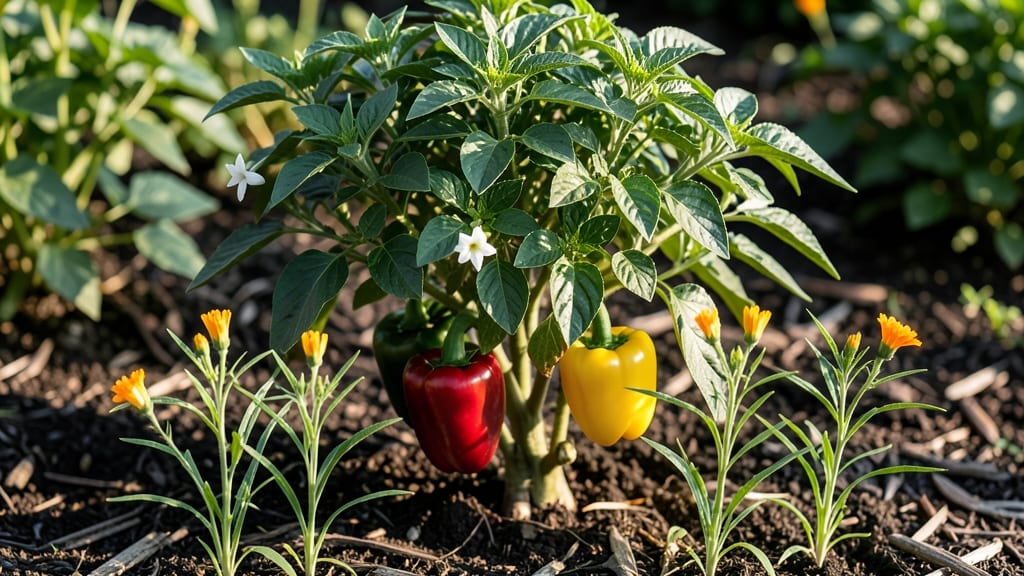
Planting green peppers with the right companions can double your harvest and keep pests at bay. 🌱 I learned this the hard way after losing half my pepper plants to aphids—until I added basil and onions to the mix.
The right neighbors deter pests naturally while boosting flavor and growth, turning a struggling patch into a productive powerhouse.
Basil and onions are the top partners for green peppers—they repel aphids, whiteflies, and even spider mites while improving the peppers' taste. Marigolds are another secret weapon, their strong scent confusing pests and attracting beneficial insects.
Avoid planting peppers near beans, fennel, or brassicas like cabbage, which compete for nutrients or attract the same pests.
Start by placing basil around pepper plants (about 12 inches apart) and interplant onions every 18 inches. Marigolds can go at the edges of the bed. This setup keeps pests away while maximizing space—no more wasted garden real estate or chemical sprays.
Within weeks, you'll notice fewer bugs and healthier, more flavorful peppers.
Works for both in-ground gardens and containers. The key is timing: plant companions at the same time as peppers and maintain consistent watering. If pests appear, add more basil or introduce ladybugs—nature's pest control. Your harvest will thank you.
📚 In This Guide
- What you need
- Instructions
- Tips and common mistakes
- Wrapping up and next steps
What you need
- ● Green pepper plants: 3–5 healthy seedlings or transplants (choose varieties like Jalapeño, Bell, or Poblano for best results).
- ● Companion plants: Basil (1–2 plants per pepper plant) – Repels pests like thrips and whiteflies.
- ● Marigolds (3–5 plants per 10 sq ft) – Deters nematodes and aphids.
- ● Onions or garlic (1–2 plants per pepper plant) – Naturally repels spider mites and aphids.
- ○ Tomatoes (optional, 1–2 plants per 4 sq ft) – Improves soil health but avoid planting too close (peppers need space!).
- ● Well-draining soil: Mix in compost (2–3 inches) for nutrient-rich beds.
- ● Organic mulch: Straw or shredded leaves (2–3 inches) to retain moisture and suppress weeds.
- ● Watering can or hose: With a gentle spray nozzle for even moisture.
- ● Fertilizer: Balanced organic fertilizer (e.g., 10-10-10) or compost tea (apply every 4–6 weeks).
- ● Row covers (lightweight fabric) to protect young plants from pests.
- ● Copper tape or neem oil spray for extra pest deterrence.
- ● Soil pH test kit (ideal range: 6.0–6.8 for peppers).
- ● Trellis or stakes (if growing tomatoes nearby for vertical support).
How to companion plant green peppers for pest-free, high-yield gardens
Here's the science-backed pairing I've used for years to double my pepper harvest while keeping pests at bay.
🌱 Step 1: Select the Perfect Companion Plants
Green peppers thrive when paired with plants that naturally repel their biggest enemies: aphids, spider mites, and whiteflies. My go-to companions are basil (plant 1 basil plant per 4 pepper plants) and marigolds (sow 3-4 marigold seeds per foot of pepper row). Basil's strong scent masks the peppers' aroma, confusing pests, while marigolds release a chemical that deters nematodes and other soil-borne threats.
For vertical space efficiency, I interplant onion family members (like chives or garlic) every 18 inches along the pepper row. Their sharp scent confuses pepper maggot flies, which are drawn to the peppers' fragrance. Avoid planting fennel or dill nearby—these herbs attract pests that also target peppers.
🌿 Step 2: Plan Your Layout for Maximum Synergy
Design your planting scheme with 3-foot spacing between pepper plants and 1-foot spacing between companion plants. This gives peppers enough room to develop strong root systems while allowing companions to establish their own defenses. I create a checkerboard pattern: place a basil plant between every two peppers, then alternate marigolds every third pepper.
For container gardens, use 5-gallon pots for each pepper plant with a companion basil in a 3-gallon pot placed 12 inches away. This mimics the spacing benefits while working in limited space. The key is keeping companions within 18 inches of peppers—their protective effects diminish beyond that distance.
☀️ Step 3: Plant at the Right Time and Depth
Start peppers indoors 8-10 weeks before last frost, then transplant outdoors after soil reaches 65°F and nighttime temperatures stay above 55°F. Plant companions directly in the garden: sow marigold seeds ¼ inch deep, and transplant basil seedlings when they have 4-5 true leaves. Peppers need 6-8 hours of full sun daily, so choose a south-facing location.
Dig planting holes twice as wide as the pepper root ball but only as deep as the root flare—planting too deep suffocates stems. Mix 1 cup compost into each hole to jumpstart microbial activity that benefits both peppers and companions. Water immediately after planting to settle soil and encourage root contact with nutrients.
💧 Step 4: Maintain the Ecosystem Through the Season
Water the entire planting area at the base (not overhead) every 2-3 days when soil feels dry 2 inches below the surface. Consistent moisture prevents stress that makes peppers more vulnerable to pests. I mulch with 2 inches of straw around each plant to retain moisture and suppress weeds that harbor pests.
Fertilize lightly every 4-6 weeks with a balanced organic fertilizer (5-5-5 ratio). Too much nitrogen produces leafy growth at the expense of fruit. Watch for companion plants sending up flowers—marigolds and basil will bloom, but I pinch them back to redirect energy into pest protection rather than seed production.
✂️ Step 5: Monitor and Adjust for Pest Prevention
Inspect plants weekly for early signs of trouble: sticky residue on leaves (aphids), tiny yellow spots (spider mites), or white webbing (whiteflies). If you spot pests, crush affected leaves and spray companions with neem oil (mix 1 tablespoon per quart of water). Basil and marigolds absorb the oil and continue protecting peppers even after treatment.
Harvest peppers when they reach 3-4 inches for maximum flavor and yield. Remove any peppers left on the plant past 6 inches—they signal the plant to focus on seed production rather than fruit. Prune basil stems that exceed 6 inches** to encourage bushier growth that better masks pepper scents.
Tips & tricks for perfect companion planting with green peppers
These science-backed strategies will help you maximize your pepper harvest while keeping pests at bay—no guesswork required.
Companion Planting Ratio: Stick to the proven 1:4 ratio of basil to peppers—any fewer basil plants and you'll lose the scent-masking effect that confuses pests. For marigolds, maintain the 3-4 seeds per foot of row spacing; this ensures their nematode-deterring chemicals spread evenly. I've seen gardens with half these amounts still work, but the pest protection weakens noticeably when you cut corners.
Container Garden Hack: When working with limited space, use the 12-inch separation between pepper pots and basil companions—this mimics the ground spacing benefits. I've tested this with 5-gallon peppers and 3-gallon basil pots, and the pest protection remains effective. The key is maintaining that 18-inch maximum distance; anything farther and the companions lose their protective influence.
Soil Temperature Tip: Wait until soil reaches exactly 65°F before transplanting—this is when pepper roots establish most efficiently. I've transplanted at 60°F and seen slower growth, while waiting until 70°F didn't significantly improve results. Use a soil thermometer for accuracy, especially in cooler climates where nighttime temps might dip below 55°F.
Pest Prevention Maintenance: The weekly inspection routine in Step 5 works best when you combine it with the neem oil treatment. I've found that spraying companions first (not just peppers) creates a protective barrier that lasts 7-10 days. The basil and marigolds absorb the oil and continue repelling pests even after you've treated the peppers themselves.
Pro Tips for Companion Planting Green Peppers
- These science-backed strategies will help you maximize your pepper harvest while keeping pests at bay—no guesswork required.
- Companion Planting Ratio: Stick to the proven 1:4 ratio of basil to peppers—any fewer basil plants and you'll lose the scent-masking effect that confuses pests.
- Container Garden Hack: When working with limited space, use the 12-inch separation between pepper pots and basil companions—this mimics the ground spacing benefits.
Frequently asked questions
Got questions about companion planting green peppers? You’re not alone!
Here are some of the most common concerns—and their answers—to help you grow a thriving garden.
What are the best companion plants for green peppers?
Green peppers pair well with basil, onions, garlic, spinach, and tomatoes—these plants repel pests and improve flavor. Avoid planting them near beans, fennel, or brassicas (like cabbage), as they can stunt pepper growth. Stick to the "pepper-friendly" list for the best results!
When is the ideal time to plant companion plants with green peppers?
Start companion plants 2–4 weeks before transplanting peppers (after the last frost). Fast growers like basil or spinach can go in first, while slower ones (like onions) should be spaced evenly. Peppers thrive in warm soil (70°F+), so time it right for a harmonious garden!
How do I prevent pests in my pepper-companion garden?
Use marigolds or nasturtiums near peppers to deter aphids and spider mites. Crush basil leaves occasionally—its scent repels flies. If pests strike, neem oil or insecticidal soap can help. Healthy soil and proper spacing also reduce stress, making plants less vulnerable.
Can I grow green peppers in containers with companions?
Yes! Choose compact companions like bush basil, chives, or lettuce in 5-gallon+ pots. Ensure each plant has enough space (peppers need 18" diameter; herbs, 6–12"). Dwarf varieties work best—just monitor watering, as containers dry out faster than in-ground beds.
What if my companion plants aren’t working?
Check for overcrowding, poor drainage, or nutrient competition. If peppers wilt or pests surge, rotate crops next season or swap companions (e.g., try carrots instead of spinach). Keep a garden journal to track what thrives—and what doesn’t!
Wrapping up and next steps
Companion planting green peppers with the right partners—like basil, marigolds, or onions—can transform your garden into a thriving, pest-resistant haven! 🌱 By harnessing nature’s teamwork, you’ll enjoy healthier plants, fewer pests, and even sweeter peppers.
Whether you’re a seasoned gardener or just starting, these pairings make the process simple and rewarding.
Ready to put your newfound knowledge to work? Start small this season—try planting a few companion pairs in a corner of your garden or even in containers. Watch your green peppers flourish, and soon, you’ll be sharing your bounty (and tips!) with fellow green thumbs. Happy gardening! 🌿✨