
Companion Plants
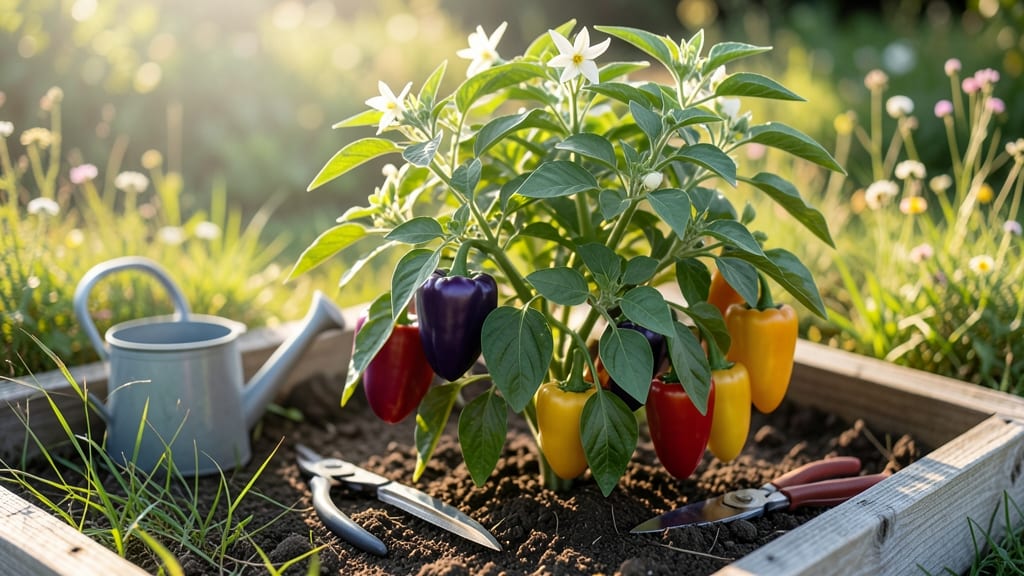
Decorative hot pepper plants turn your garden into a vibrant living art piece with colors ranging from fiery reds to deep purples. 🌿 I fell in love with them when I realized how effortlessly they blend edible function with bold visuals—no compromise needed.
These aren’t just spicy snacks; they’re the star of small-space gardens, containers, and even themed borders.
Their narrow, upright growth habit makes them perfect for vertical accents, while their glossy foliage and dramatic fruit add texture to any setting. Pair them with ornamental grasses for movement contrast or mix in with purple basil for a cohesive purple-themed display.
In containers, they thrive alongside trailing nasturtiums or compact thyme, creating a textured edible landscape that’s as pretty as it is productive.
What’s even better? They’re low-maintenance—just give them full sun and well-draining soil, and they’ll reward you with year-round interest. Start with varieties like 'Black Pearl' for deep purple fruit or 'Apache' for striking orange-red pods.
The possibilities for creative garden layouts are endless, from spicy border gardens to edible ornamentals that double as conversation starters.
Whether you’re working with a tiny balcony or a small backyard, these peppers prove that edible plants can be stunning design elements. Let’s explore how to make them the centerpiece of your next garden project—without sacrificing flavor or beauty.
📚 In This Guide
- What you need
- Instructions
- Tips and common mistakes
- Wrapping up and next steps
What you need
- ● Decorative hot pepper seeds or seedlings: Choose varieties like ‘Fish Pepper,’ ‘Shishito,’ or ‘Lunchbox’ for vibrant colors and mild-to-medium heat. (3–5 plants for a small garden)
- ● Well-draining potting mix: A blend of peat moss, perlite, and compost (10–15 lbs, depending on pot size). (Avoid heavy garden soil—peppers hate soggy roots!)
- ● Containers or garden beds: Containers: 5–7 inch pots (1–2 plants per pot) or fabric grow bags (5-gallon size). (Drainage holes are a must!)
- ● Garden beds: Full sun (6+ hours/day) with loose, fertile soil. (Raise beds if drainage is poor.)
- ● Balanced fertilizer (5-5-5 or 10-10-10): 1 tbsp per plant at planting, then every 4–6 weeks. (Organic options like fish emulsion work too!)
- ● Mulch: Straw or shredded leaves (1–2 inches) to retain moisture and suppress weeds.
- ● Hand trowel or small shovel for transplanting.
- ● Watering can or hose with a gentle spray nozzle (peppers dislike wet leaves).
- ● Pruning shears for shaping and harvesting.
- ○ Gloves (optional but recommended!)—some peppers pack a spicy punch.
- ● A sunny spot (south-facing windowsills or balconies work for containers!).
- ● Warmth: Peppers thrive in temps between 70–90°F. (Start seeds indoors 8–10 weeks before last frost if in a cool climate.)
- ● Patience: Germination takes 7–14 days, and harvest time is 60–90 days for most varieties.
- ● Decorative stakes or cages to support bushy varieties.
- ● Epsom salt (1 tbsp per gallon of water) for a magnesium boost mid-season.
- ● Companion plants like basil, marigolds, or onions to deter pests.
- ● Harvesting baskets or jars for storing your spicy (or sweet!) bounty.
Step-by-step guide to growing striking decorative hot pepper plants
Here's how to cultivate vibrant, ornamental pepper varieties that double as edible conversation pieces.
🌱 Step 1: Select and Prepare Containers for Optimal Growth
Choose 5-gallon containers with drainage holes for each plant—these peppers need room to develop their signature bold colors. I prefer terracotta because it breathes and prevents root rot, which these tropical-looking plants are surprisingly prone to. Fill each pot with 2/3 potting mix and 1/3 perlite for excellent drainage.
Press the mix down gently until it's firm but not compacted—you want roots to push through easily. The reason for this ratio is simple: decorative peppers hate soggy feet. Add a handful of balanced 10-10-10 fertilizer to the bottom layer to give them a nutrient boost right from planting.
☀️ Step 2: Plant Seeds or Transplants at the Right Time
Start seeds indoors 8-10 weeks before your last frost date under grow lights for consistent germination. Plant seeds 1/4 inch deep—any deeper and they'll struggle to reach the surface. Cover lightly with additional mix and mist until the soil surface looks damp but not wet.
If using transplants, wait until nighttime temperatures stay above 55°F—these tropical beauties won't tolerate cold snaps. Space plants 18-24 inches apart to allow for their eventual bushy growth. The key here is patience: decorative peppers grow slowly at first but explode into color once established.
💧 Step 3: Maintain Consistent Moisture and Sunlight
Water when the top inch of soil feels dry to the touch—these plants need steady moisture but will sulk if left soggy. I water deeply in the morning so the leaves dry quickly, preventing fungal issues. Aim for 6-8 hours of direct sunlight daily, though they'll tolerate partial shade if the colors won't be as vibrant.
Here's the thing—these aren't your average peppers. They need regular feeding every 2-3 weeks with a low-nitrogen fertilizer (like 5-10-10) to encourage fruiting and color development. You'll notice the first signs of their decorative potential when the fruits start changing from green to their signature colors—purple, black, yellow, or even striped patterns.
✂️ Step 4: Prune and Support for Maximum Impact
Pinch back the tips of young plants when they reach 6 inches tall to encourage bushier growth. Remove any leggy stems that grow toward the light—this keeps the plant compact and full. Install small tomato cages or stakes early if your variety tends to get top-heavy with fruit.
Deadhead spent flowers to redirect the plant's energy into fruit production rather than seed development. This is where decorative peppers shine—their fruits stay on the plant longer, developing those dramatic colors. You'll know you're doing it right when the plant looks dense and the fruits are uniformly colored rather than patchy.
🌿 Step 5: Extend the Season with Simple Care
Bring containers indoors before the first frost if you want to keep them producing. Place them near a south-facing window with supplemental grow lights for 12-14 hours daily. Reduce watering slightly in winter since growth slows, but keep the soil lightly moist.
With proper care, these plants can live for years, rewarding you with increasingly bold colors each season. The secret is consistency—don't let them dry out completely, and always provide that bright light. You'll end up with a living centerpiece that's as edible as it is beautiful.
Tips & tricks for growing stunning decorative hot peppers
These pro tips will help you coax those vibrant colors out of your decorative peppers—even in small spaces.
Container Selection: While 5-gallon containers are ideal, don't dismiss larger pots if you're growing multiple plants. I've seen spectacular results with 7-gallon containers for varieties like 'Black Pearl' or 'Purple Flash'—just ensure the extra space doesn't make the soil stay damp too long. The drainage holes are non-negotiable, but you can add a layer of pebbles at the bottom to create an extra moisture barrier if your terracotta tends to wick up water too quickly.
Seed Starting Strategy: The 8-10 week indoor starting window might feel long, but trust me—rushing seeds leads to weak, leggy plants. I use clear plastic domes over my seed trays to maintain humidity without overwatering. Once seedlings have their first true leaves (about 3 weeks in), give them a gentle pinch to encourage branching. This early pruning sets them up for that bushy, productive growth we want.
Lighting Upgrades: While 6-8 hours of direct sunlight is perfect, supplemental grow lights make all the difference in smaller spaces. I recommend LED grow lights with a full spectrum (especially red/blue wavelengths) if your peppers start looking pale or stretched. Position lights just 6 inches above the plants and adjust as they grow—these decorative varieties need intense light to develop their signature colors.
Fertilizer Timing: The 2-3 week feeding schedule is perfect, but here's the secret: alternate between your 10-10-10 balanced fertilizer and a calcium supplement every other feeding. This prevents blossom end rot (a common issue with decorative peppers) and gives those vibrant fruits the structural support they need to maintain their dramatic shapes and colors.
Pro Tips for Decorative Hot Pepper Plants
- These pro tips will help you coax those vibrant colors out of your decorative peppers—even in small spaces.
- Container Selection: While 5-gallon containers are ideal, don't dismiss larger pots if you're growing multiple plants.
- Seed Starting Strategy: The 8-10 week indoor starting window might feel long, but trust me—rushing seeds leads to weak, leggy plants.
Frequently asked questions
Got questions about growing decorative hot pepper plants? You’re not alone! Here are answers to the most common queries—from care tips to troubleshooting—so you can keep your peppers thriving and looking stunning.
Are decorative hot peppers hard to grow in small spaces?
Not at all! Many varieties like Capsicum annuum (e.g., 'Apache,' 'Lemon Drop') thrive in containers or raised beds. Choose compact plants (1–2 feet tall) and ensure they get 6+ hours of sunlight daily. Just avoid overcrowding—peppers need airflow to prevent disease.
How long does it take for decorative peppers to produce fruit?
Patience pays off! From seed, expect 60–90 days to harvest, while transplants may fruit in 45–60 days. Early blooms (white/purple flowers) signal fruit soon. Pro tip: Prune excess leaves to redirect energy to peppers, speeding up production.
Can I eat the peppers if they’re just for decoration?
Decorative peppers are edible—just taste with caution. Varieties like 'Fish Pepper' or 'Black Pearl' pack heat (10,000–50,000 SHU). Use sparingly in sauces, pickles, or dried flakes. Warning: Avoid touching eyes after handling—spicy oils can sting!
What’s the best way to prevent pests on my pepper plants?
Pests like aphids or spider mites love peppers too! Start with neem oil or insecticidal soap for mild infestations. For prevention:
- Rotate crops yearly to disrupt pest life cycles.
- Plant companion herbs (basil, marigolds) nearby to repel bugs.
- Water at the base (not leaves) to avoid fungal issues.
What’s a good alternative if I don’t want hot peppers?
Try ornamental pepper hybrids like 'Pepper X' (sweet, mild) or Capsicum annuum 'Black Beauty' (decorative, edible). For zero-heat options, grow Physalis peruviana (cape gooseberries) or Solanum lycopersicum 'Black Cherry' tomatoes—they’re equally eye-catching!
Wrapping up and next steps
Decorative hot pepper plants bring vibrant color, texture, and even culinary potential to small gardens—proving that bold flavors and beauty go hand in hand! 🌶️ Whether you’re drawn to their fiery hues or their low-maintenance charm, these plants are a fantastic addition to containers, raised beds, or sunny corners.
With the right care, they’ll reward you with months of eye-catching foliage and harvestable peppers.
Ready to level up your garden game? Start by selecting your favorite varieties, then gather your supplies and dive in—your future garden (and taste buds) will thank you! 🌱