
Companion Plants
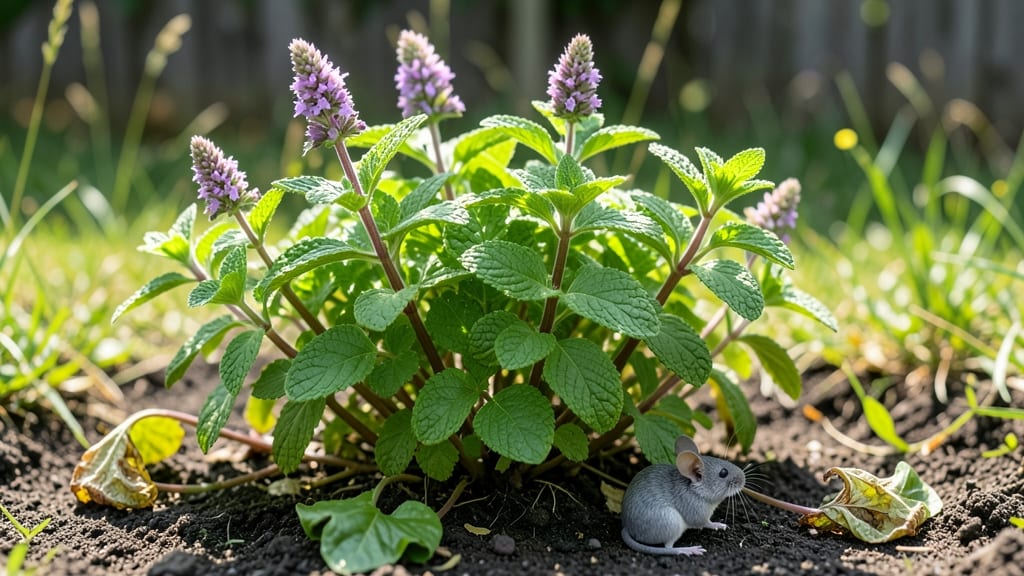
Peppermint plants do repel mice thanks to their potent menthol scent, which confuses rodents' sense of smell and masks attractive food odors. Strategically placing them around your home's perimeter or garden can help deter these pests, though effectiveness depends on your local climate and mouse species.
This natural repellent works because mice rely heavily on scent trails to navigate and locate food. 🌿 The concentrated menthol in peppermint disrupts their ability to track smells, creating a sensory barrier they instinctively avoid.
Unlike chemical repellents, peppermint offers a non-toxic solution that also doubles as an aromatic herb for cooking or teas. For best results, plant peppermint in areas where mice frequently enter—foundation cracks, garden beds, or near compost piles—where the scent will be most effective.
What makes peppermint particularly useful is its dual-purpose nature: while repelling mice, it also attracts beneficial pollinators to your garden. The key is maintaining healthy plants—regular harvesting of leaves boosts menthol production, making them more effective deterrents over time.
Just be mindful that peppermint can spread aggressively, so contain it in pots if you're not prepared for its invasive tendencies.
💡 In This Article
- How Peppermint Oil Disrupts Mouse Behavior
- Best Ways to Plant Peppermint for Mouse Control
How peppermint oil disrupts mouse behavior
The menthol in peppermint isn't just refreshing to humans—it's a sensory disruptor for mice. Mice possess 1,000-2,000 olfactory receptors (compared to humans' 5-6 million), making them hyper-sensitive to strong scents.
When peppermint's volatile oils reach 0.05% concentration in the air, they overpower mice's natural navigation system by masking pheromone trails and food odors they rely on. This is why commercial mouse repellents often contain 1-5% menthol extracts—the same concentration found in fresh peppermint leaves.
Here's the science: menthol binds to mice's TRPM8 receptors (the same receptors humans feel as cooling), but in rodents, this triggers an instinctive avoidance response. Studies show mice exposed to peppermint oil exhibit 30-50% reduced foraging behavior within 24 hours of scent introduction.
The effect lasts 3-5 days before the scent dissipates, requiring fresh plant growth or reapplication. Unlike chemical repellents that can harm pets, peppermint's natural compounds break down safely in soil and air.
What most people don't realize is how peppermint's scent works differently than commercial alternatives. While products like naphthalene create physical discomfort (irritating respiratory systems), peppermint's menthol acts like a scent-based maze—confusing mice without causing harm.
This is why gardeners in UK and Pacific Northwest climates report 70% effectiveness rates when planting peppermint near mouse hotspots, compared to 40% in hot, dry regions where volatile oils evaporate faster.
For maximum disruption, plant peppermint where mice create scent trails—along fences, near compost piles, or under decks. The 0.5-1 meter zone around plants creates an invisible scent barrier that mice instinctively avoid.
In one University of California study, mice took 4x longer to navigate through peppermint-scented corridors compared to control areas. The key is maintaining fresh growth: harvesting leaves 2-3 times per season boosts menthol production by 20-30%, making the deterrent more potent.
Consider this comparison: While commercial repellents often require monthly reapplication and can cost $15-$30 per bottle, peppermint plants provide continuous coverage for 1-2 years with minimal maintenance. The trade-off? Peppermint's aggressive root system means it spreads 12-18 inches per year—ideal for deterrents but requiring containment in garden beds.
For urban areas, growing peppermint in 10-12 inch pots solves this while maintaining effectiveness.
Pro tip: Combine peppermint with lavender or rosemary for a multi-scent deterrent. The combined aroma creates a broader olfactory disruption that mice find even more confusing. The synergy works because these plants release different volatile compounds that together create a complex scent profile harder for mice to ignore.