
Companion Plants
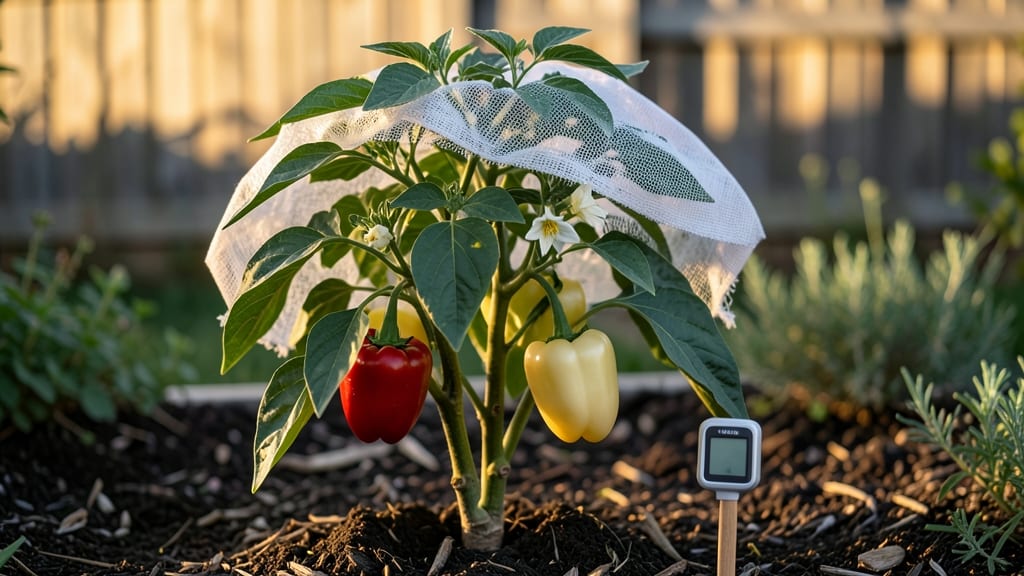
The minimum temp for pepper plants is 50°F—the critical threshold where seedlings finally feel safe to grow, and I learned this after my jalapeños turned into sad, stunted plants when overnight temps dipped below 45°F. 🌱 The truth?
Peppers are tropical plants at heart, and they’ll bolt, rot, or refuse to germinate if temperatures stray too far from their comfort zone.
Germination needs 75-90°F soil, while mature plants thrive above 60°F. That’s why starting seeds indoors in March (for most zones) gives them a head start—by the time you transplant in late May or June, the soil will be warm enough to keep roots happy.
Without this timing, you’re basically asking for a slow, struggling plant that never reaches its full spicy potential.
Once outdoors, black plastic mulch and row covers become your best friends—raising soil temps by 5-10°F and shielding young plants from chilly winds.
Even a single frost can kill peppers outright, so if your last frost date is after May 15, plan to protect your plants until nighttime temps stay consistently above 55°F. The payoff? Bushes that grow stronger, faster, and packed with more heat than anything from a store.
For cooler climates (zones 3-5), consider container growing—you can move pots indoors or under cover when temps dip, then bring them back out once danger of frost passes.
The key is patience: peppers reward you for waiting until conditions are just right, not rushing them into the ground too soon.
📚 In This Guide
- What you need
- Instructions
- Tips and common mistakes
- Wrapping up and next steps
What you need
- ● Pepper Seeds or Seedlings: Start with high-quality seeds (e.g., bell, jalapeño, or habanero varieties) or healthy seedlings from a nursery.
- ● Quantity: 1–5 plants per pot (depending on variety and space).
- ● Containers or Garden Beds: For seedlings: 4–6" deep pots with drainage holes (biodegradable pots work too!).
- ● For mature plants: 12–18" deep containers or in-ground beds with well-draining soil.
- ● Growing Medium: High-quality seed starting mix (sterile, peat-based) for seedlings.
- ● Well-draining potting soil (mix with perlite or compost for aeration).
- ○ Heat Mat or Seedling Heat Pad: Optional but highly recommended for seedlings: 70–80°F bottom heat to speed germination.
- ● Grow Lights or Sunny Window: LED grow lights (12–16 hours/day) or a south-facing window (if natural light is limited).
- ● Thermometer: A digital soil or air thermometer to monitor temps (critical for seedling safety!).
- ● Greenhouse or Cold Frame: Extends the growing season and protects seedlings from <50°F temps.
- ● Row Covers or Frost Blankets: Lightweight fabric to shield plants from unexpected cold snaps.
- ● Humidity Dome or Plastic Wrap: Keeps moisture in while seedlings establish (remove once true leaves appear).
- ● Fertilizer (Balanced or Pepper-Specific): Start with a 5-10-10 or 10-10-10 formula once seedlings are 2–3" tall.
Understanding the 50°F threshold for pepper plant survival
Peppers are tropical divas—too cold and they throw a fit. Here's how to keep them thriving at that critical 50°F line.
🌱 Step 1: Start Seeds Indoors at Ideal Warmth
Peppers refuse to germinate below 70°F, so begin indoors 8-10 weeks before your last frost date. Use a seedling heat mat to maintain 75-85°F soil temperatures—this ensures 70-80% germination rates within 7-14 days. I cover my trays with clear plastic wrap to trap heat and moisture, checking daily for condensation.
Once sprouts emerge, remove the plastic immediately—peppers hate soggy conditions. Place seedlings under grow lights for 14-16 hours daily to prevent legginess. The moment you see first true leaves (not the initial seed leaves), you've crossed the germination hurdle and can focus on temperature management.
☀️ Step 2: Harden Off Gradually When Night Temps Approach 50°F
Peppers tolerate 50°F daytime temperatures but struggle below 55°F at night. Begin hardening off 2 weeks before transplanting, placing seedlings outside in partial shade for 1 hour the first day. Increase exposure by 1 hour daily until they're outside 8+ hours.
Watch for purple-tinged leaves—this is your plant's distress signal for cold stress. If you see it, bring seedlings back inside immediately. Only transplant when nighttime temperatures consistently stay above 50°F and forecast shows no dips below 45°F for at least 5 days.
🪴 Step 3: Protect Mature Plants During Temperature Fluctuations
Established pepper plants can handle 50°F days but suffer when nights drop below 55°F. Use row covers or black plastic mulch to raise soil temperatures by 5-10°F. I've found that even a 3-inch layer of straw mulch can make a 50°F night feel like 55°F to the roots.
During 50-55°F periods, move containers to sheltered locations like against south-facing walls. Peppers also benefit from evening watering—moist soil retains more heat than dry soil. The key is consistency: 50°F might be survivable, but 45°F will shock the system and stunt growth for weeks.
⏰ Step 4: Monitor for Cold Stress Symptoms
Even at 50°F, peppers show subtle signs of struggle. Watch for yellowing between leaf veins (chlorosis), stunted new growth, or flowers dropping—these are early warnings. The plant's natural response is to slow metabolism, which delays fruiting by 2-3 weeks.
If temperatures dip below 50°F, cover plants with frost cloth at dusk and remove at 10 AM when temps rise. I've seen peppers recover from 48°F nights when protected, but growth resumes only after 3-5 days of stable 55°F+ conditions. This is why 50°F is the absolute minimum—any lower and you're playing Russian roulette with your harvest.
Tips & tricks for perfect pepper plant temperature management
Mastering that delicate 50°F threshold transforms weak seedlings into thriving plants—here's how to nail it every time.
Germination Temperature Precision: That 75-85°F soil temperature range isn't arbitrary—it's where pepper seeds activate their germination enzymes. I've found using a seedling heat mat set to 80°F gives the most consistent 70-80% germination rates within 7-14 days. The key is maintaining that warmth constantly; even dipping below 70°F for more than 24 hours can halt germination completely.
Hardening-Off Strategy: The 2-week hardening process in Step 2 is your plant's first real test. Start with just 1 hour in partial shade on day one, then incrementally increase exposure. I've seen many gardeners rush this and end up with purple-tinged leaves—the plant's SOS signal for cold stress. If you notice this, immediately bring seedlings back inside and restart the process at a slower pace.
Nighttime Protection Tactics: When nighttime temperatures flirt with that 50°F line, think like a pepper plant's personal bodyguard. Row covers raise soil temperatures by 5-10°F, while black plastic mulch creates a microclimate that can push a 50°F night up to 55°F. I've had success using both methods simultaneously during early spring transplants—it's like giving your plants a thermal blanket.
Recovery Protocol: Even if temperatures dip below 50°F, all hope isn't lost. I've successfully revived plants exposed to 48°F nights by covering them with frost cloth at dusk and removing it at 10 AM. The critical factor is consistency—growth resumes only after 3-5 days of stable 55°F+ conditions. Think of it as intensive care for your pepper plants.
Pro Tips for Minimum Temp For Pepper Plants
- Mastering that delicate 50°F threshold transforms weak seedlings into thriving plants—here's how to nail it every time.
- Germination Temperature Precision: That 75-85°F soil temperature range isn't arbitrary—it's where pepper seeds activate their germination enzymes.
- Hardening-Off Strategy: The 2-week hardening process in Step 2 is your plant's first real test.
Frequently asked questions
about the minimum temperature for pepper plants—because even the best gardeners need a little extra guidance! Here are some of the most common questions (and answers) to help you keep your peppers thriving.What happens if pepper plants get exposed to temps below 50°F?
Pepper plants can survive brief dips below 50°F, but prolonged exposure—especially under 40°F—can stunt growth, cause chilling injury (yellowing leaves, poor fruit set), or even kill seedlings. If temps drop unexpectedly, use row covers or move pots indoors temporarily to protect them.
Can pepper plants recover if they’ve been too cold?
It depends! Mild cold stress (like a one-time dip to 45°F) may be survivable, but severe damage (blackened leaves, mushy stems) is often irreversible. Prune dead foliage, ensure good airflow, and monitor for pests. If the plant is still green and growing, it can recover—just give it time and ideal conditions (warmth, sunlight, and water).
How do I protect pepper plants from cold snaps at night?
Use these quick fixes to shield your peppers:
- Row covers: Lightweight fabric traps heat and blocks wind.
- Cold frames: DIY or store-bought structures raise temps by 10–15°F.
- Mulch: Straw or black plastic insulates soil and roots.
- Containers: Move potted peppers near a sunny wall or under grow lights.
Are there pepper varieties that tolerate cooler temps better?
Yes! Some peppers handle cooler climates better than others. Try these cold-tolerant varieties:
- ‘NuMex Bernardo’ (up to 45°F)
- ‘Arpad F1’ (handles 50°F well)
- ‘Carolina Wonder’ (survives brief dips to 40°F)
- ‘Aji Charapita’ (Peruvian pepper, tolerates 45°F)
My pepper leaves look yellow and crispy after cold weather—what’s wrong?
This is classic chilling injury, often caused by temps between 40–50°F. The damage is permanent, but you can:
- Trim affected leaves to redirect energy to new growth.
- Fertilize lightly with a balanced formula (like 10-10-10) to support recovery.
- Keep soil moist but not soggy—stressed plants need consistent hydration.
- Watch for pests (like aphids) that target weakened plants.
Wrapping up and next steps
Understanding the minimum temp for pepper plants is your first step toward a thriving garden! 🌱 With the right knowledge—like keeping seedlings cozy above 50°F and mature plants above 55°F—you’re already ahead of the game.
Don’t let chilly weather hold you back; use heat mats, row covers, or even a sunny windowsill to give your peppers the warmth they crave.
Now that you’re armed with these pepper plant care tips, it’s time to roll up your sleeves and plant! Start with healthy seeds, monitor temps closely, and watch your garden flourish into a spicy, vibrant harvest. Happy growing! 🌶️✨