
Vegetables
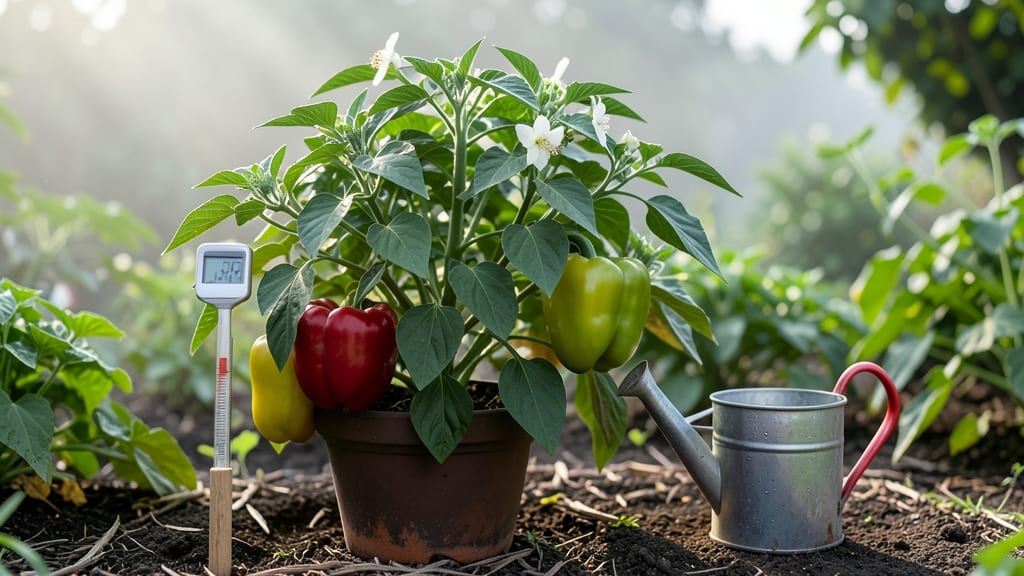
Understanding how different pepper varieties respond to temperature changes is key to maximizing your harvest.
For example, tropical peppers like habaneros prefer warmer climates and struggle in cooler regions, while temperate varieties such as bell peppers adapt better to moderate conditions. 🌡️ The real challenge comes when temperatures fluctuate—sudden drops can cause blossom end rot, while extreme heat may lead to leaf scorch or stunted growth.
I always recommend monitoring local weather patterns and adjusting care routines accordingly, whether that means using shade cloth during heatwaves or providing row covers during early spring planting.
What’s interesting is how peppers react to temperature stress at different growth stages. Young plants are particularly vulnerable to cold, while mature plants can sometimes recover from heat stress if given proper care.
This is why many gardeners focus on protecting seedlings during early growth and providing consistent moisture during hot spells. By understanding these nuances, you can create an environment where your peppers not only survive but thrive throughout the growing season.
💡 In This Article
- Peppers’ Temperature Sensitivity by Variety Type
- Protecting Peppers from Heat and Cold Stress
Peppers’ temperature sensitivity by variety type
Peppers aren't all created equal when it comes to temperature tolerance. Bell peppers, for instance, are the most cold-sensitive, with their growth stalling below 55°F and suffering irreversible damage when temperatures dip below 40°F.
This is because their native habitat is tropical, but they've been selectively bred for cooler climates. The reason?
Their cell membranes, which contain unsaturated fats, become rigid in cold temperatures, disrupting nutrient transport and photosynthesis. 🌡️ In contrast, tropical varieties like habaneros and scotch bonnets thrive in 80°F–90°F ranges, as their cell membranes contain more saturated fats that remain fluid even in heat.
Jalapeños and serranos fall somewhere in between, with optimal growth between 70°F–85°F but remarkable resilience to brief heat spikes up to 100°F. This is thanks to their thicker cuticles and deeper root systems that help regulate moisture loss.
However, when temperatures climb above 95°F for extended periods, these varieties show signs of stress: leaves curl, flowers drop, and fruit development slows. The science behind this is fascinating—high temperatures disrupt the plant's hormone balance, particularly ethylene production, which is crucial for fruit ripening and setting.
What most gardeners don't realize is how temperature affects flowering and fruit set. Peppers are sensitive to temperature fluctuations during their flowering stage, with ideal pollination occurring between 75°F–85°F. Below 60°F, flowers may fail to open, while above 90°F, pollen production drops dramatically.
This explains why many gardeners experience poor yields during heatwaves or early spring planting. For example, in USDA zones 8-10, where summer temperatures often exceed 95°F, gardeners must use shade cloth or mulch to maintain soil temperatures in the 70°F–80°F range for optimal fruit production.
Consider these key temperature thresholds by variety:
- Bell peppers: Optimal 70°F–85°F, damage below 40°F, stress above 90°F
- Jalapeños/Serranos: Optimal 75°F–85°F, brief spikes to 100°F tolerated, long-term stress above 95°F
- Habaneros/Scotch Bonnets: Optimal 80°F–90°F, struggle below 60°F, heat-tolerant up to 95°F
- Poblano/Ancho: Optimal 65°F–80°F, sensitive below 50°F, moderate heat tolerance
The reason behind these differences lies in their evolutionary origins. Tropical peppers developed heat-resistant mechanisms like thicker wax layers on leaves to reduce water loss, while temperate varieties evolved slower metabolic rates to conserve energy in cooler climates.
This biological adaptation explains why some varieties can handle desert climates while others thrive in Mediterranean regions. For gardeners, this means selecting varieties that match your local climate patterns—planting habaneros in Florida but bell peppers in California's coastal areas where summer fog helps moderate temperatures.
One often-overlooked factor is nighttime temperatures. Many pepper varieties require a 10°F–15°F drop between day and night to trigger proper flowering. In hot climates where nighttime temperatures stay above 80°F, this can completely prevent fruit set.
This is why some tropical varieties produce more fruit when grown in high-altitude regions where cooler nights occur, even if daytime temperatures are warm. Understanding these nuances can help you choose varieties that align with your specific growing conditions.