
Watering
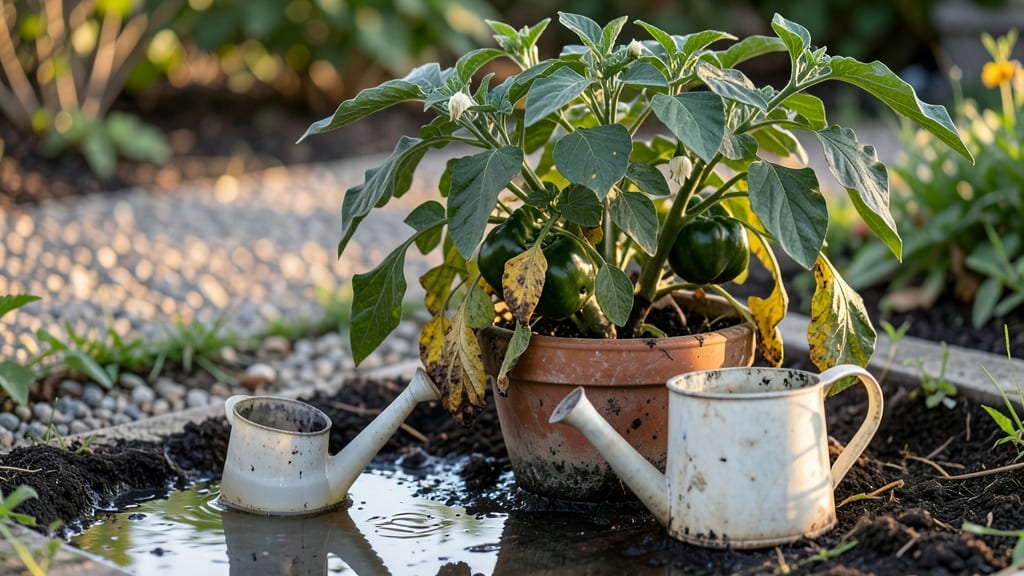
These pictures of overwatered pepper plants—yellow leaves, limp stems, and roots that smell like wet socks—should be your warning sign. 🌱 That’s overwatering, and it’s easier to fix than you think.
I’ve turned around plants like this in just a few days by addressing the real issues: compacted soil, poor drainage, and a watering routine that’s more about drowning than nurturing.
The first sign? Yellowing leaves that start at the bottom and creep upward. Then comes the wilting, even when the soil feels damp. Worse, root rot sets in—soft, mushy roots that can’t support your plants. The good news?
You don’t need fancy tools or expensive fixes. A simple drainage check, a tweak to your watering schedule, and maybe a fresh pot with better soil mix can bring them back to life.
By the end of this, your peppers will snap back with vibrant green leaves, sturdy stems, and roots that breathe. The fix is about balance: letting the top inch of soil dry out between waterings, using pots with drainage holes, and giving those roots room to stretch.
No more guesswork—just healthier plants and better harvests.
Works for any pepper variety, whether you’re growing in containers, raised beds, or the ground. The key is consistency: once you adjust, stick with it. Your plants will thank you with bold, glossy foliage and the promise of spicy, sweet rewards.
Root Causes Of Overwatering
When your pepper plants start looking sad—think droopy leaves, yellowing foliage, or even blackened stems—it’s often a cry for help from too much water. But why does this happen?
Overwatering isn’t just about pouring too much H2O into the soil; it’s a cascade of biological and environmental factors that disrupt your plant’s delicate balance. Let’s break down the science behind the soggy soil syndrome.
Pepper plants thrive in well-draining soil, but if your garden beds or pots lack proper drainage, excess water has nowhere to go. When roots sit in soggy conditions, they struggle to absorb oxygen—a critical component for cellular respiration. Without oxygen, roots suffocate, leading to:
- Root rot: Fungal pathogens like Phytophthora or Pythium thrive in waterlogged soil, attacking roots and cutting off nutrient flow. 🍄
- Nutrient leaching: Overwatering flushes essential minerals (like nitrogen, potassium, and magnesium) out of the root zone, starving the plant.
- Compacted soil: Heavy or clay-based soils hold water like a sponge, preventing air pockets that roots need to breathe.
Actionable fix: Amend soil with perlite, vermiculite, or compost to improve aeration. If using pots, ensure they have drainage holes—and never let plants sit in saucers of standing water.
Pepper plants hate moisture swings. When you water heavily one day and then skip the next, roots oscillate between drought and deluge. This inconsistency triggers:
- Osmotic stress: Roots expend energy to pump out excess water, draining their energy reserves and weakening growth.
- Cellular damage: Rapid water uptake followed by drought causes plasmolysis, where plant cells shrink and lose function.
- Weakened defenses: Stress makes plants more susceptible to pests (like aphids) and diseases.
Actionable fix: Water deeply but infrequently—aim for 1–1.5 inches of water per week (adjust for climate). Use drip irrigation or soaker hoses to deliver steady moisture.
Too much fertilizer—especially high in nitrogen or salts—can burn roots and disrupt their ability to regulate water uptake. Here’s how it backfires:
- Salt buildup: Excess salts in soil create a hypertonic environment, forcing roots to work harder to absorb water (and often failing).
- Microbial imbalance: Fertilizers can kill beneficial soil bacteria that help break down organic matter, reducing soil porosity.
- Root scorch: High concentrations of nutrients (like ammonium) can chemically damage root membranes.
Actionable fix: Flush soil with water after fertilizing to leach excess salts. Use balanced, slow-release fertilizers (like 10-10-10) and test soil pH (ideal: 6.0–6.8 for peppers).
Not all overwatering is your fault—sometimes, the environment conspires against your peppers. Watch for:
| Factor | How It Causes Issues | Solution |
|---|---|---|
| 🌧️ High humidity | Slows evaporation, keeping soil damp longer and promoting fungal growth. | Space plants for airflow; use fungicides if needed. |
| 🌡️ Cool temperatures | Reduces root activity, so plants can’t absorb water efficiently, leading to waterlogging. | Mulch heavily to insulate roots; avoid watering in chilly mornings. |
| 🌱 Crowded planting | Competes for oxygen in the root zone, accelerating rot. | Thin plants to 18–24 inches apart; prune lower leaves for better airflow. |
Pro tip: 🌡️ Check soil moisture before watering—stick your finger 1–2 inches into the soil. If it’s damp, wait. If it’s dry, water thoroughly until it drains from the bottom.
Revive Your Pepper Plants Now
Overwatering can turn your thriving pepper plants into a sad, soggy mess—but don’t panic! With the right steps, you can nurse them back to health and prevent future waterlogging.
Below, we’ve mapped out practical fixes for the most common signs of overwatering, along with prevention tips to keep your peppers happy and productive.
Yellowing leaves are a red flag, but they’re reversible if you act fast.
🔥 Step 1: Stop Watering Immediately
- Let the soil dry out completely before watering again.
- If the soil feels damp just 1–2 inches below the surface, wait 2–3 more days before checking again.
🍳 Step 2: Improve Drainage
- Repot if needed: If your pepper plant is in a container with no drainage holes, transfer it to a pot with holes.
- Add perlite or sand: Mix in 20–30% perlite, vermiculite, or coarse sand to improve aeration.
- Raise the pot: Place it on a drip tray or elevated stand to prevent water pooling.
👨🍳 Step 3: Trim Damaged Foliage
- Use sterilized scissors to snip off yellow or mushy leaves—this helps the plant redirect energy to healthy growth.
- Avoid cutting into green tissue; focus on fully yellow or brown leaves.
⏰ Step 4: Adjust Your Watering Schedule
- Water deeply but infrequently: Peppers prefer 1–1.5 inches of water per week, split into 2–3 sessions.
- Water in the morning to allow excess moisture to evaporate.
- Check soil moisture with your finger—if the top 1–2 inches are dry, it’s time to water.
Root rot is serious but treatable if caught early.
💡 Step 1: Remove the Plant from Wet Soil
- Gently dig up the plant and inspect the roots.
- Healthy roots are firm and white; rotten roots are mushy, black, or smell foul.
🔪 Step 2: Prune Rotten Roots
- Use clean pruning shears to cut off all black, mushy roots.
- If more than 50% of roots are rotten, the plant may not recover—consider propagating a cutting if possible.
🌱 Step 3: Repot in Fresh, Dry Soil
- Choose a well-draining potting mix (avoid heavy garden soil).
- Disinfect the pot with a 10% bleach solution (1 part bleach to 9 parts water) before repotting.
- Water lightly only after repotting to avoid shocking the roots.
✨ Step 4: Adjust Future Watering
- Water only when the top 2 inches of soil are bone-dry.
- Use a moisture meter if you’re unsure—peppers hate soggy feet!
Once your plant recovers, prevent overwatering with these habits:
✅ Use the Right Pot Size
- Too small? Roots get crowded and suffocate.
- Too big? Soil stays wet too long.
- Ideal: A pot 1–2 inches larger in diameter than the root ball.
✅ Mulch to Retain Moisture (Without Overdoing It)
- Apply 1–2 inches of organic mulch (straw, wood chips) to slow evaporation.
- Keep mulch 1–2 inches away from the stem to prevent rot.
✅ Monitor Humidity & Airflow
- Peppers hate humidity—aim for 40–60% humidity.
- Use a fan on low to improve airflow, especially in greenhouses or indoor setups.
✅ Fertilize Lightly After Recovery
- Once leaves regain color, feed with a balanced fertilizer (10-10-10 or 5-5-5).
- Avoid nitrogen-heavy fertilizers—they encourage leafy growth at the expense of peppers.
Need a fast reference? Here’s what to do based on symptoms:
| Symptom | Cause | Fix |
|---|---|---|
| Yellow lower leaves | Overwatering | Stop watering, improve drainage, trim leaves |
| Wilting + black stems | Root rot | Prune roots, repot in dry soil, adjust watering |
| Stunted growth | Compacted soil | Loosen soil, add perlite, ensure proper pot size |
| White mold on leaves | Poor airflow + wetness | Increase airflow, reduce humidity, remove affected leaves |
Pro Tip: 🌡️ If your pepper plant is severely overwatered, don’t give up! Many plants bounce back in 2–4 weeks with proper care. Keep an eye on progress and adjust as needed—your peppers will thank you with bountiful harvests! 🌶️🔥
Frequently asked questions
How can I tell if my pepper plant is overwatered vs. underwatered?
Overwatered pepper plants show yellowing leaves starting at the bottom, droopy stems even when soil feels damp, and mushy roots that smell foul. Underwatered plants have crispy brown edges on leaves and soil that pulls away from pot edges. Stick your finger 1-2 inches deep—if damp, you're overwatering; if dry, it's thirsty.
Can overwatered pepper plants recover if I just stop watering?
Stopping watering helps, but recovery depends on root condition. If roots are firm and white, they'll bounce back in 1-2 weeks with proper drainage. If roots are black and mushy, prune the rotten parts and repot in dry soil. Severe cases may need 2-4 weeks of careful drying before improvement.
Why do my pepper plants get overwatered even when I follow watering schedules?
Common culprits: poor drainage (no pot holes), heavy clay soil that holds water, or humid climates slowing evaporation. Check your setup—pepper roots need air pockets to breathe. Add perlite to soil or use terracotta pots that dry faster.
What's the best way to fix soggy soil in pepper pots?
Drain excess water immediately, then mix 20-30% perlite or vermiculite into your potting soil. Elevate pots on drip trays and avoid saucers that trap water. For severe cases, repot completely using a well-draining mix and let it dry out for 3-5 days before watering again.
Will overwatered peppers still produce fruit?
Mild overwatering may delay fruiting, but plants can recover to produce peppers. Severe cases with root rot may stop fruiting entirely. Focus on drainage fixes first—healthy roots = better harvests. If your plant recovers in 3-4 weeks, it should still bear fruit, though yields might be smaller initially.